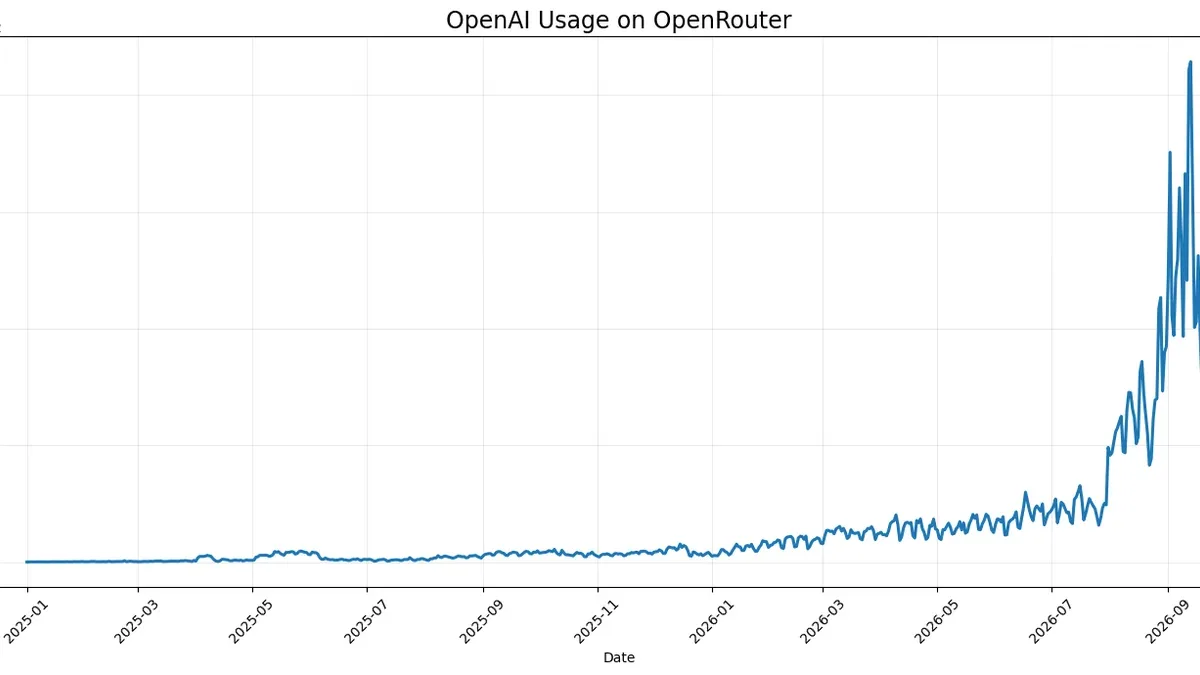
Claude Proves Riemann Hypothesis: Lean Certifies Proof, $1M Prize Next
Anthropic's Levent Alpöge says Claude helped prove the 167-year-old Riemann hypothesis, and the Lean community has certified the 17-million-line proof correct.
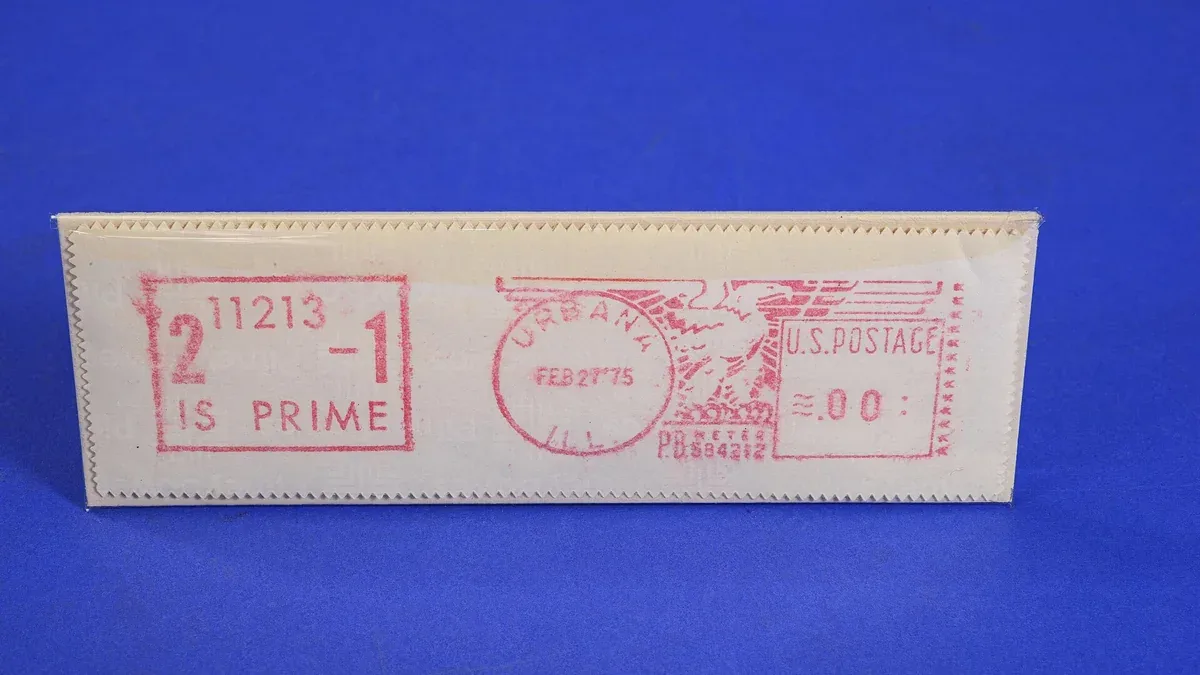
Image: Wikimedia Commons / Smithsonian Museum of American History
On Saturday, November 21, 2026, the team behind Lean, the proof-checking software used across mathematics, certified a proof of the Riemann hypothesis built by Anthropic mathematician Levent Alpöge with Claude. In a joint statement endorsed by the Lean Focused Research Organization and the Mathlib Initiative, they said they have "full confidence that Alpöge's proof of the Riemann Hypothesis is correct." The proof runs to 17 million lines of code, the first claimed solution to pass a full machine check.
Alpöge, an Anthropic mathematician and Harvard junior fellow, announced the proof on Friday, November 20, in a four-page note titled "Remark," with a 14-part archive of 175,187 files written in Lean 4. The archive is 239.3 megabytes compressed, expanding to 61.5 gigabytes. Alpöge said the work also settles the Generalized Riemann Hypothesis for all Dirichlet L-functions, formalized "without assumptions," with the final pieces falling into place late on Sunday, November 15.
Key Takeaways
- On November 21, the Lean and Mathlib communities certified Alpöge's 17-million-line Lean proof as correct, after checks by several independent programs.
- Alpöge says he guided the design while Claude carried out the complex algebra and technical lemmas over months of collaboration.
- Posed in 1859, the hypothesis carries a $1 million Clay Millennium Prize, but the prize needs publication and general acceptance.
How the Lean Community Verified the 17-Million-Line Proof
The statement set out four checks, all satisfied: the hypothesis as stated is the one already in Mathlib, Lean's shared mathematics library; the library compiles without errors; the tool comparator confirmed the theorem proved is exactly Mathlib's statement; and the exported proof passed Lean's official kernel and independent checkers in other languages, including con-leche and con-ron, which cannot accept a false proof. MIT mathematician Andrew Sutherland, who compiled it independently, said it had been "independently rechecked by the Lean kernel with only the three standard axioms."
What the Riemann Hypothesis Is and Why the $1 Million Prize Is Years Away
The Riemann hypothesis, posed by Bernhard Riemann in 1859, holds that the non-trivial zeros of the Riemann zeta function all lie on a single line, a pattern that would explain how primes are distributed. Primes underpin much of modern cryptography. The Clay Mathematics Institute named it one of its seven Millennium Prize Problems in 2000, each worth $1 million; six remain officially unsolved. The prize is not close: a solution must appear in a qualifying publication, win general acceptance, and stand for two years. Alpöge has released no readable paper, saying a written version would run to more than 250,000 pages. The earliest it could consider the prize is 2028.
| Claim | Researcher | Method | Status on November 21 |
|---|---|---|---|
| Riemann hypothesis and generalized version | Levent Alpöge, Anthropic | 17 million lines of Lean code with Claude | Certified correct |
| Generalized Riemann hypothesis | Alessandro Masullo, Stanford | Human-written draft, 12 years of work | Under review |
What a Second Proof Claim and Anthropic's Silence Mean for the Field
The same day, Stanford researcher Alessandro Masullo proposed a separate, human-developed proof of the Generalized Riemann Hypothesis. Masullo's draft, 12 years of work, has already drawn questions. The two claims are at different stages: Alpöge's has cleared machine checks, while Masullo's must still survive human scrutiny. Anthropic has not commented publicly and did not respond to a request for comment from the Associated Press. The claim arrives days after Anthropic's stock-market debut, when its shares opened at $111.50 on the Nasdaq after pricing at $83. The result is the latest sign of how far AI systems have come on hard reasoning tasks.
Frequently Asked Questions
Has the Riemann hypothesis actually been proved?
The Lean and Mathlib communities have certified that Alpöge's formal proof is correct: the code compiles and proves the standard statement of the hypothesis. That is not general acceptance: mathematicians still need to understand the argument, and the Clay prize is at least two years away.
What is the Riemann hypothesis in simple terms?
It is a claim about the prime numbers, first made by Bernhard Riemann in 1859: the non-trivial zeros of the Riemann zeta function all lie on one line, which would reveal a hidden pattern in how primes are spread.
Did Claude prove the Riemann hypothesis on its own?
No. Alpöge said he guided the proof's high-level design while Claude carried out complex algebraic manipulations and technical lemmas. The result is a human-AI collaboration, not an autonomous machine discovery.
The next step is explaining the proof in readable form, then a refereed publication starting the Clay Mathematics Institute's two-year clock.