Google's AI Agent Teams Prove 2013 Maths Conjecture: What Teamwork Did
Google's Antigravity agent teams proved a 2013 maths conjecture and formalised the Weil conjectures in Lean — but one headline figure needs a closer look.
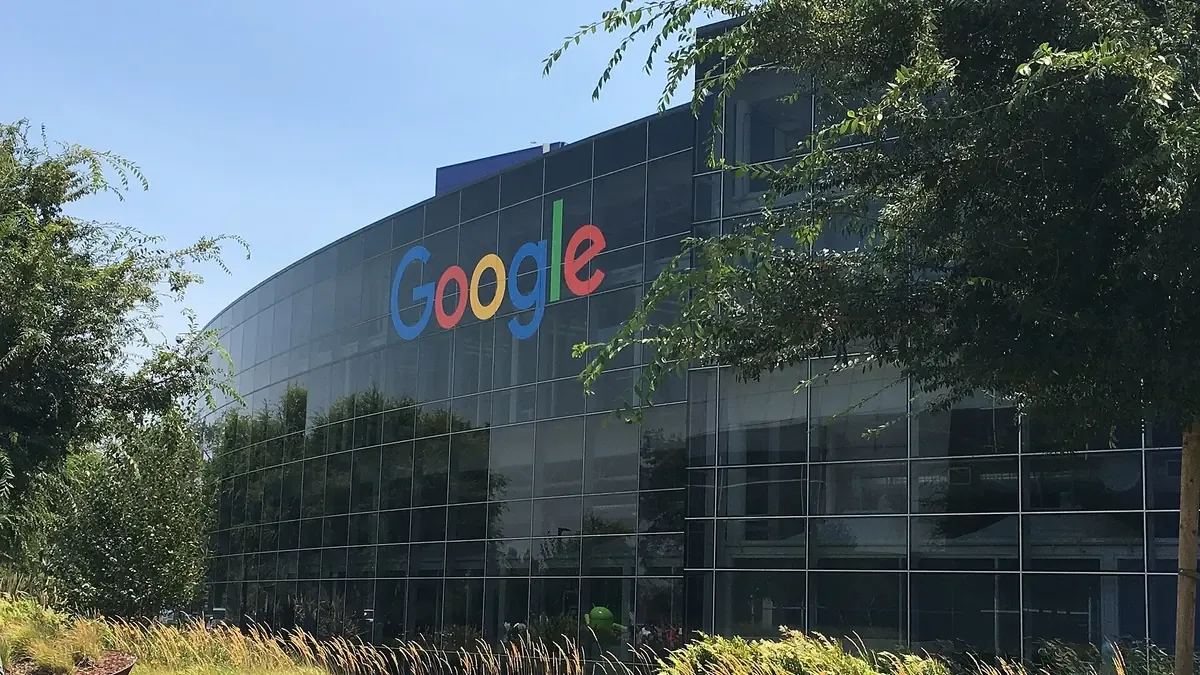
Image: Wikimedia Commons / Asoundd
MOUNTAIN VIEW, Calif., Nov. 15 — Google Research said on November 13 that teams of artificial intelligence agents working inside its Antigravity coding environment proved a 2013 information-theory conjecture in full and produced machine-checked formalisations of the landmark Weil conjectures, using its Gemini 4 models.
The results come from Teamwork, a multi-agent framework that splits a hard problem between specialist agents, each given only the files and tools it needs, while separate critics and auditors check the work from a clean context. The full account is in a Google Research post by Google Fellow Vahab Mirrokni.
Key Takeaways
- Courtade–Kumar was proved in full and formalised in Lean 4: 50 million lines, only 239,000 readable.
- The Weil conjectures were formalised in 1.8 million lines of Lean, but Google has published no code yet.
- libgav1 was rewritten in Rust, 20 to 30 per cent faster; Zircon ported to 800,000 lines of Rust.
- 10,000 academic researchers can apply for six months of free access to Antigravity’s highest usage tier.
What Google’s Teamwork Proved: Courtade–Kumar, Weil and Navier–Stokes
The Courtade–Kumar conjecture, posed in 2013, asks whether bits through a noisy channel can be compressed to one bit while keeping more information than simply copying an input bit. The answer is no. The proof was published as a preprint on September 21 by researchers from Google, the Chinese University of Hong Kong, USC and Carnegie Mellon University; the November post adds the machine-checked formalisation in Lean 4.
An independent check counted 50,373,106 lines, so the 50 million figure holds; only 238,690 lines are readable proof. The audit trail is strong: a clean rebuild and acceptance by the Lean Foundation’s external checker.
The Weil conjectures, proved by Pierre Deligne in 1974, concern counting solutions of polynomial equations. Google said Teamwork-LEAP “fully autonomously produced” a machine-checked formalisation in 1.8 million lines of Lean from 28,800 subagent calls. The evidence is thinner: the post links to encyclopaedia pages, with no repository or paper, so it cannot yet be independently checked. Axiom published a public version on November 6, at 213,159 lines.
How Teamwork Works: Agent Teams, Critics and Machine Checkers
The design pairs parallel attempts with falsifiers — objective checks such as the Lean proof checker and test suites — and partitions context so each agent gets only the files and tools for its step. In chemistry, 30 agents with a physics-informed simulator identified molecular structures from NMR data at 95 per cent top-one accuracy.
The agents rewrote Google’s libgav1 decoder into about 170,000 lines of Rust. The first version ran four times slower; after profiling it became 20 to 30 per cent faster. A two-week campaign rewrote Zircon’s remaining C++ into about 800,000 lines of memory-safe Rust, booting on ARM64. Also this week, Google rolled out Gemini 4 Hydrogen, Anthropic launched Claude Fable 5.2, and Alibaba opened previews of Qwen4 Max.
How to Get Six Months of Free Antigravity Access as a Researcher
Scientists and developers can use Gemini 4 models with Teamwork and Boost in Antigravity today, and 10,000 academics can apply for six months of free access.
| Result | What Google reported | What can be checked |
|---|---|---|
| Courtade–Kumar | 50 million lines of Lean 4 | Public repo; 238,690 readable |
| Weil conjectures | 1.8 million lines; 28,800 calls | No public code yet |
| libgav1 in Rust | 170,000 lines; 20–30% faster | No public code |
| Zircon in Rust | 800,000 lines; boots on ARM64 | No public code |
| Molecular structures | 95% top-one, 100% top-three | Reported by Google |
Frequently Asked Questions
What is Google Antigravity Teamwork and how does it work?
Teamwork is a multi-agent feature inside Antigravity, Google’s AI coding environment. It splits hard tasks between specialist agents, critics and auditors, checked by objective tests such as the Lean 4 proof checker.
Did Google’s AI prove the Courtade–Kumar conjecture on its own?
No. The proof was published as a preprint on September 21, and other groups posted proofs the same week. Google’s post adds the machine-checked formalisation.
How many lines of Lean code is the Courtade–Kumar formalisation?
Google puts it at 50 million lines. An independent count found 50,373,106 lines, but only about 239,000 are readable proof code; the rest is generated certificate data.
How can academic researchers get free access to Google Antigravity?
Google opened applications for 10,000 academic researchers to receive six months of free access to its highest usage tier. Teamwork and Boost are available in Antigravity today.
Google has not given a date for releasing the code behind the Weil formalisation or the formal proof tools.