US, Thailand Sign Reciprocal Trade Deal: Tariffs, Gems & What Changes
The US and Thailand signed a joint statement in Manila on November 17 concluding reciprocal trade talks, with a 19% tariff baseline and duty-free gems.
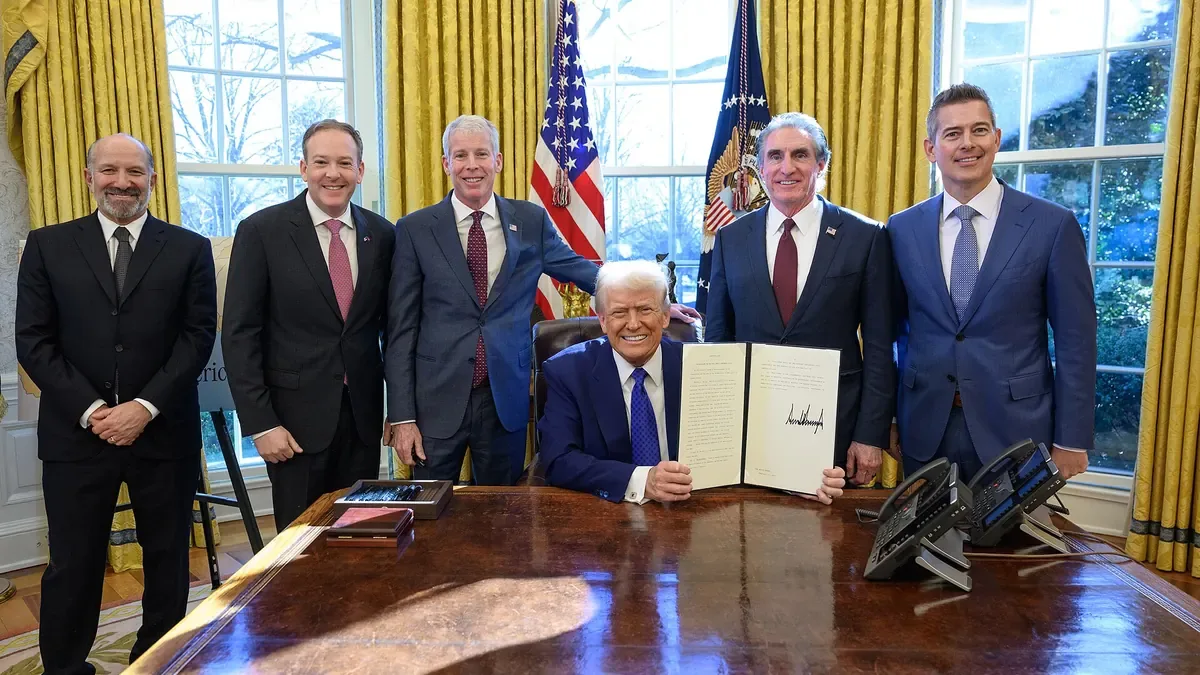
Image: Wikimedia Commons / White House Office
MANILA, November 17, 2026 — President Donald J. Trump and Thai Prime Minister Anutin Charnvirakul signed a joint statement on Tuesday confirming that the United States and Thailand have reached substantial conclusion in negotiations for an Agreement on Reciprocal Trade, the White House said.
The agreement, known as the ART, will strengthen the bilateral economic relationship and build on the Treaty of Amity and Economic Relations (1966) and the Trade and Investment Framework Agreement (2002), according to the joint statement published by the White House. Both governments will now begin internal processes to prepare it for signature and entry into force.
Key Takeaways
- Trump and Anutin signed a joint statement in Manila on November 17, 2026, confirming negotiations for a US-Thailand Agreement on Reciprocal Trade are substantially concluded.
- The deal builds on the 1966 Treaty of Amity and the 2002 Trade and Investment Framework Agreement.
- A framework agreed just over a year ago envisaged a 19% baseline US tariff on Thai goods and tariff removal on nearly all US goods entering Thailand.
- Not yet in force: legal drafting, a Thai public consultation and parliamentary ratification must come first.
What Is in the US-Thailand Reciprocal Trade Agreement?
The joint statement is short on commercial detail: it records the substantial conclusion, cites the 1966 and 2002 agreements, and commits both sides to internal processes. The substance sits in the framework agreed just over a year ago: a 19% baseline US tariff on Thai imports, and no tariffs on nearly all US goods heading into Thailand.
For one American industry the gain is concrete: the American Gem Trade Association said the deal marks an important milestone toward restoring duty-free trade in loose colored gemstones, natural pearls and diamonds, after months of intensive negotiations. The United States is Thailand's largest export market, taking 24% of its total shipments in 2026.
How the Trade Deal Affects Tariffs and Gemstone Imports
Until the agreement is signed and enters into force, no tariff changes take effect. The 19% baseline comes from the 2025 framework; the November 17 statement sets out no new rates.
US importers of Thai goods would face a settled 19% baseline rather than the higher rates threatened during last year's tariff disputes. For American buyers of Thai gemstones, restored duty-free treatment would remove a cost in place since preferential terms lapsed.
| Item | Detail |
|---|---|
| Negotiation status | Substantially concluded Nov 17, 2026 |
| Baseline US tariff on Thai goods | 19% (2025 framework) |
| US goods entering Thailand | Tariffs removed on nearly all goods |
| Gemstones, pearls, diamonds | Duty-free trade to be restored |
| US share of Thai exports | 24%, largest export market |
| Entry into force | After drafting and Thai ratification |
The deal fits a wider pattern of agreements struck on the sidelines of Asian summits: the United States and China held their first trade council talks this month, while the ASEAN summit in Manila produced minerals deals between the Quad partners.
When Will the US-Thailand Trade Agreement Take Effect?
No date has been announced. A Thai government spokeswoman told AFP the signing marked "significant progress" but was "not yet the formal ART agreement", noting Thailand still needs a public consultation and legal procedures. The American Gem Trade Association said the deal requires ratification by the Thai Parliament before it takes full effect.
The signing came on a packed day in Manila. Trump arrived late on Tuesday for his first Quad meeting in two years, and was due to join a US-ASEAN special summit before meeting Philippine President Ferdinand Marcos Jr on Wednesday. His trip continues to the APEC forum in Shenzhen and a trilateral meeting with Xi Jinping and Vladimir Putin on Thursday, November 19.
Frequently Asked Questions
Is the US-Thailand trade deal final?
No. The joint statement signed on November 17, 2026, confirms negotiations are substantially concluded, but the agreement still needs legal drafting, a public consultation in Thailand and parliamentary ratification first.
What tariff will the US charge on goods from Thailand?
The framework agreed just over a year ago envisaged a 19% baseline US tariff on Thai imports. The joint statement sets out no new rates.
Will gemstones from Thailand be duty-free under the trade deal?
Yes, once the agreement takes effect. The American Gem Trade Association said the deal restores duty-free trade in loose colored gemstones, natural pearls and diamonds.
When will the US-Thailand reciprocal trade agreement take effect?
No date has been announced. Both countries must complete internal processes, and Thailand must hold a public consultation and secure parliamentary ratification first.