10-Year Treasury Yield Crosses 5% After Weak Auction: Mortgage Rates
A weak $42 billion Treasury auction pushed the 10-year yield above 5% after hot October inflation, raising borrowing costs for mortgages, loans and savers.
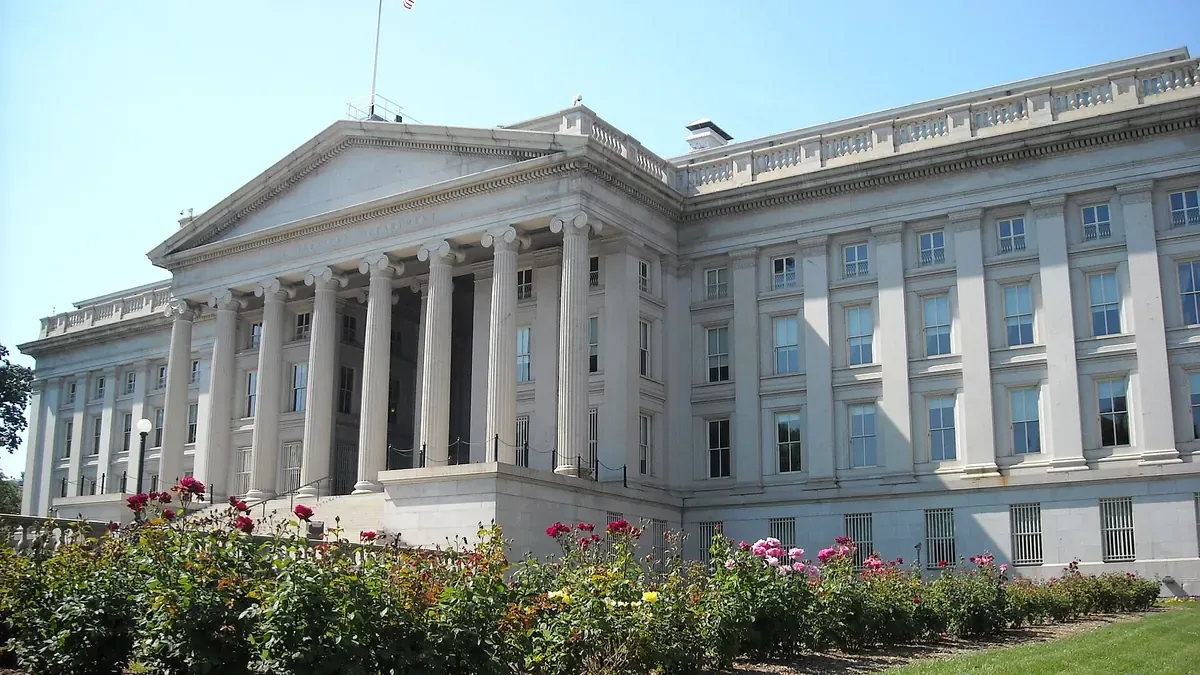
Image: Wikimedia Commons / AgnosticPreachersKid
WASHINGTON, Nov. 12 — A weak $42 billion auction of 10-year U.S. Treasury notes on Tuesday pushed the benchmark yield above 5% after the U.S. Bureau of Labor Statistics reported October consumer prices rose 0.4%, above the 0.3% economists expected. The U.S. Treasury Department sold the notes at a high yield of 5.02%, above the 5.01% yield before bidding closed.
Primary dealers, the banks required to bid at Treasury auctions, kept about 10% of the issue, the largest share since May. The sell-off ended a month-long bond recovery and lifted the two-year yield about 18 basis points, its largest one-day rise in 19 months.
- The U.S. Treasury Department sold $42 billion of 10-year notes at 5.02%; dealers absorbed about 10%, the most since May.
- October consumer prices rose 0.4% and core prices 0.3%, both above forecasts, the U.S. Bureau of Labor Statistics reported.
- The 10-year yield crossed 5%, the 30-year hit 5.352% and the two-year yield jumped about 18 basis points.
- Futures markets treat a December Federal Reserve hike as near-certain, a half-point move priced near 14%.
Why Did the 10-Year Treasury Yield Cross 5% After the Auction?
The auction landed amid a bond sell-off set off by the inflation report. Headline prices rose 0.4% in October after a 0.6% gain in September; core prices rose 0.3% for a third straight month, against a 0.2% forecast. With inflation hotter than expected, traders stopped asking if the Federal Reserve would raise rates in December and started asking how much.
Federal Reserve Governor Christopher Waller had raised the stakes hours earlier. Speaking in London, he said he would back a 50-basis-point December increase if inflation stayed hot; a quarter-point move is his baseline. Dallas Federal Reserve President Lorie Logan wants at least two more increases. CME Group's FedWatch tool put a quarter-point December rise at about 85% and a half-point move at about 14%.
How the 10-Year Yield Above 5% Affects Mortgage, Auto Loan, and Savings Rates
The 10-year yield is the reference rate for 30-year fixed mortgages, so a move above 5% feeds straight into what households pay. Mortgage rates track it closely; auto loans and credit cards tend to follow. A weak auction adds pressure: it signals investors want extra compensation to hold government debt, and that yield becomes the floor for private lending.
Savers see the other side: new Treasury notes, certificates of deposit and money market funds pay more as yields climb, but it arrives with higher prices and dearer credit. The October inflation report showed prices rising faster than the Federal Reserve wants, and the case for a December increase hardened within hours.
What Happens Next: 30-Year Auction, PPI Data and the December Fed Meeting
Two tests come before the weekend. The Treasury Department auctions $22 billion of 30-year bonds Thursday at 1 p.m. ET; weak demand would push long yields higher again, strong demand would ease the pressure. Wholesale inflation figures are due Friday at 8:30 a.m. ET; a hot reading would lift bets on a half-point December move.
The Treasury Department plans to issue $42 billion of 10-year notes each month from November through January. Central banks elsewhere are moving the same way: the Bank of England raised its rate to 4.0% on November 5. The Federal Reserve's next policy meeting is December 8-9.
| Measure | Reading | Forecast or prior |
|---|---|---|
| Headline CPI, October | 0.4% | 0.3% forecast |
| Core CPI, October | 0.3% | 0.2% forecast |
| 10-year auction yield | 5.02% | 5.01% before close |
| 10-year yield at close | 4.99% | Up 11-13bp |
| Two-year yield | About 4.75% | Up about 18bp |
| 30-year yield | 5.352% | Up 9bp+ |
Frequently Asked Questions
Why did the 10-year Treasury yield rise above 5%?
October prices rose 0.4%, above the 0.3% forecast, and weak demand at the $42 billion auction pushed yields higher as investors demanded more to hold government debt.
What does a weak Treasury auction mean for mortgage rates?
The 10-year yield benchmarks 30-year fixed mortgages, so when it rises, mortgage rates usually follow. A weak auction lifts that floor for mortgage, auto loan and credit card rates.
Will the Federal Reserve raise rates by 50 basis points in December?
Governor Christopher Waller would back a half-point move if inflation stays hot; a quarter-point rise is his baseline. Markets put a half-point rise at about 14%. The decision comes December 8-9.
When is the next Treasury auction and inflation report?
The Treasury Department auctions $22 billion of 30-year bonds Thursday at 1 p.m. ET, and the producer price index is released Friday at 8:30 a.m. ET.