Saver's Match 2027: $1,000 Government Retirement Bonus, Who Gets It
From 2027, the federal government will match 50% of retirement savings up to $1,000 a year for lower-income workers. Here is who qualifies and how to claim it.
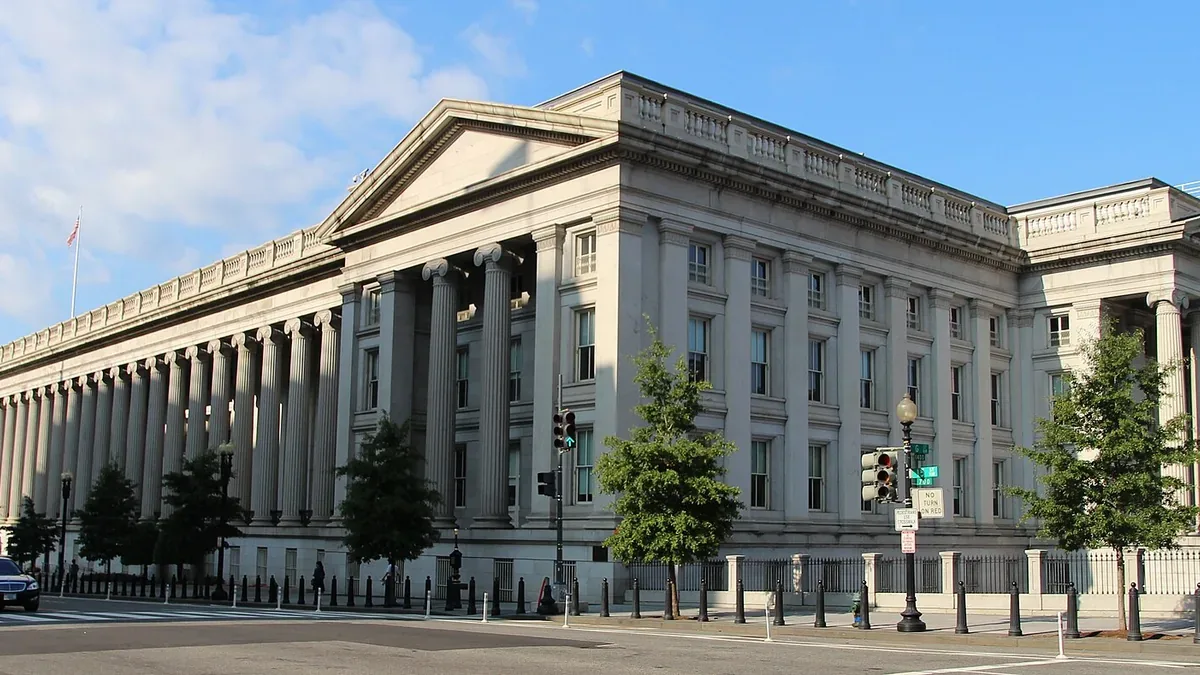
Image: Wikimedia Commons / Rchuon24, CC BY-SA 3.0
WASHINGTON, Nov. 23, 2026 — Starting in 2027, the federal government will match up to 50% of the money lower-income Americans save for retirement, paying as much as $1,000 a year directly into their accounts, according to the Internal Revenue Service. The Saver's Match, created under the SECURE 2.0 Act of 2022, replaces the Saver's Credit.
The match applies to contributions made during the 2027 tax year, with the first payments expected in 2028. Savers claim it on Form 8880-A with their 2027 federal tax return, the IRS said. Pew estimates about 22 million Americans could benefit.
Key Takeaways
- The government matches 50% of the first $2,000 saved for retirement in 2027, up to $1,000 per person a year.
- Full match: single filers up to $20,500, heads of household up to $30,750, and joint filers up to $41,000.
- No minimum contribution is required, and savers qualify even if they owe little or no tax.
- Claim it on Form 8880-A with the 2027 return filed in 2028.
Who Qualifies for the Saver's Match in 2027?
To qualify, a saver must be 18 by the end of the tax year, not a full-time student, not claimed as a dependent on another person's return, and a US resident for tax purposes, the IRS said. Qualifying contributions include deferrals to a 401(k), 403(b) or 457(b) plan, and to a traditional or Roth IRA.
Whether a saver gets the full match, a smaller match or none at all depends on modified adjusted gross income (MAGI) and filing status.
| Filing status | Full 50% match | Partial match | No match |
|---|---|---|---|
| Married filing jointly, qualifying surviving spouse | Up to $41,000 | $41,001-$70,999 | $71,000 and above |
| Head of household | Up to $30,750 | $30,751-$53,249 | $53,250 and above |
| Single, married filing separately | Up to $20,500 | $20,501-$35,499 | $35,500 and above |
A saver putting $20 a month into a retirement account in 2027 would receive a $120 match at the full rate, the IRS said. A married couple filing jointly could collect up to $2,000 combined.
How to Claim the Saver's Match on Your 2027 Tax Return
Savers do not need to do anything in 2026, the IRS said. In 2027, they should contribute to an eligible retirement plan or IRA, keep records, and claim the match by filing Form 8880-A with their 2027 federal tax return in 2028. The Treasury Department will deposit the match into the saver's designated retirement account.
Workers without a workplace plan have a new route in. Under an April 30, 2026 executive order, the TrumpIRA.gov platform will list low-cost IRA providers that accept Saver's Match deposits, with expense ratios at 0.15% or lower and no minimums. It must be operational by Jan. 1, 2027. The timing matters: the Social Security trustees project the retirement fund will pay only about 78% of scheduled benefits after 2032.
What Could Wipe Out Your Saver's Match?
The match comes with a warning. Under Section 6433(f) of the tax code, the IRS can recover 100% of the match if the contributions that earned it are withdrawn during the applicable testing period. Withdrawals before age 59½ may also face additional taxes, the IRS said.
Roth IRA savers face a separate catch. Contributions to a Roth IRA count toward the match, but the matching money cannot be deposited into a Roth IRA. The IRS and Treasury are considering paying it through a temporary traditional IRA and then converting it, which would be taxable. That arrangement is not final.
Frequently Asked Questions
How much is the Saver's Match in 2027?
It pays 50% of the first $2,000 contributed in 2027, up to $1,000 per person a year. A qualifying married couple could receive up to $2,000 combined.
What income qualifies for the Saver's Match in 2027?
Full match up to $20,500 for single filers, $30,750 for heads of household and $41,000 for joint filers. It ends at $35,500, $53,250 and $71,000, respectively.
Can I get the Saver's Match if I have a Roth IRA?
Yes, Roth contributions count, but the match cannot go straight into a Roth IRA. A taxable transfer through a temporary traditional IRA is under consideration.
When will the Saver's Match be paid into my account?
In 2028, after the 2027 return is filed with Form 8880-A. The Treasury will deposit it directly into the designated retirement account.
The Treasury and the IRS issued Notice 2026-48 on Aug. 7, 2026, announcing their intent to propose regulations. No date has been set, and TrumpIRA.gov must be operational by Jan. 1, 2027.