NASA Unveils $10 Billion Moon Base Cargo Plan: Full List of Firms & Key Dates
NASA named eight firms to compete for Moon Base cargo runs under a 10-year, $10 billion framework, with Blue Origin's nuclear rover flight to the south pole.
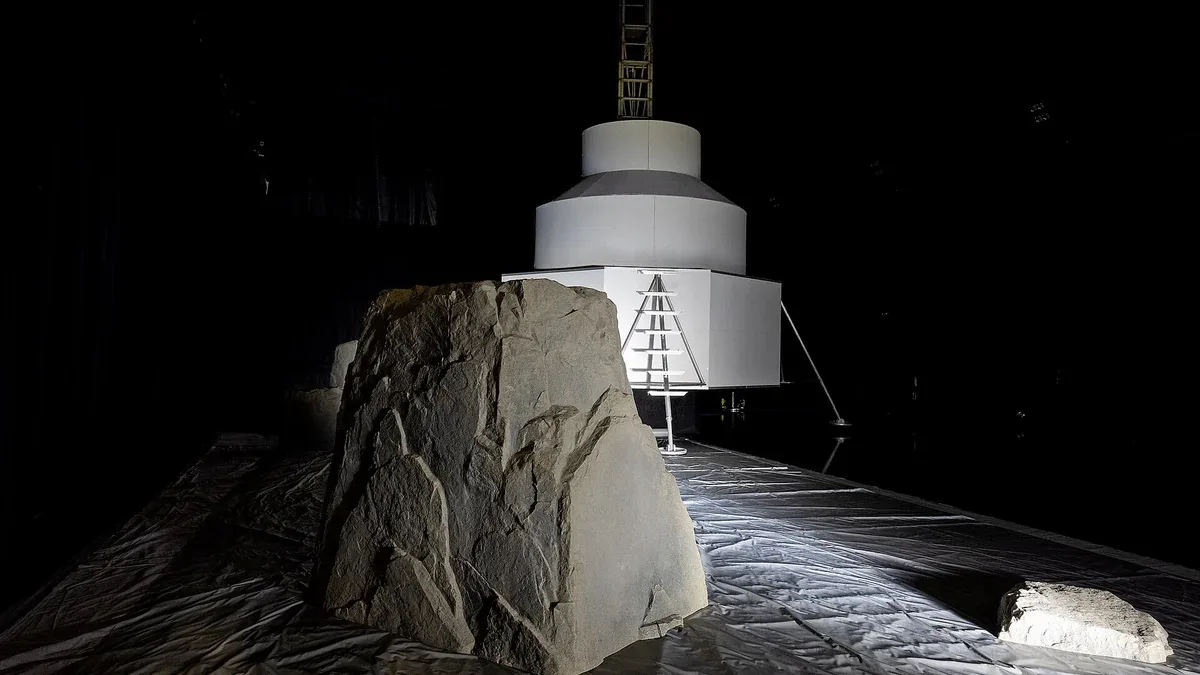
Image: Wikimedia Commons / NASA Marshall Space Flight Center / NASA/Charles Beason
KENNEDY SPACE CENTER, Florida, Nov 7 — NASA named eight companies on Saturday to compete for cargo flights to the Moon under a new 10-year framework worth up to $10 billion, the agency's largest commercial lunar delivery deal, as it builds the supply chain for a permanent base at the lunar south pole.
The framework, known as Commercial Lunar Payload Services 2, or CLPS 2, was announced by NASA Administrator Jared Isaacman at the MAX POWER aerospace expo at Kennedy Space Center. It covers lunar deliveries of science, technology and infrastructure payloads.
Key Takeaways
- NASA selected eight companies for CLPS 2, a 10-year framework with a combined maximum value of $10 billion.
- The $10 billion is a ceiling for future task orders, not money paid out; firms compete for each delivery.
- Blue Origin won a $94 million contract, plus a $140 million option, to carry the nuclear-powered PROMISE rover to the lunar south pole in 2028.
- NASA raised the CLPS 1.0 ceiling to $4.2 billion and awarded about $1.3 billion in launch orders.
Which Firms Are in NASA's $10 Billion CLPS 2 Contract?
The eight companies eligible to compete are Blue Origin, Firefly Aerospace, Intuitive Machines, ispace-US, Lockheed Martin Space, Northrop Grumman Space Systems, SpaceX and Voyager Technologies. They will build and operate the landers carrying NASA payloads. None has been handed a share of the $10 billion: CLPS 2 is an indefinite-delivery, indefinite-quantity contract, so NASA awards task orders competitively and each firm is paid only for the missions it wins.
The awards land as US aerospace restructures — Boeing said this week it will cut about 5 per cent of its commercial airplane workforce — and as private capital flows into US technology, including Google's $17 billion purchase of the Crusoe data-centre campus in Wyoming.
| Contract | Maximum value | Term | What it covers |
|---|---|---|---|
| CLPS 2 | $10 billion | 10 years | Moon Base cargo landers |
| CLPS 1.0 | $4.2 billion, up from $2.6 billion | To Nov 2028 | Phase One Moon Base work |
| VADR orders | $1.3 billion awarded; $5 billion ceiling | 10 years | Launch services |
| PROMISE delivery | $94 million, plus $140 million option | Targeted 2028 | Nuclear rover to south pole |
How NASA's $10 Billion Moon Base Contract Works
The $10 billion figure has been reported as an award. It is not a payout. The ceiling caps what NASA may order from the eight firms over 10 years. The committed money is smaller: NASA raised the CLPS 1.0 ceiling from $2.6 billion to $4.2 billion, and awarded $1.3 billion in launch and transfer orders under its venture-class programme, capped at $5 billion. The first CLPS programme, launched in 2018, has had a mixed record: Astrobotic's Peregrine Mission One was lost to a propellant leak in January 2024.
When Will Blue Origin's PROMISE Rover Reach the Moon?
The first mission is the PROMISE rover — Polar Rover for Observation, Mapping, and In-Situ Exploration. NASA awarded Blue Origin a $94 million base contract, plus a $140 million performance option, to deliver the nuclear-powered rover to the lunar south pole on its Blue Moon Mark 1 lander. The mission is targeted for 2028, with an 18-month surface mission. NASA also picked SpaceX to launch cislunar communications satellites on Starship in 2028, a demonstration for a Moon Base relay link to Earth.
Frequently Asked Questions
How much is NASA's CLPS 2 Moon Base contract worth?
The CLPS 2 framework carries a combined maximum value of $10 billion over 10 years — a ceiling on what NASA may order, not a payout. Firms are paid only when they win specific task orders.
Which companies are in NASA's CLPS 2 Moon Base programme?
Blue Origin, Firefly Aerospace, Intuitive Machines, ispace-US, Lockheed Martin Space, Northrop Grumman Space Systems, SpaceX and Voyager Technologies. All eight may compete for lunar delivery missions under the framework.
When will NASA's PROMISE rover land on the Moon?
Blue Origin is contracted to deliver the nuclear-powered PROMISE rover to the lunar south pole in 2028, with an 18-month surface mission to follow.
What is the difference between CLPS 1.0 and CLPS 2?
CLPS 1.0, launched in 2018, has a ceiling now raised to $4.2 billion and runs through November 2028. CLPS 2 is its successor: a 10-year, $10 billion framework with eight companies, built for the Moon Base programme.
NASA has not yet announced the first CLPS 2 task order or the first cargo mission. The next milestone is the award of the first delivery orders, competed among the eight firms as payloads are ready.