FCC Clears SpaceX's 1 Million Orbital AI Satellites: Key Dates & Impact
The FCC has authorized SpaceX to deploy up to one million Starmind satellites as orbital AI data centers, with the first due by 2033 and the full fleet by 2040.
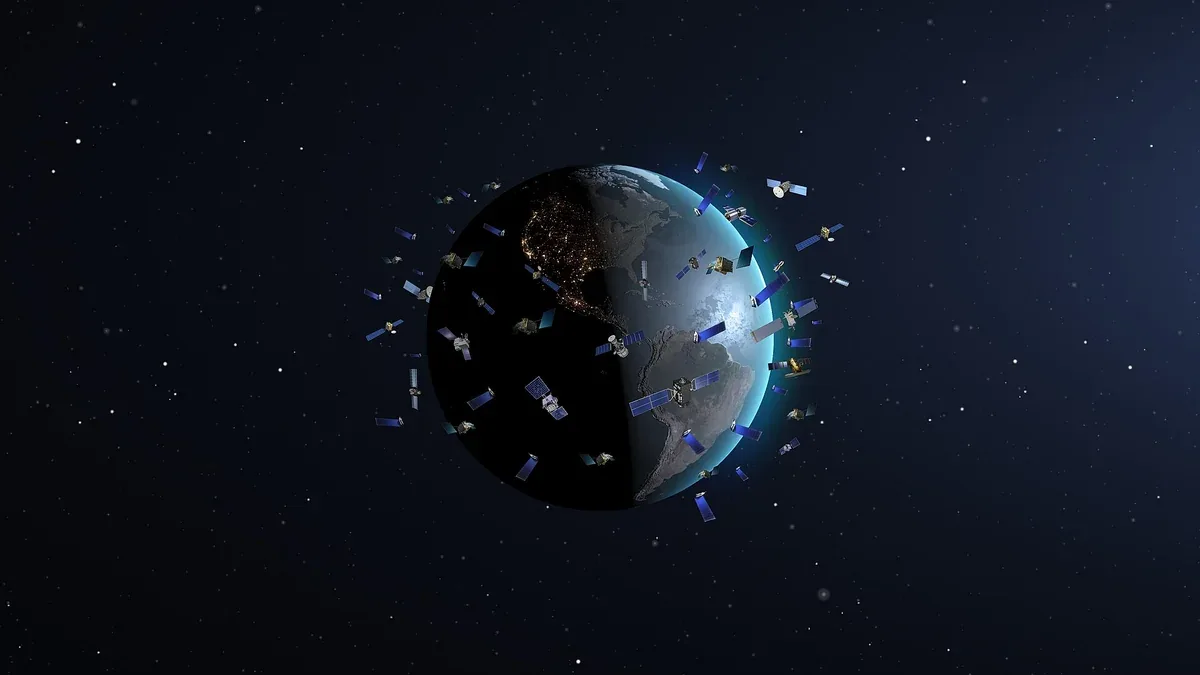
Image: Wikimedia Commons / NOIRLab/NSF/AURA/P. Marenfeld
WASHINGTON, Nov. 26 — The Federal Communications Commission on Wednesday authorized SpaceX to deploy up to one million satellites that will work as data centers in orbit, the first authorization of its kind in United States history.
The network, called Starmind, would process large volumes of data in orbit and send the results back to Earth, the commission said in its order of Nov. 25. SpaceX applied on Jan. 30, describing it as a way of capturing solar energy in space to power low-cost, high-performance AI computing.
Key Takeaways
- The commission authorized up to 1,000,000 Starmind satellites, the first US approval for a constellation of data centers in space.
- One satellite must operate by Nov. 25, 2033; 100,000 by 2035; 500,000 by 2038 and the full million by 2040.
- The satellites will fly at 500 to 1,002 kilometres and connect by laser, with Nvidia chips aboard.
- Amazon, Viasat and astronomers objected over debris and interference; the commission rejected them but left disposal above 600 kilometres undecided.
What Are Orbital AI Data Centers and How Will Starmind Work?
An orbital data center is a satellite that runs computing work in space instead of in a warehouse on the ground. SpaceX argues that sunlight is constant above the atmosphere, and waste heat can be radiated into space, easing two big limits on the giant data centers built for AI. The satellites would be linked by lasers, with radio as a fallback if the optical links fail.
The radio fallback uses two Ka-band slices, 18.8 to 19.3 GHz down and 28.6 to 29.1 GHz up, for backup telemetry, tracking and command. In August, SpaceX said it was working with Nvidia on the first Starmind satellite's compute payload, which will use Nvidia Rubin graphics processors and Vera central processors. SpaceX is also expanding ground-based AI infrastructure.
When Will SpaceX Launch the First Starmind Satellite? Key Dates and Deadlines
The order sets a strict timetable: the authorization becomes null and void if SpaceX misses any of its four deadlines.
| Milestone | Satellites in service | Deadline |
|---|---|---|
| First satellite deployed and operating | 1 | Nov. 25, 2033 |
| 10% of the authorized maximum | 100,000 | Nov. 25, 2035 |
| 50% of the authorized maximum | 500,000 | Nov. 25, 2038 |
| Full constellation | 1,000,000 | Nov. 25, 2040 |
The 15-year license term only starts when SpaceX certifies that its first Starmind satellite is in orbit and operating. SpaceX has 30 days to decline the grant as conditioned; silence counts as acceptance. Musk expects the first Starmind spacecraft to launch in the third quarter of 2027, and SpaceX told investors it will begin flying them in 2027.
Why Scientists and Rival Companies Objected to the Starmind Plan
The approval came despite petitions to deny it from Viasat, Amazon's Kuiper Systems and the American Astronomical Society, which warned about orbital debris, congestion, radio-frequency interference and environmental effects. The commission rejected those petitions.
The commission found SpaceX's debris plan compliant only for satellites below 600 kilometres. Four of the six shells sit above that line, so SpaceX cannot deploy there until it files a final debris plan and the commission accepts it. The company had asked to move satellites above 600 kilometres into distant disposal orbits instead of burning up in the atmosphere; the commission deferred that request. It also declined a further environmental review. FCC Chairman Brendan Carr said the decision "opens a bold new frontier for the computing infrastructure needed to power America's leadership and growth."
Frequently Asked Questions
When will SpaceX launch the first Starmind satellite?
Musk expects the first Starmind spacecraft to launch in the third quarter of 2027. The commission requires one operating by Nov. 25, 2033.
How many satellites are in orbit now compared with Starmind's one million?
About 17,000 satellites are in orbit today, including just over 11,000 Starlink spacecraft. A full Starmind fleet would be roughly 60 times that total.
What is the difference between Starmind and Starlink?
Starlink beams internet to dishes on the ground. Starmind runs artificial intelligence computing in orbit, powered by sunlight, and sends the results back to Earth.
Why did the FCC approve SpaceX's Starmind constellation?
The commission said the grant advances American leadership in space and AI and helps meet rapidly growing demand for AI computing. The approval is conditional, with deadlines and debris conditions attached.
SpaceX has 30 days to decline the grant as conditioned; silence counts as acceptance. Its own timetable points to first Starmind flights in 2027.