Google Unveils TPU 8tx and 8i Max in Direct Challenge to Nvidia
Google has unveiled two new AI chip systems, TPU 8tx and TPU 8i Max, completing four TPU launches in a single year as it takes on Nvidia's dominance.
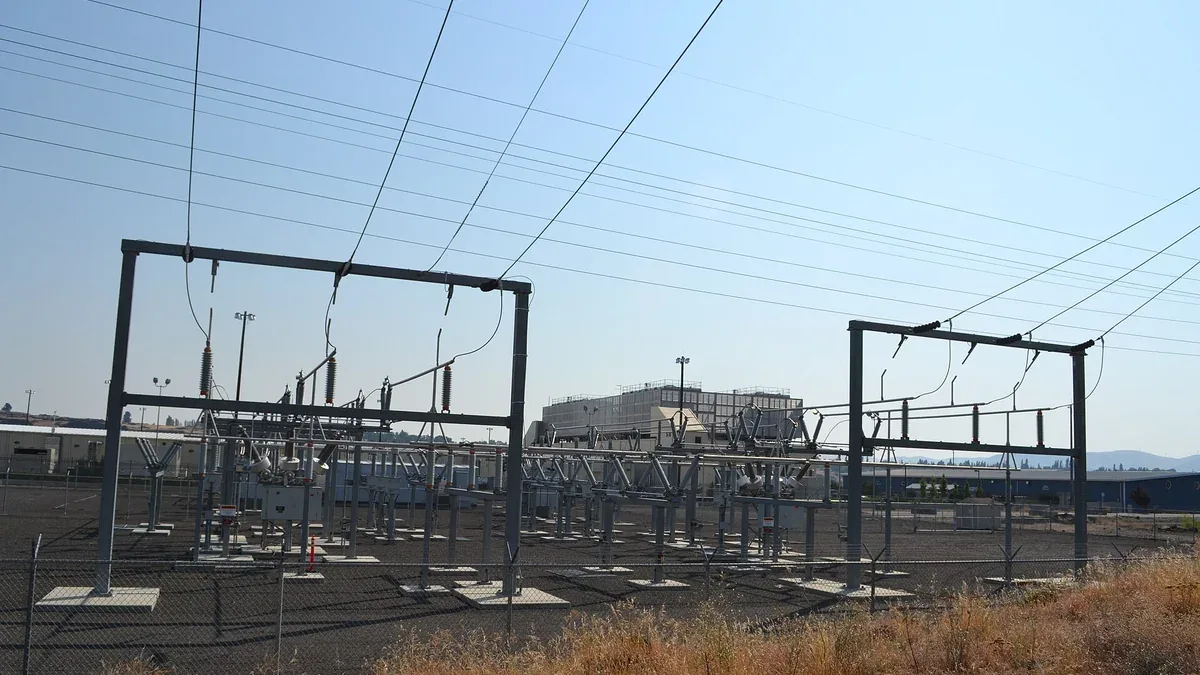
Image: Wikimedia Commons / Visitor7
MOUNTAIN VIEW, California, Nov. 9 — Google on Monday unveiled two new artificial intelligence chip systems, TPU 8tx and TPU 8i Max, completing four launches in a single year as it steps up its challenge to Nvidia's grip on AI hardware. The announcement, published by Google, marks the first time the company has introduced four Tensor Processing Unit systems in one calendar year. Google said its TPUs now serve nearly 100 customers, including AI labs, trading firms and universities.
The eighth generation began in April, when Google introduced the TPU 8t for large-scale training and the TPU 8i for real-time reasoning. The two new systems are not new chips, Google stressed: each repackages existing silicon with memory, networking and security, letting the company ship specialised hardware in months rather than years.
Key Takeaways
- Google unveiled TPU 8tx and TPU 8i Max on Nov. 9, its third and fourth eighth-generation systems of 2026.
- The 8tx runs AI on sensitive data without unlocking it, using 8t silicon with 5th Generation AMD EPYC hosts.
- The 8i Max packs two TPU 8i chips into one package, doubling compute, SRAM and memory bandwidth.
- Google gave no price, availability date or named customers; both systems are expected in 2027.
A chip built for locked-down data
TPU 8tx is aimed at banks, governments and other regulated organisations that run AI models and autonomous agents on their most sensitive data. Data is normally encrypted at rest and in transit, but must be unlocked in memory while a computer processes it. Google said the 8tx builds security into the hardware layer, keeping sensitive data and model weights protected and isolated even while in active use.
The system is built on the same silicon as the TPU 8t training chip, paired with 5th Generation AMD EPYC processor hosts and the low-latency Boardfly network. Google said the combination delivers up to two times lower latency than the 8t, with a near-zero performance penalty. Teams can also fine-tune models and train agents on a single system, without moving sensitive data between clusters.
Doubling memory for long-context agents
TPU 8i Max tackles a different limit: the memory wall. When dozens of AI agents work together across an entire software codebase or hours of video, memory bandwidth becomes the bottleneck. Google put two low-latency TPU 8i chips onto a single package, doubling the compute, SRAM and memory bandwidth of a single 8i — the base chip pairs 288 gigabytes of high-bandwidth memory with 384 megabytes of on-chip SRAM.
The eighth-generation TPU lineup
| System | Announced | Built for | Key figure |
|---|---|---|---|
| TPU 8t | April 2026 | Large-scale training | 2.7x training performance |
| TPU 8i | April 2026 | Real-time reasoning | 80% inference price performance |
| TPU 8tx | Nov. 9, 2026 | Secure, confidential inference | 2x lower latency |
| TPU 8i Max | Nov. 9, 2026 | Massive context windows | 2x compute, SRAM, HBM bandwidth |
Software to match the silicon
Google paired the hardware with a software push. Last month it open-sourced TorchTPU, so PyTorch code and Hugging Face models now run natively on TPUs, and Cloud Pathways on Google Kubernetes Engine is now generally available.
The contest with Nvidia
The launch lands at a moment of strain for Nvidia, which dominates the market for AI accelerators. Nvidia shares fell on Monday as its board opened an independent investigation into chief executive Jensen Huang, the subject of a separate investigation by Nvidia's board. Google is also spending heavily on data centres, including a 17 billion dollar Wyoming project it took over from Crusoe this month. Nvidia is deepening ties in Asia, announcing a collaboration with Rebellions and SK Telecom on sovereign AI infrastructure.
Frequently Asked Questions
What are TPU 8tx and TPU 8i Max?
They are Google's two newest Tensor Processing Unit systems, announced on Nov. 9, 2026. The 8tx is built for secure, confidential inference on sensitive data, while the 8i Max targets massive context windows.
Are these new chips?
No. Google described them as new systems built from existing silicon. The 8tx uses the same silicon as the TPU 8t, and the 8i Max combines two TPU 8i chips in one package.
When will they be available, and how much will they cost?
Google has not published a price, a general-availability date or a list of regions for either system, and it named no launch customers. The systems are expected to reach customers in 2027.
The two systems are expected to reach customers in 2027, and Google has not yet said when it will publish prices, availability dates or launch customers.