Trump Threatens 'Tremendous Tax' on Data Centres Built Abroad: AI Impact
Trump says US firms building data centres overseas will face a 'tremendous tax', warning China would 'take all of them' — but gave no details.
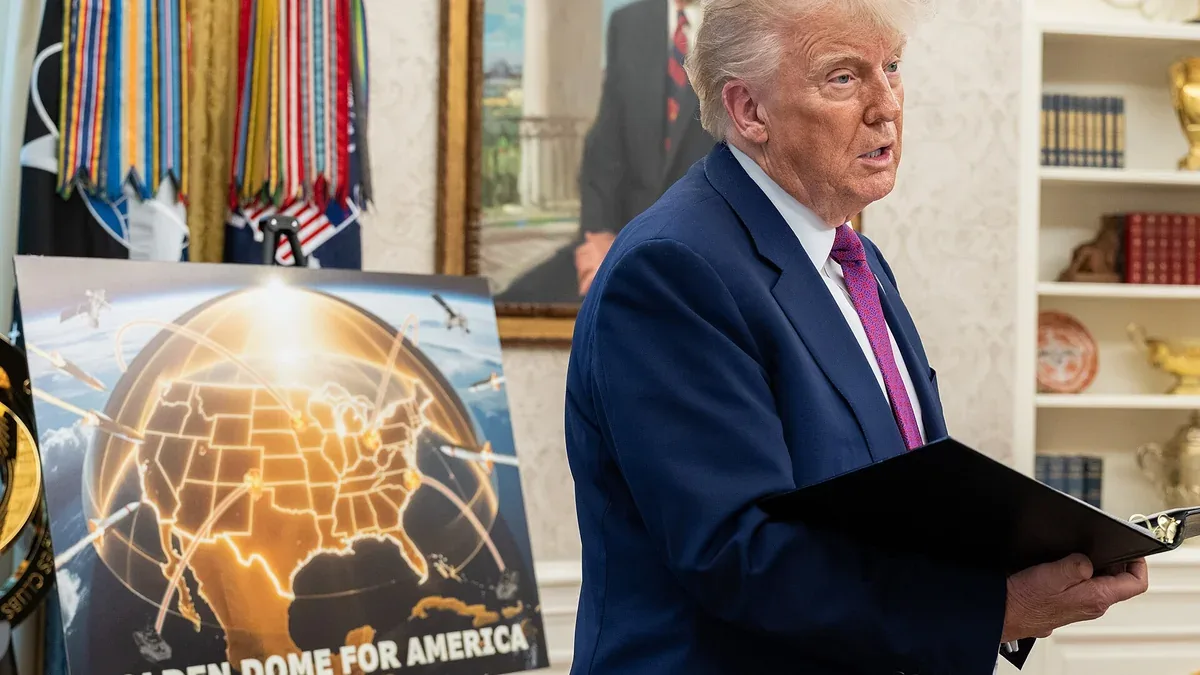
Image: Wikimedia Commons / The White House
WASHINGTON — President Donald Trump said on Friday that the United States will penalise American companies that build data centres in other countries, warning that firms which do so will face a 'tremendous tax'. Trump made the threat at a White House news conference on 20 November, a day after returning from Asia, where he met China's Xi Jinping and Russia's Vladimir Putin.
"We're not going to allow our companies to build data centers outside of our country," Trump told reporters. "We're not allowing data centers to go into other countries because China will take all of them, and we're not allowing that to happen. And we're going to put tremendous penalties on companies that try and do it."
Key Takeaways
- Trump said US firms building data centres abroad will face a "tremendous tax" and "tremendous penalties".
- He framed it as keeping AI infrastructure in the US and stopping China from taking it.
- He gave no details on how it would work and said he had not yet told his own officials.
Will Trump Tax US Companies That Build Data Centres Abroad?
Trump said the penalty would apply to American companies that build data centres outside the country but gave no detail on how it would work, what it would cover, or when it would start. He said he had not yet told his own officials and called the announcement unplanned.
Trump also urged communities to welcome data centre construction. "You ought to take advantage of the data centers. Make them pay you, make them pay your community, but don't shut them off," he said. A new tax would need Congress, and no proposal has been published.
How a Data Centre Tax Would Affect AI Companies and the US Buildout
Data centres provide the computing power needed to train and run AI systems, and a penalty could complicate the global AI buildout. Developers often locate facilities close to users to cut delays, and moving large volumes of data over long distances can add significant costs.
The threat comes as the administration tightens controls on the technology. On Monday it issued new rules restricting remote access to advanced US computing chips and servers, the latest step to limit China's ability to use American chips to train its best AI models. It also comes a day after Anthropic's Nasdaq debut valued the firm at about $2.09 trillion.
Trump and Xi's AI Guardrails: What Was Agreed and What Comes Next
Trump also teased a new agreement on international rules for artificial intelligence, saying he and Xi had agreed to work together on safety. "President Xi and I agree that we're going to do some joint guardrails," he said. "The US is leading, China is in second place, and there really is no third place."
No text of any agreement has been published, and Trump gave no detail on what the guardrails would cover or when they would be agreed. His administration has taken a light-touch approach to AI regulation.
| Date | Development |
|---|---|
| Mon, 16 Nov 2026 | US issues new rules restricting remote access to advanced computing chips |
| Thu, 19 Nov 2026 | Trump meets Xi and Putin in Shenzhen at first trilateral summit |
| Fri, 20 Nov 2026 | Trump says US firms building data centres abroad face a 'tremendous tax' |
Frequently Asked Questions
Will US companies face a tax for building data centres abroad?
Trump said they would face a 'tremendous tax' but gave no rate, no list of companies covered, and no start date, and said he had not told his officials. No proposal has been published, so nothing has changed yet.
Why does Trump say China would "take all" overseas data centres?
He said the US would not allow data centres to go to other countries 'because China will take all of them', and framed keeping them in the United States as part of competing with China on AI.
When would Trump's data centre tax take effect?
No date or mechanism has been given. A new tax would normally need Congress, so timing depends on whether the White House puts forward a proposal.
What are the US–China AI guardrails Trump mentioned?
Trump said he and Xi agreed to 'joint guardrails' on AI, with the US leading and China second. No text has been published, and it is not yet clear what they would cover.
The White House has not published details. The next step is whether the administration puts forward a plan and whether any US technology company responds.