S&P Puts Nvidia on Downgrade Watch Over Governance: What It Means for Investors
S&P Global Ratings put Nvidia's AA credit rating on CreditWatch Negative, warning it could cut the rating one notch within 90 days over governance concerns.
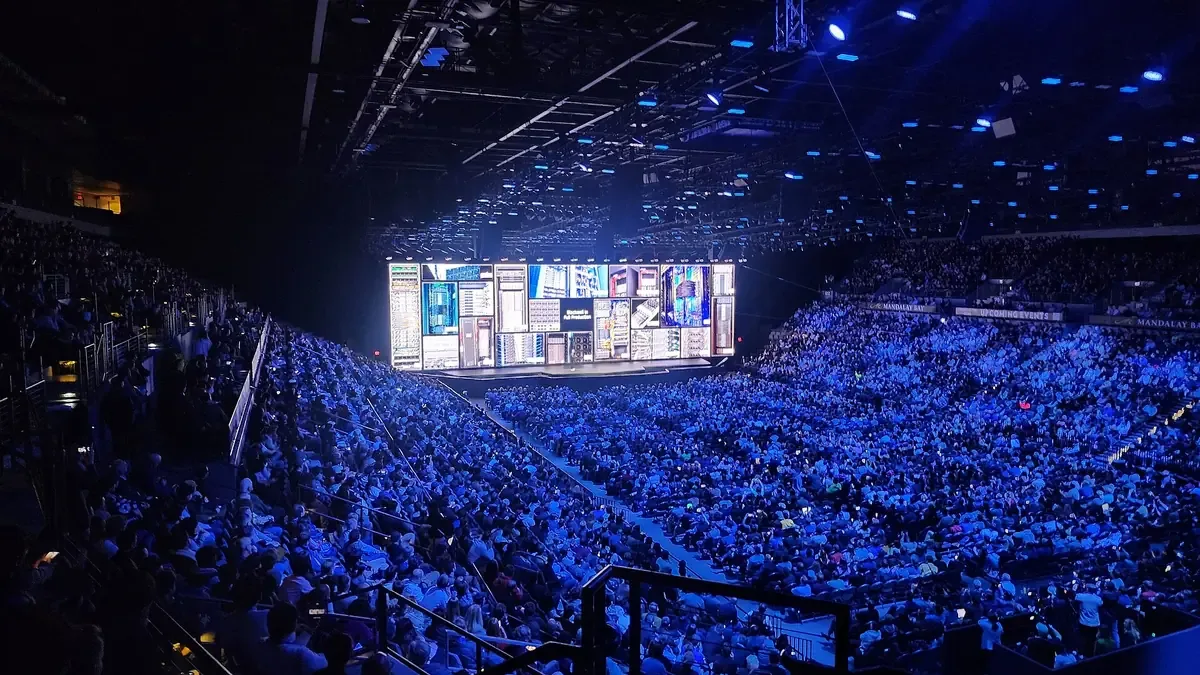
Image: Wikimedia Commons / Joseph Zadeh
Washington, November 26 — S&P Global Ratings placed Nvidia’s AA credit rating on CreditWatch with negative implications on Wednesday, November 25, warning that it could downgrade the chipmaker within 90 days unless the company repairs the governance weaknesses exposed by the departure and return of chief executive Jensen Huang.
The action covers both Nvidia’s AA issuer credit rating and the AA rating on its senior unsecured debt, S&P Global Ratings said in a statement on Wednesday. It is a warning, not a downgrade: the rating stays at AA while S&P reviews whether the board can fix the deficiencies.
Key Takeaways
- S&P placed Nvidia’s AA issuer credit and senior unsecured debt ratings on CreditWatch Negative on Wednesday, November 25.
- Any downgrade is expected to be limited to one notch, to AA-, which would still leave Nvidia investment grade.
- S&P cited board independence, oversight of senior executives, succession planning and geopolitical risk.
- Nvidia shares fell 3.9 percent but stayed about 18.9 percent above Friday’s close.
Why S&P Put Nvidia’s Credit Rating on Watch
S&P said “recent, well-publicized developments have raised questions about the effectiveness of Nvidia Corp.’s management and governance framework, including board independence and ‘key man’ risk.” It said Huang’s departure and reinstatement did not settle its questions about board oversight.
It pointed to weaknesses in the board’s structure, composition and effectiveness, weak oversight of senior executives, poor management of geopolitical risks and no succession plan for a founder-chief executive on whom the company depends heavily.
Huang resigned less than two weeks ago amid reports of extramarital affairs. The board first ruled out his return and named chief financial officer Colette Kress interim chief executive, then reinstated Huang on Monday, November 23. Lawmakers criticized the reinstatement and questioned export controls and whether national security was compromised by Huang’s affair with Alice Huang, who is suspected of spying for China.
What a One-Notch Downgrade Would Mean for Nvidia Investors
S&P expects any downgrade to be limited to one notch, which would take the rating to AA-, unless investigations show its reputation or future business prospects have been harmed. AA- remains investment grade, but a lower rating usually means higher borrowing costs on new debt.
The warning is about governance, not money. S&P said its view of Nvidia’s competitive position and financial profile was unchanged. Last week the company reported quarterly revenue that more than doubled from a year earlier and projected revenue growth of about 75 percent for the next fiscal year.
Nvidia shares closed down 3.9 percent on Wednesday in an AI sell-off. The shares had jumped more than 30 percent on Monday after the reinstatement was announced, yet remained about 18.9 percent above Friday’s close.
| Measure | Detail |
|---|---|
| Current rating | AA, issuer credit and senior unsecured debt |
| S&P action | CreditWatch Negative, announced Wednesday, November 25 |
| Likely outcome | One-notch downgrade, to AA- |
| Nvidia shares, Wednesday | Down 3.9 percent; fell as much as 9.1 percent intraday |
| Nvidia shares since Friday | Up about 18.9 percent |
How Nvidia Is Responding to the Governance Questions
Nvidia has announced several measures to strengthen oversight, including a committee focused on national security and export controls, an investigation into whether Huang was targeted by a foreign intelligence operation, and a search for a chief compliance officer. S&P said it knew of no remedial action by the board so far and plans to meet Nvidia’s board and management.
S&P also warned that stricter United States export controls could limit Nvidia’s future growth, and that evidence the company circumvented export restrictions or misled investors about its China exposure could weigh further on its creditworthiness. Nvidia did not immediately respond to a request for comment.
Frequently Asked Questions
Has S&P downgraded Nvidia’s credit rating?
No. The AA rating is unchanged. CreditWatch Negative means S&P has 90 days to decide whether to cut it, most likely by one notch to AA-, if the governance concerns are not fixed.
What does CreditWatch Negative mean for Nvidia stock?
It is a warning about how the company is governed, not about its finances: S&P said its view of Nvidia’s competitive position and financial profile was unchanged.
Why is S&P concerned about Nvidia’s corporate governance?
The agency cited board independence, oversight of senior executives, succession planning and geopolitical risk.
What would a downgrade to AA- mean for Nvidia’s borrowing costs?
A lower rating usually raises the interest a company pays on new bonds, though AA- is still investment grade. Borrowing costs are also shaped by how the Federal Reserve sets its benchmark rate.