US Flash PMI Slows to 54.6 in November: Growth Cools, Fed Hike Bets Ease
US growth cooled in November as the S&P Global flash PMI fell to 54.6, with services missing forecasts and easing the case for a December Fed rate rise.
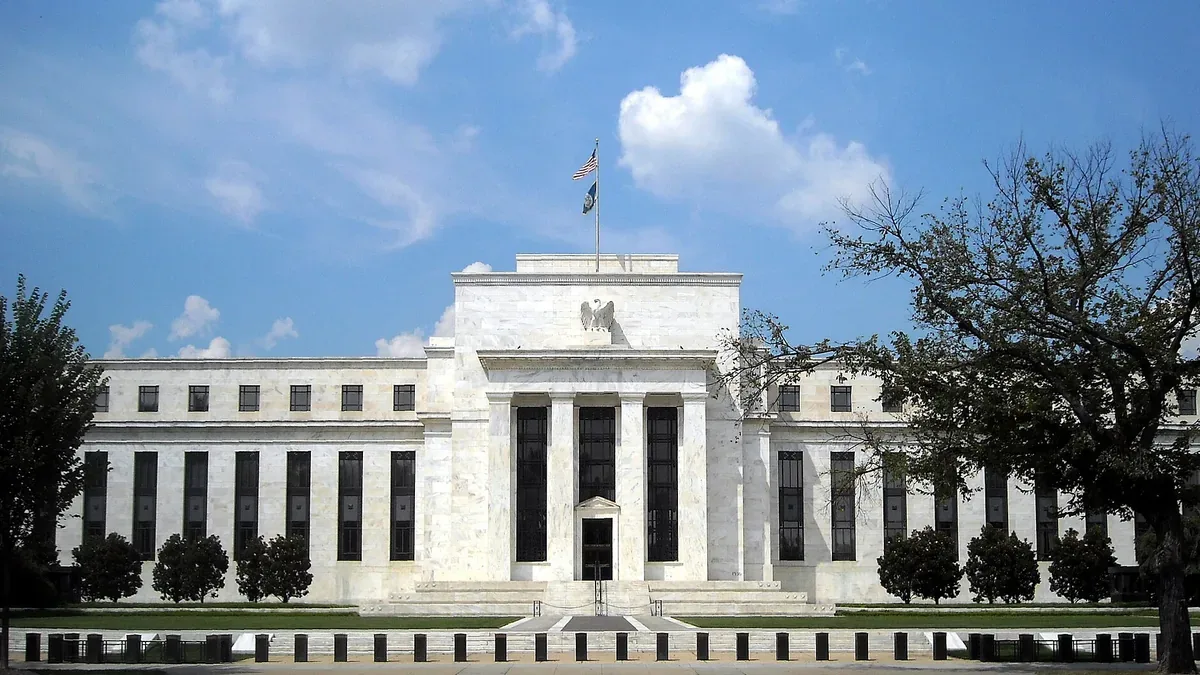
Image: Wikimedia Commons / AgnosticPreachersKid, CC BY-SA 3.0
WASHINGTON — Growth in the United States private sector cooled in November, S&P Global said on Monday, as its flash composite index fell to a four-month low of 54.6 from 55.9 in October. Services missed forecasts by a full point, while manufacturing held steady, leaving activity in expansion but losing speed.
Released at 9:45 a.m. ET, the readings came in below expectations. Services dropped to 54.7 from 56.1 in October, against a consensus forecast of 55.7. Manufacturing printed at 54.5, matching forecasts and easing from 54.9.
Key Takeaways
- The S&P Global flash composite PMI fell to 54.6 in November, down from 55.9 in October and below the 55.6 consensus.
- Services dropped to 54.7, missing the 55.7 consensus by a full point, down from 56.1 in October.
- Manufacturing held at 54.5, in line with forecasts, easing from 54.9 in October.
- All three remain above 50, signaling expansion, ahead of the Fed’s December 10 decision and Wednesday’s PCE and GDP data.
US Services PMI Falls to 54.7 in November, Missing Forecasts
The services sector delivered the biggest surprise in the November survey. At 54.7, a four-month low, services fell 1.4 points from October’s final 56.1, a full point below the 55.7 consensus. Services dominate a large part of the economy, so a miss of this size carries more weight than one in manufacturing.
October set the pattern: the final reading of 56.1 came in well below the 57.9 flash estimate, with business optimism falling sharply amid worries about affordability, rates and politics. November extends that cooling trend.
US Manufacturing PMI Holds at 54.5 as Factory Growth Steadies
Manufacturing was the steadier half. The factory index printed at 54.5, a three-month low, exactly matching consensus and easing slightly from October’s final 54.9. October’s flash estimate of 56.0 was revised down to 54.9, so November sits close to where factory activity actually settled.
| Index | November flash | October final | Consensus |
|---|---|---|---|
| Composite output | 54.6 | 55.9 | 55.6 |
| Manufacturing PMI | 54.5 | 54.9 | 54.5 |
| Services business activity | 54.7 | 56.1 | 55.7 |
The survey, conducted from November 12 to 20, covers around 1,000 companies, and the flash estimate uses about 85% of usual responses. US stock futures had risen before the release after the market’s worst week since April, and Monday’s Anthropic options debut showed how jumpy markets have become.
What the November Flash PMI Means for the December Fed Decision
The Federal Reserve held its benchmark rate at 3.75–4.00% on October 29, in a 10–2 vote, and next decides on December 10. Markets had anticipated another rise in December; cooler services growth gives the Fed less reason to tighten. How the Fed reads that balance is explained in our guide to how the Federal Reserve sets interest rates.
That tension was visible in October, when S&P Global reported selling prices rising at the fastest pace since August 2022 even as output eased, and the Institute for Supply Management’s prices index hit 75.2. Treasury Secretary Scott Bessent has warned excessive tightening could jeopardize growth. Britain’s composite also edged down, to 52.3 from 52.9, so the US remains the strongest major economy even as its growth cools.
Frequently Asked Questions
What is the US flash PMI for November 2026?
The S&P Global flash composite PMI for November 2026 is 54.6, down from 55.9 in October. Manufacturing is 54.5, and services is 54.7. The flash estimate, released on November 23, is preliminary, with final figures due in early December.
Did the US services PMI miss forecasts in November 2026?
Yes. Services printed at 54.7, a full point below the 55.7 consensus and down from 56.1 in October, the largest miss of the three readings. Manufacturing matched its 54.5 consensus exactly.
What does a PMI reading above 50 mean?
Above 50 signals expansion on the previous month; below 50 signals contraction. At 54.6, the November composite shows the US private sector still growing, but more slowly than October’s 55.9.
How does the November PMI affect the Fed’s December interest rate decision?
Cooler growth eases the case for another rise, as the Fed has less reason to tighten when activity slows. The Fed next meets on December 10, having held rates at 3.75–4.00% in October. October PCE and second-estimate GDP, due Wednesday, will matter at least as much.
The next test comes sooner: October PCE inflation and second-estimate GDP land on Wednesday at 8:30 a.m. ET. Monday’s rebound in US stock futures showed investors watching each release closely. Full data is on S&P Global’s PMI pages and the Federal Reserve’s meeting calendar.