Army Whistleblower Alleges Warnings Ignored Before Kuwait Drone Attack
Maj. Stephen Ramsbottom told Congress that warnings about thin defences at Port Shuaiba were ignored before an Iranian drone killed six US soldiers on March 1.
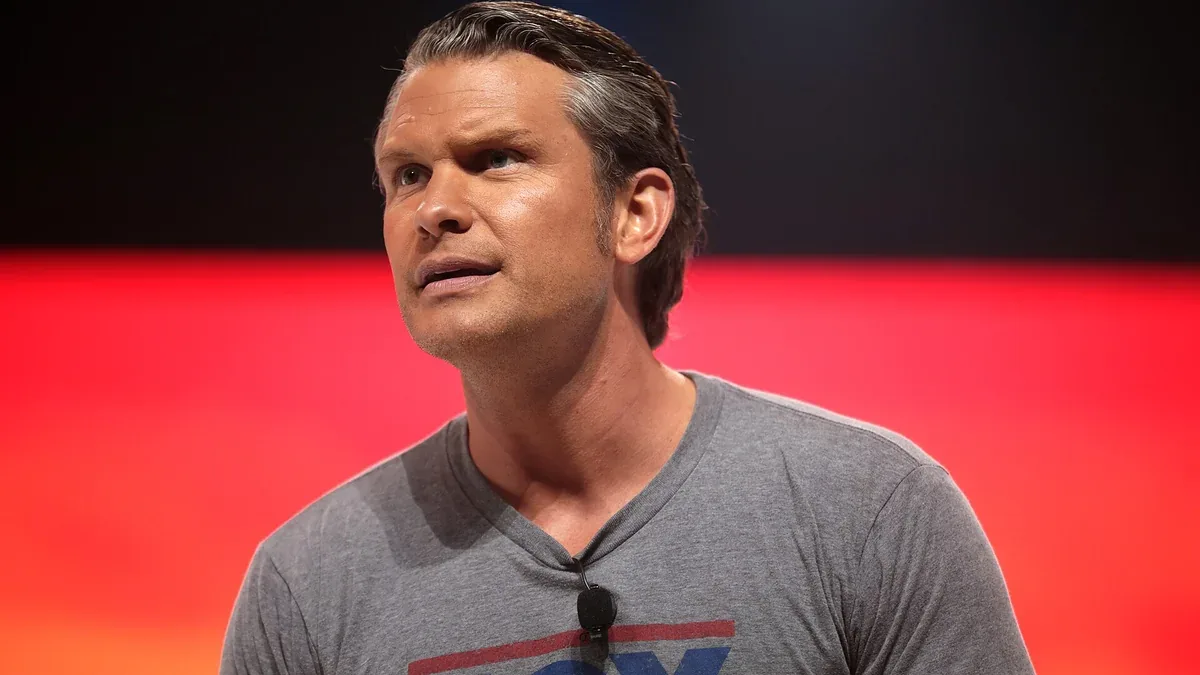
Image: Wikimedia Commons / Gage Skidmore
WASHINGTON — A wounded US Army major told Congress on Friday that senior Army leaders ignored warnings about thin defences at a Kuwait command post before an Iranian drone killed six American soldiers there on March 1.
Army Reserve Maj. Stephen Ramsbottom, who was wounded in the strike, said the post at Port Shuaiba had no physician, no fixed aid station and only one ambulance. In an interview that aired on Sunday on the CBS programme 60 Minutes, he said: "I feel this is a tactical failure by the Army, our leadership, and myself — all the way down to my level."
Key Takeaways
- Ramsbottom told Congress on Nov. 13 that Army leaders dismissed warnings about thin fortifications at Port Shuaiba.
- An Iranian drone struck the post on March 1, killing six US soldiers and wounding more than 20.
- The war has cost $47 billion, with 800+ US service members wounded and 23 killed.
- Sen. Richard Blumenthal has demanded a classified briefing from Defense Secretary Pete Hegseth.
What Happened at Port Shuaiba on March 1, 2026?
The strike came in the first 24 hours of the conflict, a day after US and Israeli strikes killed Iran's Supreme Leader Ali Khamenei on Feb. 28. The drone hit the command post at Port Shuaiba, killing six soldiers and wounding more than 20. It was the deadliest attack on US troops in the war.
| Date | Event |
|---|---|
| March 1, 2026 | Iranian drone hits Port Shuaiba; six killed |
| Nov. 13, 2026 | Ramsbottom files disclosure with Congress; complaint to Pentagon inspector general |
| Nov. 15, 2026 | 60 Minutes airs Ramsbottom interview |
What Did Army Maj. Stephen Ramsbottom Allege in His Complaint?
The complaint alleges Army leaders dismissed concerns about thin fortifications at Port Shuaiba and failed to prepare proper anti-drone defences. It asks why soldiers were moved to the port, how it was defended, and how the all-clear was handled that morning.
Ramsbottom said six soldiers had seen United States intelligence before the war listing Port Shuaiba as an Iranian target, and five Iranian quadcopter drones circled the post on the night of the strike. He said he warned Maj. Gen. John Hinson and Brig. Gen. Clint Barnes, and was told the unit did not have to worry about protection.
His counsel, Andrew P. Bakaj of Compass Rose Legal Group, said the account is difficult to square with how the Pentagon first described the attack. The claims are Ramsbottom's allegations and have not been independently verified; a Pentagon spokesperson declined to comment. The day after the attack, Hegseth insisted the troops were well protected, calling the drone a "squirter" that made its way through. He has not publicly addressed the complaint since.
What Happens Next After the Port Shuaiba Whistleblower Complaint?
Bakaj wants an independent investigation by the Pentagon inspector general, the Army's investigative record obtained, all records preserved, and Ramsbottom protected from reprisal. He said the families "deserve a full and honest accounting of why."
The Army completed its investigation in June and briefed families on its findings in the week before the broadcast. Michelle Tietjens, whose husband Master Sgt. Noah Tietjens was killed at the post, said the Army did not acknowledge any mistakes. The Pentagon declined to answer whether the 103rd had been denied adequate force protection.
Blumenthal, the top Democrat on the Senate Permanent Subcommittee on Investigations, wants Hegseth to appear in a classified briefing and hand over the force-protection assessments for Port Shuaiba. "The families of the six fallen servicemembers, the wounded survivors, and the American people deserve transparency and accountability," he said.
The Pentagon has not yet said whether Hegseth will attend the briefing or hand over the assessments, and the committees have not said when they will act on the disclosure.
Frequently Asked Questions
Who is Army Maj. Stephen Ramsbottom?
Ramsbottom is a US Army Reserve major in the 103d Expeditionary Sustainment Command at Port Shuaiba. He was wounded in the March 1 attack.
How many US soldiers were killed in the Port Shuaiba drone attack?
Six US soldiers were killed and more than 20 wounded when an Iranian drone struck Port Shuaiba on March 1, 2026.
What did Defense Secretary Pete Hegseth say after the Port Shuaiba attack?
The day after the attack, Hegseth told reporters the troops were well protected and called the drone a "squirter" that made its way through defences. He has not publicly addressed the complaint.