FCC Lets US Prisons Jam Contraband Phones: Rules, Costs & Who Is Affected
The FCC voted on November 19 to let state and local prisons jam contraband cellphones for the first time, under strict testing and containment rules.

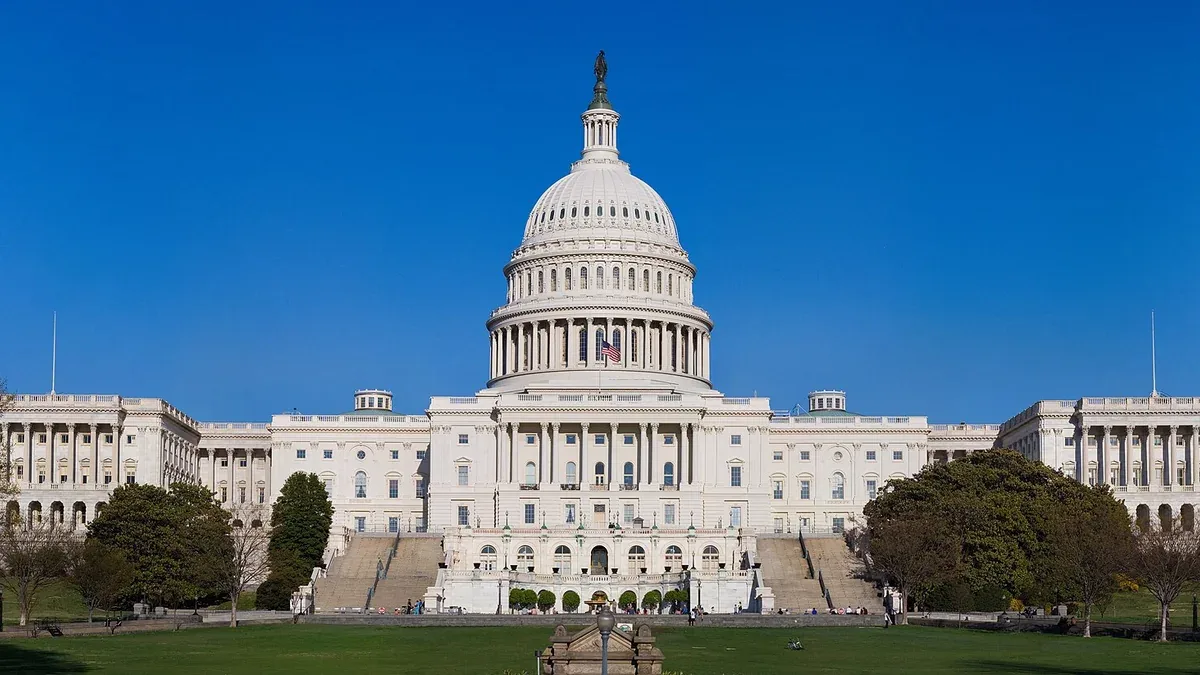
Image: Wikimedia Commons / Federal Communications Commission
WASHINGTON — The Federal Communications Commission voted on Thursday, November 19, to allow state and local prisons and jails to jam contraband cellphones, ending a decades-old ban on the technology in state lockups. The commission adopted final rules letting correctional facilities apply to block signals inside designated prison areas, to cut off phones inmates use to run criminal operations behind bars.
The rules do not require any prison to jam signals. A facility that wants the technology must apply, pass containment tests, and notify carriers and nearby residents. The commission said prison authorities recovered more than 25,000 contraband phones in a single year.
Key Takeaways
- The FCC adopted final rules on November 19, 2026, letting state and local prisons and jails apply to jam contraband cellphones.
- Jamming is optional, not required, and may only run inside an authorized containment area.
- Facilities must pass proof-of-concept and on-site testing, and notify carriers, 911 authorities and communities.
- The commission also opened a comment period on jamming unlicensed spectrum and satellite signals.
How Prison Cellphone Jamming Works Under the FCC Rules
Under the order, a prison or jail follows one of two licensing paths: a proof-of-concept test under an experimental licence to prove containment, then further testing at the prison before operations begin. Jamming may occur only inside the authorized containment area, and must not cause harmful interference outside it. The change carves a narrow exception into the Communications Act of 1934, whose Section 333 bans deliberate interference with licensed radio signals. Federal prisons already test small-scale jamming.
| Step | What the prison does | Who is notified |
|---|---|---|
| Application | Apply to the FCC with the jamming plan | Federal Communications Commission |
| Proof-of-concept test | Test under an experimental licence to prove containment | Carriers, FirstNet, 911 and public safety officials |
| On-site testing | Further testing at the facility once licensed | Nearby communities before deployment |
| Live operation | Jam only inside the authorized containment area | Ongoing oversight by the commission |
Which Prisons Can Jam Cellphones and When It Starts
South Carolina expects to be among the first to apply. Corrections Director Joel Anderson wants jamming at all 21 state prisons, and tests at Broad River showed phones losing service inside housing units and regaining it outside, without spilling beyond prison grounds. Chairman Brendan Carr announced the vote on October 28 with Senator Tom Cotton and Arkansas Attorney General Tim Griffin. "While the FCC has authorized a range of solutions in the past, it has stopped short of allowing jamming. That ends today," Carr said the day before the vote. He has pointed to a 2010 murder-for-hire plot carried out through an illegal prison phone.
Why Critics Say Prison Jamming Risks Blocking Legal Calls
Commissioner Anna Gomez had urged a pilot program and warned of unintended consequences. The wireless industry group CTIA told the commission jamming would block authorized communications as well as contraband ones. Inmate advocates say the high rates for official prison calls push inmates toward contraband phones. Congress is also weighing the issue: Senator Tom Cotton and Representative David Kustoff have introduced the Cellphone Jamming Reform Act, which would give correctional facilities permanent statutory authority, and the measure would need support in both chambers, including the House. Lawmakers have pressed officials in oversight hearings, as in the recent congressional summons of Huang and Lutnick.
Frequently Asked Questions
Can US prisons legally jam cellphone signals now?
Yes. From November 19, 2026, state and local prisons and jails may apply for permission to jam contraband cellphones. The rules allow jamming but do not require it.
Will prison cellphone jamming block calls for people living near a prison?
It should not. Jamming may only run inside the authorized containment area, and must not cause harmful interference outside it. Facilities must prove containment in testing.
Do prisons have to jam cellphones under the new FCC rules?
No. The rules give state and local correctional facilities the option to use jamming technology, and no facility is required to deploy it. Each prison system decides for itself.
When will the first prison start jamming cellphones?
There is no set date. A facility must first apply, pass a proof-of-concept test, and complete on-site testing. South Carolina says it is ready to seek approval for all 21 of its state prisons.
Comments on extending jamming to unlicensed spectrum and satellite communications are due 60 days after the order is published in the Federal Register. The commission's news release and the fact sheet on the order set out the full framework.