Hera's First Photos Show Didymos: What NASA's DART Crash Changed
ESA's Hera probe has sent back its first close-up images of Didymos and Dimorphos, showing the asteroid NASA's DART spacecraft struck in 2022.
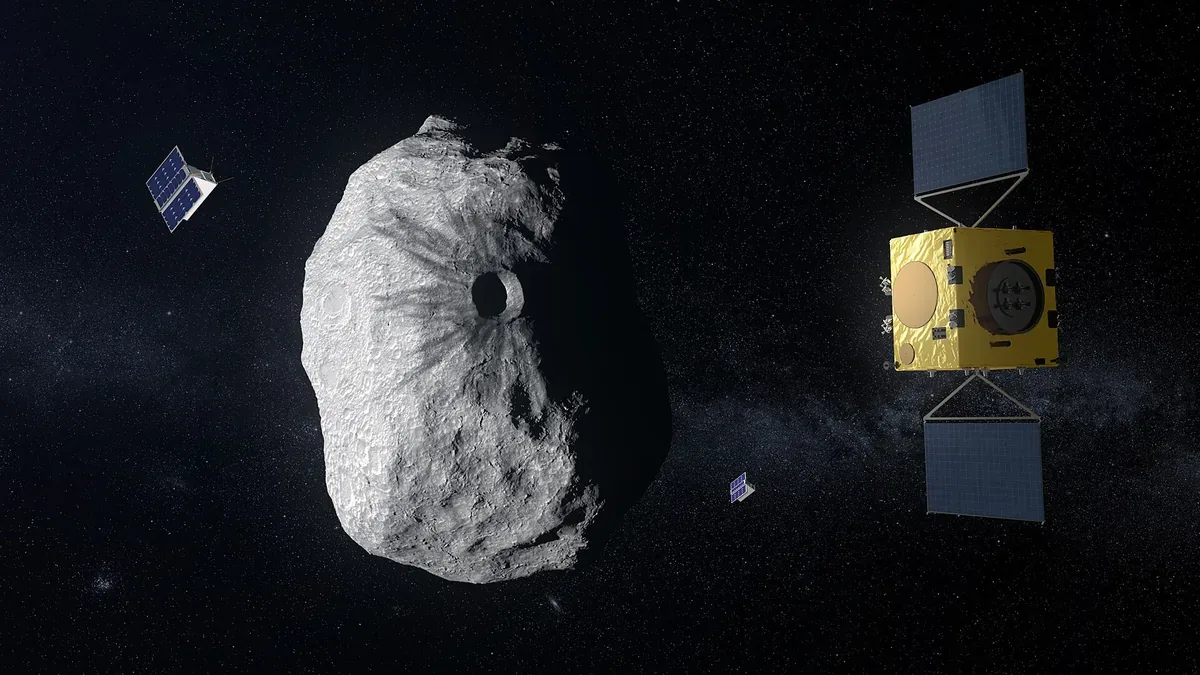
Image: Wikimedia Commons / ESA – Science Office
DARMSTADT, Germany — The European Space Agency's Hera spacecraft has sent back its first close-up images of the Didymos binary asteroid system, the world NASA's DART spacecraft struck in the first test of asteroid deflection. The agency released the first image on 5 November 2026, from about 60 kilometres away, and a second on 12 November from 56 kilometres.
Hera reached the Didymos system in early November 2026, after launching from Cape Canaveral on 7 October 2024. The car-sized spacecraft now holds station 25 to 30 kilometres from the pair, starting a close-up investigation lasting at least six months.
Key Takeaways
- Hera's first close-up images of Didymos were released on 5 and 12 November 2026.
- They show a previously unseen side of the 780-metre asteroid, with boulders, craters and a sharp equatorial ridge.
- NASA's DART spacecraft struck Dimorphos on 26 September 2022, shortening its orbit by about 33 minutes.
- Hera is now 25 to 30 kilometres from the pair; detailed images follow on 25 November.
What Hera's First Photos of Didymos and Dimorphos Show
The first image, taken by Hera's monochrome Asteroid Framing Camera, shows the face of Didymos that NASA's DART camera never saw. Boulders, craters and grooves cover the surface, and a ridge along the equator stands out.
Scientists at the German Aerospace Center say the pictures raise a question about the DART impact. Material thrown off Dimorphos may have crossed the roughly one kilometre between the two bodies to land on Didymos. Didymos also spins once about every 2.2 hours, which may explain the sharp ridge.
How NASA's DART Impact Changed Dimorphos's Orbit
On 26 September 2022, NASA's DART spacecraft struck Dimorphos at about 6.1 kilometres per second. The collision shortened the moonlet's orbital period around Didymos by about 33 minutes, the first measurable change to a celestial body's motion by a deliberate human-made impact.
Hera is the second half of that test. Over the coming months it will map both asteroids, measure the mass of Dimorphos, and examine the crater DART left, to show how much of the orbital change came from the impact and how much from ejected debris. Hera is the European part of the joint ESA-NASA Asteroid Impact and Deflection Assessment.
| Fact | Detail |
|---|---|
| First close-up image | 5 November 2026, from about 60 km |
| Didymos / Dimorphos | About 780 m / about 151 m wide |
| DART impact | 26 September 2022, about 6.1 km per second |
| Orbital change | Period shortened by about 33 minutes |
| Next milestone | Detailed images, 25 November 2026 |
When Will ESA Release Detailed Images of Didymos and Dimorphos?
The European Space Agency will release detailed, full-resolution images of both asteroids on 25 November 2026, including a close look at the DART impact site. Until then Hera is flying a slow survey pattern, holding 25 to 30 kilometres from the pair while its cameras map both bodies.
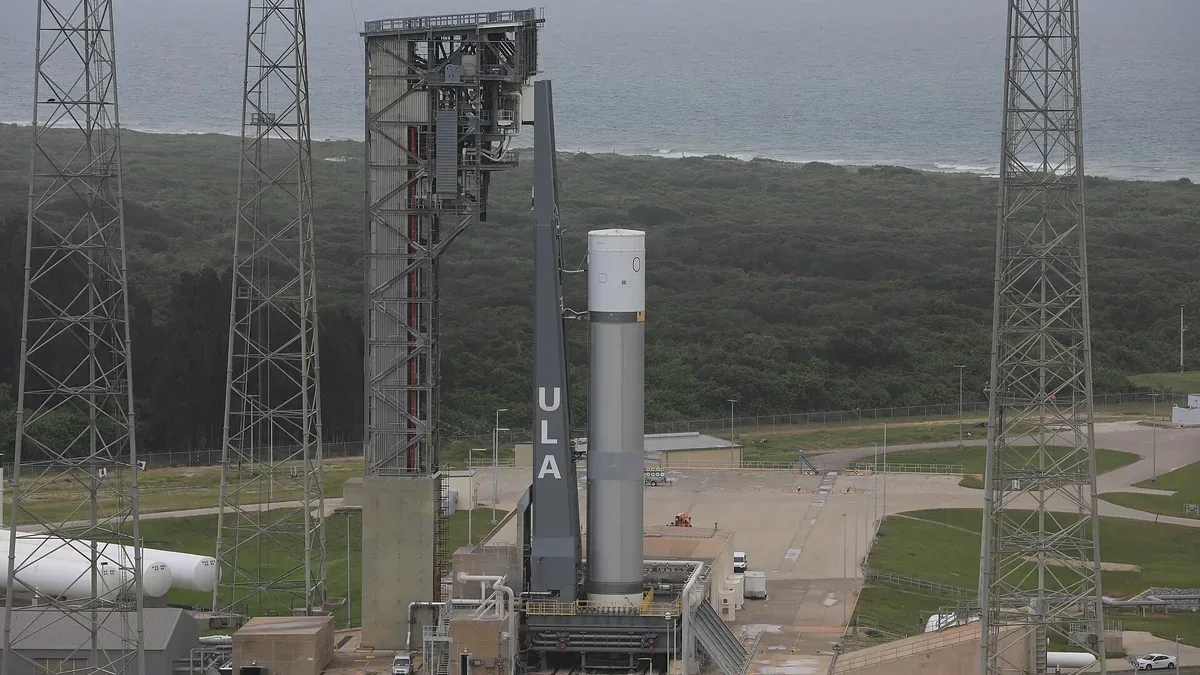
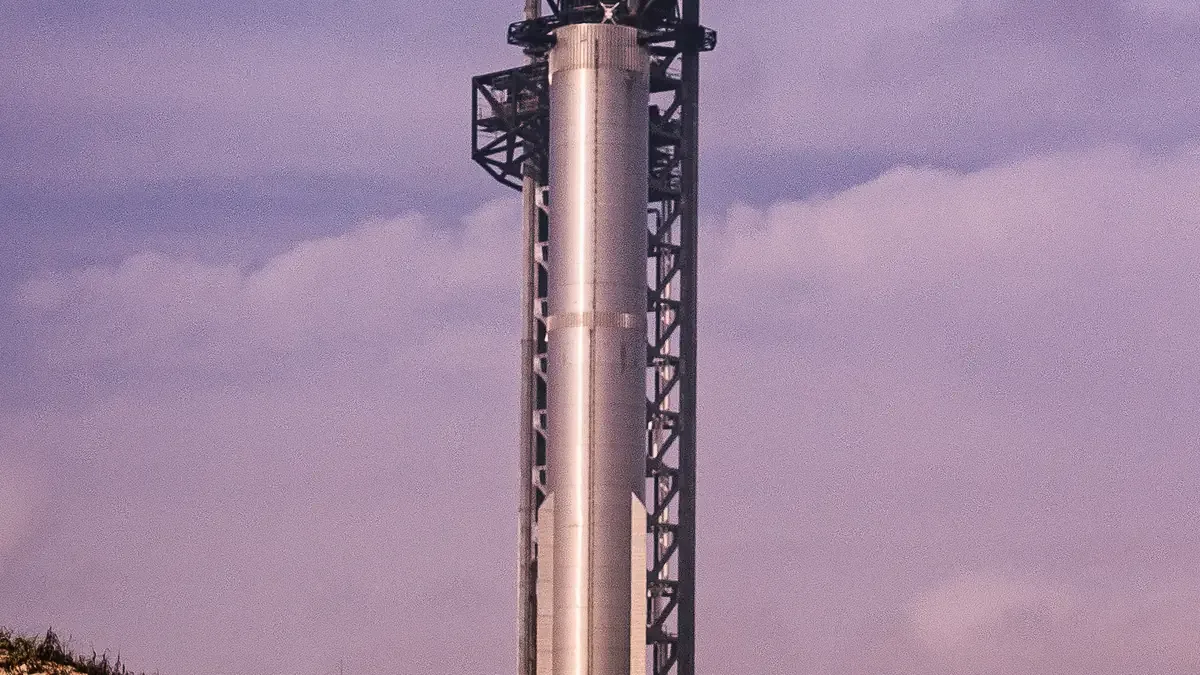
Next month Hera will move closer, to about 20 kilometres, and early next year it will deploy two shoebox-sized CubeSats, Juventas and Milani, for an even closer examination. A reliable deflection method needs testing before it is needed, and Hera's survey is the evidence a future mission would be planned on. It follows a busy month for spaceflight, with SpaceX's Starship Flight 15 and United Launch Alliance's Vulcan rocket returning to flight.
Frequently Asked Questions
What is the Hera mission studying at Didymos and Dimorphos?
Hera is studying the aftermath of NASA's DART impact on Dimorphos, the small moonlet of the asteroid Didymos. It will measure the shape, mass and internal structure of both asteroids and examine the impact crater.
How far away is the Didymos asteroid system from Earth?
The Didymos system is nearly 197 million kilometres from Earth. At that distance a radio signal takes about 11 minutes to travel one way.
Did NASA's DART spacecraft really change an asteroid's orbit?
Yes. When DART struck Dimorphos on 26 September 2022, it shortened the moonlet's orbital period around Didymos by about 33 minutes. It was the first time a celestial body's motion had been measurably altered by a deliberate human-made impact.
When will Hera send back detailed images of Dimorphos's impact crater?
The European Space Agency will release detailed, full-resolution images of both Didymos and Dimorphos on 25 November 2026. Hera will then move closer and deploy two CubeSats early next year for close-range studies.
The next milestone is the 25 November release, when the DART impact site will be shown in detail for the first time since 2022.