NASA Finds Black Hole Behind Giant Star's 27 Outbursts: What It Means
NASA's Chandra telescope traced 27 eruptions from the giant star AT 2016blu to a hidden black hole or neutron star 30 million light-years away.
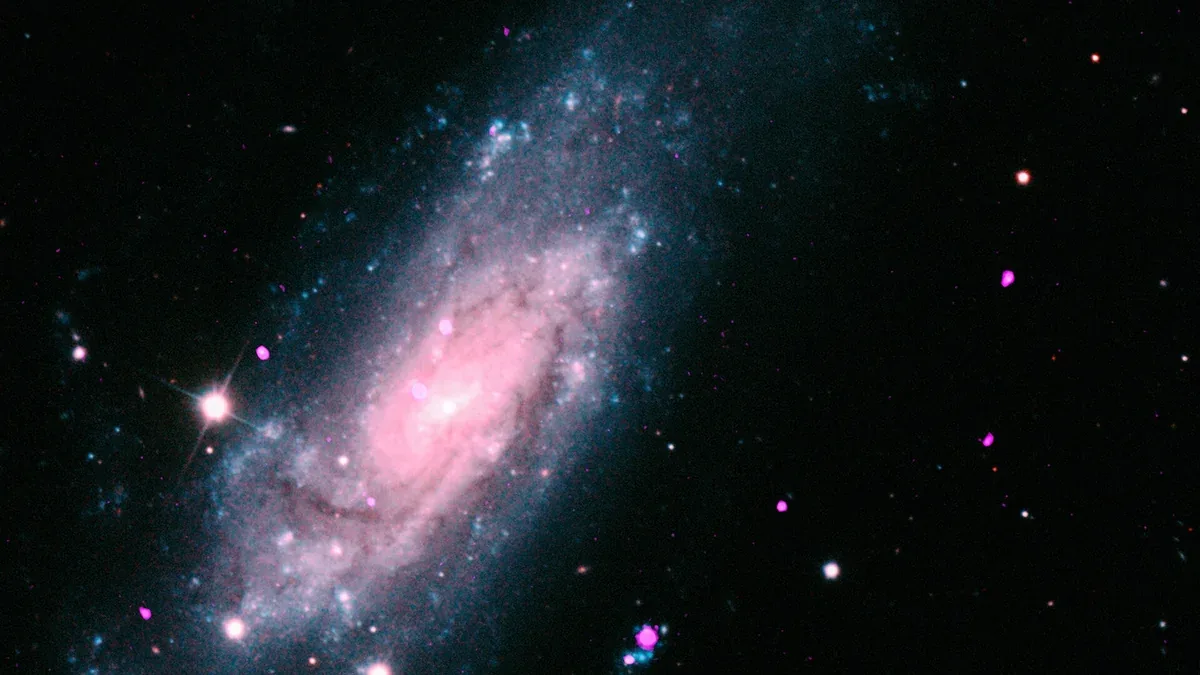
Image: X-ray: NASA/CXC/Univ. of Virginia/M. Aghakhanloo et al.; Optical: SDSS; Image Processing: NASA/CXC/SAO/P. Edmonds
Washington, November 14, 2026 — NASA's Chandra X-ray Observatory has solved a 15-year mystery around a giant star that flared like a supernova 27 times without dying. Astronomers found a hidden companion — a black hole or a neutron star — that pulls gas from the star every 113 days, according to NASA.
The star, known as AT 2016blu, sits in the spiral galaxy NGC 4559, about 30 million light-years from Earth, and weighs at least 33 times the Sun's mass. A study led by Mojgan Aghakhanloo of the University of Virginia, published November 9 in The Astrophysical Journal, reports the first X-ray detection of such a star.
Key Takeaways
- A hidden black hole or neutron star orbits the giant star AT 2016blu.
- The star has erupted at least 27 times since 2012, roughly every 113 days, and survived each one.
- In March 2026 it shone at least 100 times brighter in X-rays than before the outbursts.
- The University of Virginia-led study appeared in The Astrophysical Journal on November 9.
What Is AT 2016blu and Why Does It Keep Exploding
AT 2016blu is a luminous blue variable, a hot and massive star that changes in brightness. Its bursts look like supernova explosions, yet the star survives each one, so astronomers call such objects supernova impostors.
Between 2012 and 2026, astronomers recorded at least 27 bursts of visible light, roughly every 113 days. The regular timing pointed to an orbiting companion, but no telescope had caught the pair until the star flared again in early 2026.
How Did NASA's Chandra Telescope Find the Hidden Black Hole
Chandra is the only X-ray telescope sharp enough to separate AT 2016blu from another bright X-ray source nearby. In March 2026, it found the star at least 100 times brighter in X-rays than in 2001 and 2002. The team concluded that gas from the star falls onto the companion at their closest approach.
Racing inward near the speed of light, the gas heats up and produces bright X-rays, which make the gas around the star glow — the flash ground telescopes have recorded 27 times. The star now counts as a candidate ultra-luminous X-ray source.
Could the Companion Be a Black Hole or a Neutron Star
NASA said the companion is either a stellar-mass black hole or a neutron star, the dense core left by a massive star. The observations cannot yet tell them apart, because both would pull in gas and glow in X-rays the same way.
Aghakhanloo said astronomers had watched the star change for years but could not understand the cause without the right Chandra observations at the right moment.
| Fact | Detail |
|---|---|
| Star | AT 2016blu, a luminous blue variable |
| Galaxy | NGC 4559, 30 million light-years away |
| Mass | At least 33 times the Sun |
| Bursts | At least 27, 2012-2026 |
| Orbit | About 113 days |
| X-rays | 100 times brighter, March 2026 vs 2001-2002 |
| Companion | Black hole or neutron star |
| Study | The Astrophysical Journal, November 9, 2026 |
The result gives astronomers a new way to hunt hidden black holes, which reveal themselves only when they feed. SpaceX also tested new hardware this week on Starship Flight 15, while NASA set out its lunar plans in a $10 billion Moon base cargo framework.
Frequently Asked Questions
What caused the giant star AT 2016blu to explode 27 times?
A hidden companion — a black hole or a neutron star — pulls gas from the star at each closest approach in their 113-day orbit. The gas heats up and produces X-rays, which make the gas around the star glow. The star survives each eruption, which is why it is called a supernova impostor.
Is AT 2016blu a black hole?
No. AT 2016blu is a giant star at least 33 times the mass of the Sun. The black hole, or neutron star, is its hidden companion, and NASA said the observations cannot yet tell which it is.
How far away is AT 2016blu from Earth?
About 30 million light-years, in the spiral galaxy NGC 4559. Chandra could still detect the X-rays because the outbursts are extremely bright.
What is a supernova impostor star?
A massive star that flares like a supernova but survives the eruption. Real supernovae destroy the star. AT 2016blu has flared at least 27 times since 2012 and remains intact.
Further reading: NASA's Chandra announcement and the study in The Astrophysical Journal. The team will keep watching AT 2016blu, and the next close approach will test whether the brightening repeats.