Fed Survey: AI Is Now the Top Financial Risk, 87% of Contacts Say
The Federal Reserve's stability report finds 87% of market contacts now cite AI as the top financial risk, with $680 billion in computing debt issued in 2026.
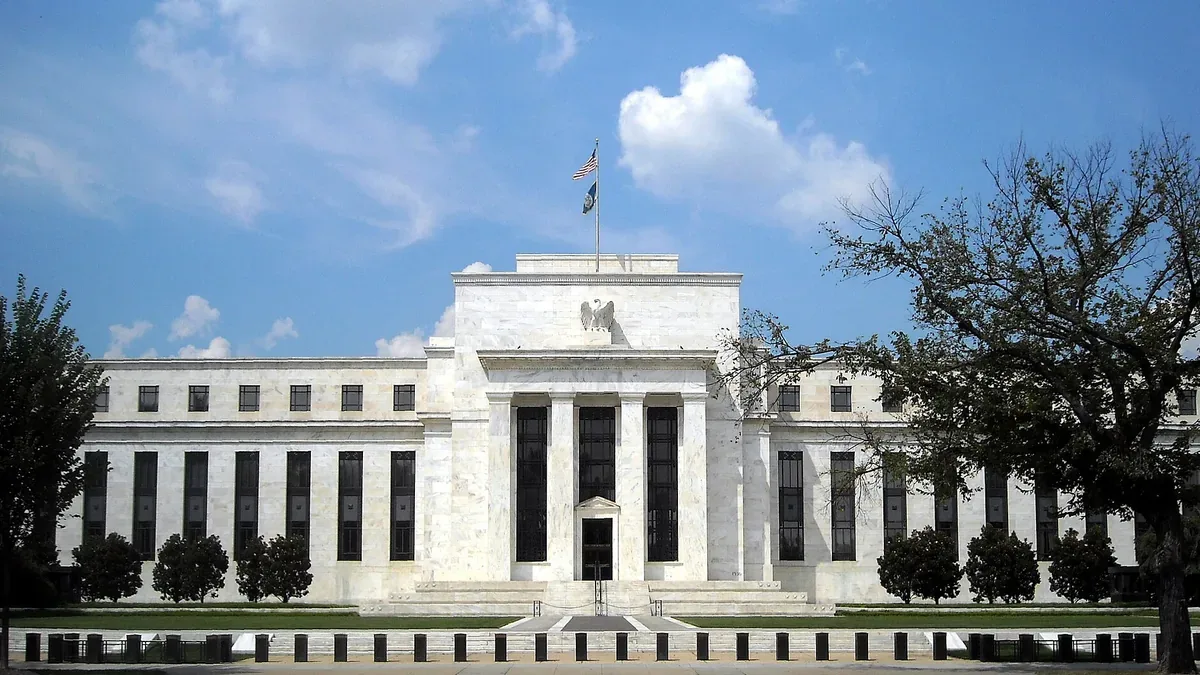
Image: Wikimedia Commons / AgnosticPreachersKid
WASHINGTON — The Federal Reserve said on Friday that artificial intelligence has become the most-cited risk to the United States financial system, with 87 percent of market contacts surveyed naming AI as a salient threat in the central bank's latest Financial Stability Report.
The twice-yearly report, released on November 13, found that AI now outranks every other concern among the 23 market contacts surveyed by staff at the Federal Reserve Bank of New York in September and October. Just 50 percent named AI as a risk in May.
Key Takeaways
- 87 percent of 23 market contacts named AI as a salient risk to the financial system, up from 50 percent in May.
- Debt issued for advanced computing infrastructure reached $680 billion in 2026 through October, five times the total issued in all of 2023.
- Debt, guarantees and leases not yet started on the data-centre buildout could exceed $3 trillion, the Federal Reserve said.
- Hedge fund leverage is at its highest since the Federal Reserve began collecting the data in 2013.
Why the Fed Says AI Is the Top Risk to the Financial System
Respondents pointed to three linked worries: cyberattacks, the complex financing behind the AI buildout, and the chance that an earnings slowdown could set off a broad market correction. The survey was taken before Jensen Huang resigned as chief executive of Nvidia on November 12.
| Risk cited | Share of contacts |
|---|---|
| Artificial intelligence | 87% |
| Broad correction in risk assets | 52% |
| Higher long-term interest rates | 48% |
| Cyberattacks | 43% |
| Fiscal debt sustainability | 43% |
How Much Debt Has Been Issued for AI Data Centres?
The report devoted a large section to the surge in borrowing tied to data centres and other advanced computing infrastructure. Debt issuance in the sector reached $680 billion by October 2026, already five times the amount issued in all of 2023, and now accounts for nearly a third of all nonfinancial investment-grade corporate debt issuance, after amounting to less than 6 percent three years ago.
The total exposure could be far larger: debt, guarantees and leases not yet started could exceed $3 trillion. The Federal Reserve compared the cycle to the broadband telecom boom of the late 1990s, and warned that links between data-centre builders, credit markets and lenders 'create vulnerabilities that necessitate close monitoring.'
What the Fed's AI Warning Means for Stocks and Investors
The warning landed in a week when markets were already retreating. On Friday, the S&P 500 fell 0.4 percent to 7,561.67 and the Nasdaq Composite dropped 0.91 percent to 25,136.27, while the Philadelphia Semiconductor Index slid 3.43 percent and the yield on the benchmark 10-year Treasury note rose to 5.152 percent. Nvidia fell for a sixth consecutive week, its longest such run since October 2012.
The Federal Reserve also found asset valuations high across a range of classes, due in part to enthusiasm about AI, and said the sector has been a significant driver of US economic growth this year. An unexpected earnings downturn could prompt a market decline, tighter credit and reduced investment, worsened by hedge fund leverage at its highest since data collection began in 2013.
Frequently Asked Questions
What did the Federal Reserve's November 2026 Financial Stability Report say about AI?
It found that 87 percent of market contacts named AI as a salient risk to the financial system, up from 50 percent in May. Respondents pointed to cyberattacks, complex AI financing and the risk of an earnings slowdown triggering a market correction.
How much debt has been issued for AI computing infrastructure?
Advanced computing-related debt issuance reached $680 billion in 2026 through October, five times the total issued in all of 2023, the Federal Reserve said. Including guarantees and leases not yet started, total exposure could exceed $3 trillion.
Why does the Federal Reserve compare AI spending to the 1990s telecom boom?
The central bank said the influx of debt and investment in AI infrastructure resembles the broadband telecom cycle of the late 1990s, and the current cycle may soon surpass it.
What happens to markets if AI earnings slow down?
The Federal Reserve said an unexpected earnings downturn could prompt a market decline, tighter credit and reduced investment. High asset valuations and record hedge fund leverage could worsen the impact.
Nvidia reports third-quarter results on November 17, with interim chief executive Colette Kress facing questions on the financing deals struck under Jensen Huang. The Federal Reserve publishes its next stability report in May 2027.