How Does the Stock Market Work? A Complete Beginner's Guide
How does the stock market work? How shares are priced, traded and settled, what exchanges and brokers do, and what every beginner should know first.
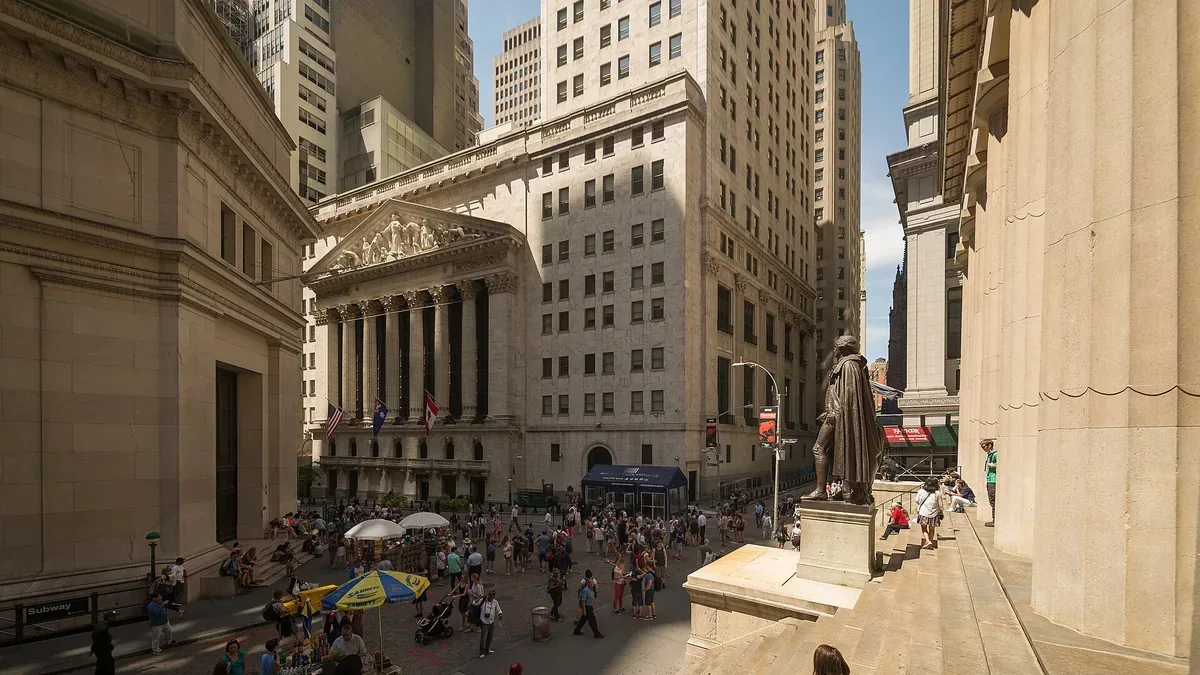
Image: Wikimedia Commons / Arild Vågen
How does the stock market work? It is the system that lets ordinary people buy small pieces of publicly traded companies — and sell them again. A share is a slice of ownership, with a claim on its profits and a vote. That matters: the market is where retirement savings grow and companies raise money to expand.
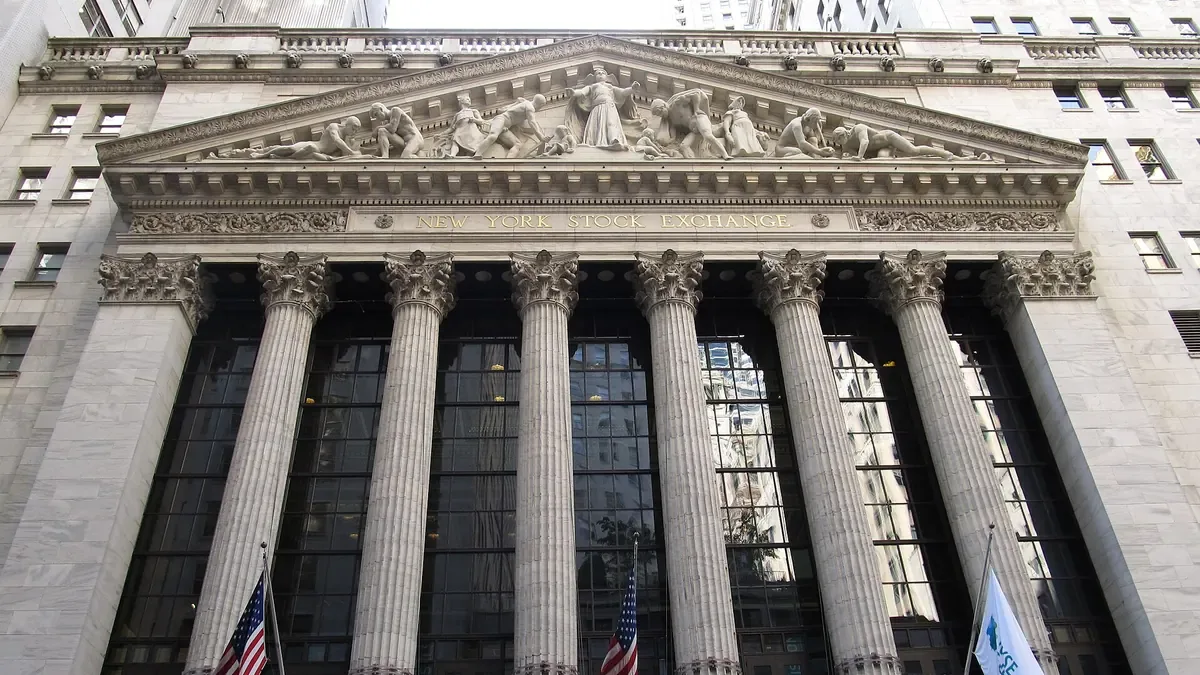
The market is not one place. It is a network of stock exchanges, brokers and trading venues, operating under rules set by the US Securities and Exchange Commission (SEC), with FINRA overseeing broker-dealers. The two largest American exchanges are the New York Stock Exchange (NYSE) and Nasdaq.
Key Takeaways
- A stock is a slice of ownership in a public company, with possible dividends and a vote.
- Companies raise money only in an IPO; later trades happen between investors.
- Prices are set by supply and demand, through bids and asks — no authority fixes them.
- Trades settle one business day later (T+1); the core US session runs 9:30 a.m. to 4 p.m. Eastern Time.
How Companies Sell Shares to the Public
A company enters the market through an initial public offering, or IPO. First it must register with the SEC and publish detailed financial disclosures. Investment banks act as underwriters: they help set the IPO price and sell the new shares, mostly to large institutions. This first sale happens in the primary market — the only time the company itself receives money from its shares. Once listed, shares trade on the secondary market, where investors buy and sell among themselves; when you buy 50 shares through a brokerage app, you are buying them from another investor who decided to sell.
How Stock Prices Are Set
Nobody sets a stock's price by decree. The price is the level of the most recent trade, and it moves whenever the balance of buyers and sellers shifts. At any moment, every listed stock has a bid — the highest price a buyer will pay — and an ask, the lowest price a seller will accept. The gap between them is the spread.
What moves that balance is information: earnings, interest-rate decisions, economic data and company news. When buyers outnumber sellers, the price rises; when sellers dominate, it falls. Indexes track the market: the Dow Jones Industrial Average follows 30 American companies, the S&P 500 about 500, and the Nasdaq Composite every stock listed on Nasdaq.
What Happens When You Place an Order
You place an order through a broker, which routes it to an exchange or a market maker — a firm that stands ready to buy and sell at its quoted prices. The two order types beginners meet most often are market orders, which execute at the best available price, and limit orders, which cap the price you will pay. A market order guarantees execution but not the price; a limit order gives price control but may never fill.
After a trade executes, a clearing house settles it: shares and cash change hands one business day later, under the T+1 rule. The core session runs from 9:30 a.m. to 4 p.m. Eastern Time, Monday to Friday, excluding market holidays. If a brokerage fails, the Securities Investor Protection Corporation (SIPC) protects customer assets — though not against a stock falling in value.
| Primary market | Secondary market | |
|---|---|---|
| What happens | New shares are issued | Existing shares change hands |
| Who gets your money | The company | The selling investor |
| Who sets the price | The company and its underwriters | Buyers and sellers |
| Example | An IPO | Buying on the NYSE |
Frequently Asked Questions
Do I own part of the company when I buy a stock?
Yes. A share is a unit of ownership: common shareholders can vote at annual meetings and may receive dividends.
Where does my money go when I buy shares?
To the investor who sold them to you — not to the company. The company receives money only when it issues new shares.
How do the Dow, S&P 500 and Nasdaq differ?
They track different baskets of stocks. The Dow follows 30 large US companies, the S&P 500 follows about 500, and the Nasdaq Composite covers all stocks listed on Nasdaq.
The practical lesson is simple: the market rewards patience more than timing. Prices move on new information every second, so predicting the next move is a losing game for most people — which is why many long-term investors hold broad index funds. Before buying a stock, read the company's SEC filings.