IBM Nighthawk r3 Targets 1,040 Qubits by 2027: Key Dates & Specs
IBM unveiled its Nighthawk r3 quantum processor with 520 programmable qubits and a plan to link two chips into a 1,040-qubit system in 2027.
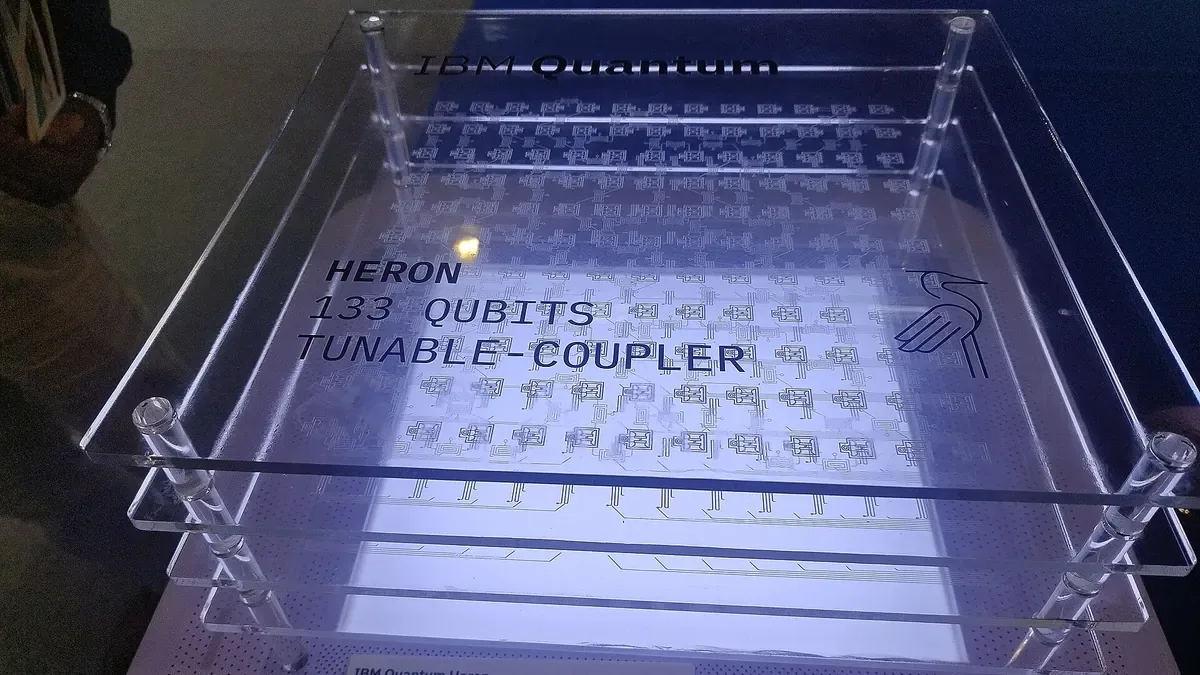
Image: Wikimedia Commons / Dev Jadiya
YORKTOWN HEIGHTS, New York, November 11, 2026 — IBM has unveiled its next-generation quantum processor, Nighthawk r3, designed to execute 10,000 quantum operations across 520 programmable qubits, and said it plans to link two of the chips into a single 1,040-qubit system in 2027. The announcement, made at IBM's annual Quantum Developer Conference in Yorktown Heights, is the largest single step yet in IBM's push toward machines that can correct their own errors.
The new processor carries 2,034 physical qubits in total, of which 520 are programmable, and keeps the square-lattice layout and fast speeds of its predecessor, Nighthawk r2. The 1,040-qubit system planned for 2027 would be IBM's first machine past the 1,000-qubit mark, a staging post on the road to fault-tolerant quantum computing.
- Nighthawk r3 is designed for 10,000 quantum operations on 520 programmable qubits, up from 7,500 on 120 qubits in Nighthawk r2.
- Two r3 processors linked by 10 chip-to-chip l-couplers are planned to form a 1,040-qubit system in 2027.
- Partners have run 34 billion circuits on Nighthawk r2, with speedups of up to 19 times.
- The r3 figures are design targets, not measured results from finished hardware.
Nighthawk r3 Specs: 520 Qubits, 10,000 Operations
Nighthawk r3 extends the high-speed architecture of Nighthawk r2, introduced in September 2026 and available to researchers and partners through IBM's cloud platform. The current chip supports more than 7,500 quantum operations on 120 qubits and delivers up to 100,000 samples per second.
| Processor | Programmable qubits | Physical qubits | Quantum operations | Status |
|---|---|---|---|---|
| Nighthawk r2 | 120 | 458 | More than 7,500 | In use |
| Nighthawk r3 | 520 | 2,034 | 10,000 (design target) | Announced Nov 11, 2026 |
| Two linked r3 chips | 1,040 | Not disclosed | Not disclosed | Planned for 2027 |
How IBM Will Build Its 1,040-Qubit System in 2027
The 2027 system depends on joining two processors together, a step IBM calls modular scaling. Each r3 chip will carry 10 l-couplers, the links that pass quantum information between chips. IBM said it has already tested the building blocks: this year it connected Nighthawk r1 processors with four l-couplers and reached 99.3 percent state transfer fidelity, against a 99.9 percent target.
IBM also connected two cryogenic cooling modules into a single system for the first time, reaching operating temperature in under five days and cooling below 15 millikelvin. The company said the demonstrations show the modular approach can scale, though the linked 1,040-qubit machine has not yet been built.
What IBM Nighthawk r3 Means for Quantum Computing and AI
IBM pointed to work already running on Nighthawk r2 as evidence the architecture delivers practical value. German energy group E.ON reported a 15-fold speedup in quantum machine learning for grid optimisation, while IBM and Oak Ridge National Laboratory recorded a 12-fold speedup simulating magnetic materials. An experiment with Algorithmiq ran eight times faster than the original, and would have needed about 240 times more memory for a classical computer to match.
Demand for advanced computing hardware is rising. Google's latest tensor processing units are challenging Nvidia's dominance in AI chips, while AI infrastructure providers have reported record order books. IBM is also folding quantum processors into a single managed environment with classical high-performance computing; Google DeepMind's AlphaGenome 2 launch this week shows rival labs racing on the same frontier.
“Useful quantum computing hinges on whether results can be delivered with accuracy and speed, both are fundamental,” said Jay Gambetta, Director of IBM Research and IBM Fellow. “Nighthawk is already showing us what that looks like today. As we scale this architecture to larger and more powerful quantum computers, the capabilities of quantum computation will reach new levels as we integrate more closely with classical resources and march ahead to fault tolerance.”
Frequently Asked Questions
When will IBM's 1,040-qubit quantum system be ready?
IBM plans to link two Nighthawk r3 processors into a single 1,040-qubit system in 2027, but has not given a more precise date.
How many qubits does IBM Nighthawk r3 have?
Nighthawk r3 has 520 programmable qubits out of 2,034 physical qubits. The 1,040-qubit figure refers to two linked r3 processors, not one chip.
Is IBM Nighthawk r3 a working quantum computer yet?
No. The announced figures are design targets for a processor still being built. The chip in use today is Nighthawk r2, with 120 programmable qubits.
IBM has not yet said when Nighthawk r3 will reach customers or what access will cost. The next test comes in 2027, when it plans to link two r3 chips; beyond that, IBM targets its fault-tolerant Starling system for 2029.