Lutnick Stalled Trump's Nvidia Chip Crackdown: Key Dates & Impact
US Commerce Secretary Howard Lutnick stalled President Trump's crackdown on Nvidia chip diversions to China three times, senior officials say.
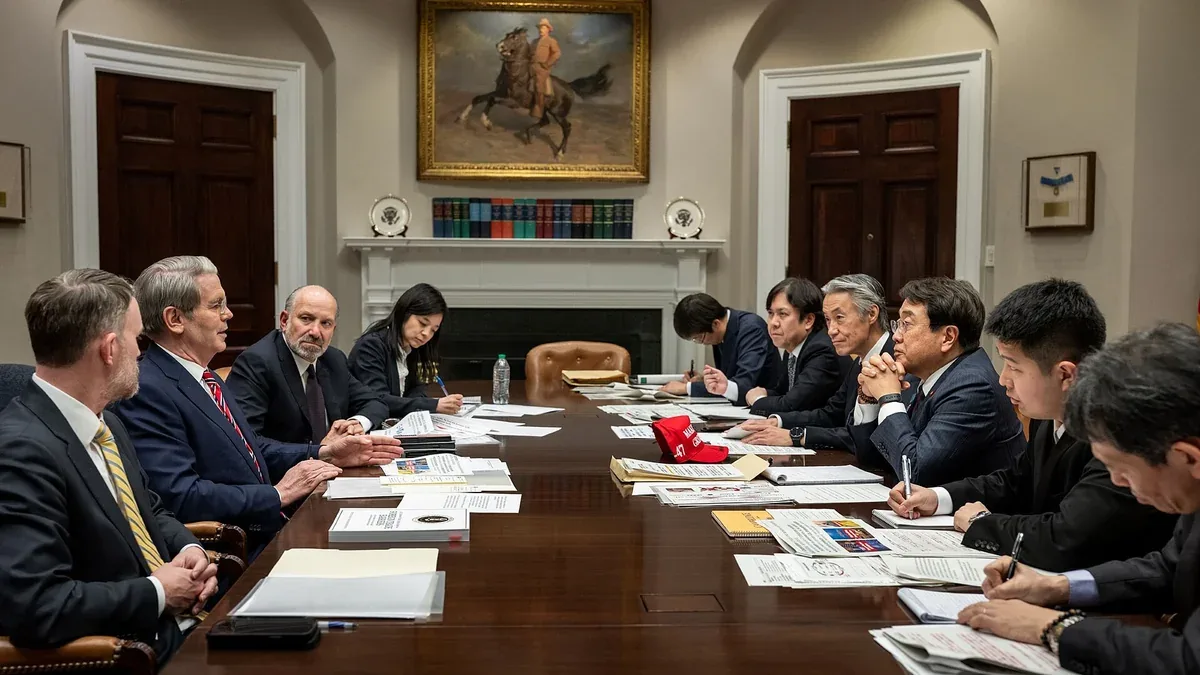
Image: Wikimedia Commons / Cabinet Office of Japan, CC BY 4.0
WASHINGTON — U.S. Commerce Secretary Howard Lutnick has repeatedly stalled President Donald Trump's order to crack down on companies suspected of diverting Nvidia's most advanced artificial intelligence chips to China, according to six senior administration officials briefed on the discussions. Trump has authorised the action three times this year, most recently on November 5; the Commerce Department has yet to carry it out.
The dispute broke into the open last Thursday, when Lutnick met Treasury Secretary Scott Bessent, Defense Secretary Pete Hegseth, Trade Representative Jamieson Greer and Secretary of State Marco Rubio in the Situation Room. Bessent confronted Lutnick over his department's resistance, and the rest of the group backed Bessent. Lutnick appeared to agree, then said he needed to check with the president.
- Trump has authorised a crackdown on suspected Nvidia chip diversions to China three times in 2026 — in May, August and November 5 — and the Commerce Department has not imposed it.
- Bessent confronted Lutnick in a Situation Room meeting last Thursday, with Hegseth, Greer and Rubio backing Bessent.
- Trump settled the dispute in the Oval Office after consulting Elon Musk: "Let's get it done." Lutnick then offered to draft options and return.
Why Lutnick Is Stalling Trump's Nvidia Chip Crackdown on China
Lutnick warned in the Oval Office that the controls would start a trade war with China. The others answered that China is already doing to the United States what Lutnick feared, and Musk sided with Rubio, Bessent, Greer and Hegseth. Trump settled the matter. One official said Lutnick "is stalling it out," and had met Trump privately to try to change his mind.
The pattern stretches back to May, when Trump first approved action after a classified memo warned about Jensen Huang's relationship with Alice Huang, a Megaspeed employee suspected of working for Beijing. At a later meeting, Bessent, Director of National Intelligence Jay Clayton, Hegseth and White House officials urged Lutnick and Kessler to act. "And they were refusing," one official said. A Commerce spokesperson denied that Bessent confronted Lutnick, but did not address the other claims.
Which Companies Are Suspected of Diverting Nvidia Chips to China?
At the centre of the dispute is Megaspeed, whose employee Alice Huang is suspected of passing information to Beijing. Bessent pressed Lutnick on why his department had held back on controls, especially for Megaspeed, and has separately pressed him to place the company on the entity list.
The wider concern is intermediaries moving restricted chips through third countries. The United States bars exports of its most advanced Blackwell-class chips to China, and the Commerce Department's Bureau of Industry and Security polices diversion.
| Date | Development |
|---|---|
| May 2026 | Trump first approves action; Lutnick and Kessler resist |
| August 2026 | Trump approves action a second time; controls still not imposed |
| November 5, 2026 | Trump approves a third time after consulting Musk |
| November 11, 2026 | Stall becomes public; Commerce denies confrontation |
What Happens Next for Nvidia Chip Exports to China?
The controls remain unissued, and it is unclear when — or whether — Lutnick will act. The standoff comes as Nvidia's board investigates the reports about Huang, and as the company's shares have swung sharply.
Trump's wider approach has been more permissive than the crackdown suggests. The administration has eased controls on Nvidia's H200 chips, older but still powerful processors, in return for a 25 percent tariff, and cleared about 10 Chinese companies to buy them. Huang has argued that selling less powerful chips keeps Beijing dependent on American technology.
Nvidia reports third-quarter results on Tuesday, November 17, when investors will hear from Huang on China demand and export rules. Until the Commerce Department acts, the crackdown Trump has ordered three times remains a decision on paper, not a policy in force.
Frequently Asked Questions
Did Trump order a crackdown on Nvidia chips going to China?
Yes, three times in 2026 — in May, August and November 5. Each time, the Commerce Department has not imposed the controls.
Who is Alice Huang and what is Megaspeed?
Alice Huang is a former Megaspeed executive whom American intelligence officials suspect of passing information to Beijing. Megaspeed is at the centre of the Nvidia spy scandal, and Bessent has pressed Lutnick to place it on the entity list.
Can Nvidia still sell chips to China?
Yes, within limits. The administration eased controls on Nvidia's H200 chips in return for a 25 percent tariff, and about 10 Chinese companies were cleared to buy them. The most advanced Blackwell-class chips remain barred.