Senate Passes BAAJA Permitting Bill 62-33: What Changes for Energy Projects
The Senate voted 62-33 to pass the BAAJA permitting overhaul, the biggest rewrite of federal environmental review in years. The bill now heads to the House.
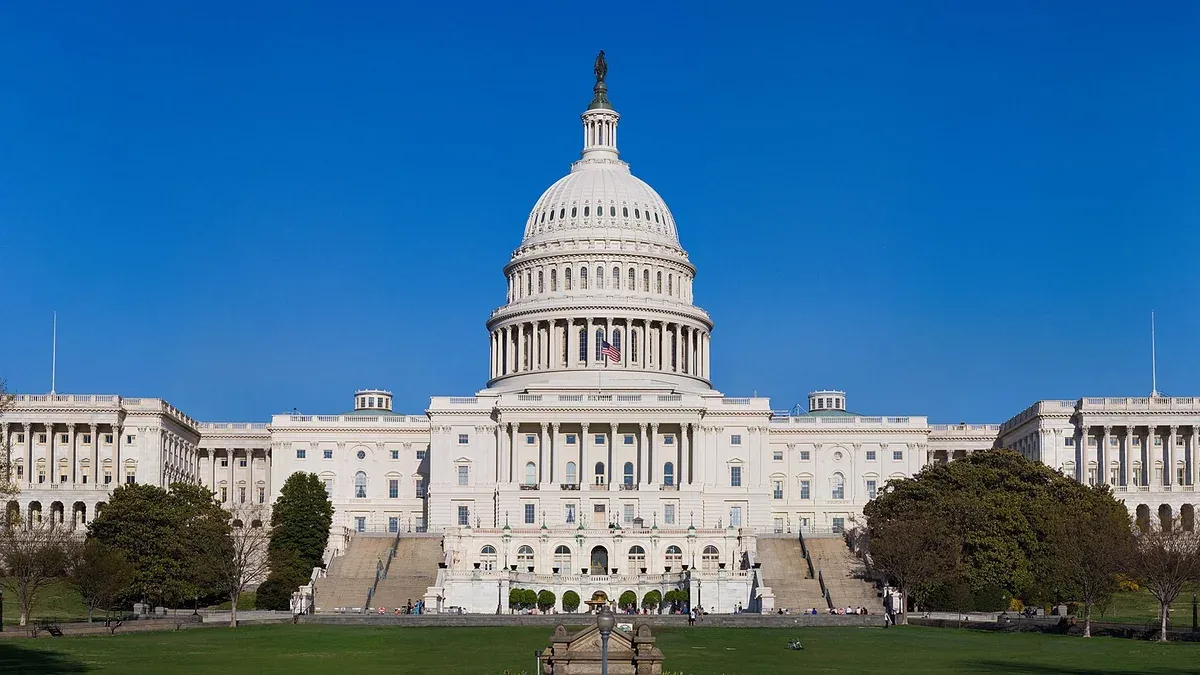
Image: Wikimedia Commons / Noclip
WASHINGTON — The United States Senate voted 62-33 on Thursday night, just after 10 p.m. ET, to pass the Bipartisan American Affordability and Jobs Act, a bipartisan bill to speed federal approval of power plants, transmission lines, mines and data centres, the most significant permitting rewrite in years. The Rhodium Group estimates the bill could save the average American household $50 to $78 a year by 2040.
The bill, known as BAAJA, now heads to the Republican-controlled House. President Donald Trump has said he will sign it if it reaches his desk, and the White House says it strongly supports passage. Fourteen Democrats and one independent joined most Senate Republicans to pass it; Josh Hawley of Missouri and Mike Rounds of South Dakota were the only Republicans to vote no.
Key Takeaways
- The Senate passed BAAJA 62-33 on Thursday, November 19, after months of bipartisan talks.
- The bill sets a two-year limit for full environmental impact statements and one year for smaller assessments.
- Court challenges must be filed within 150 days and go to a federal appeals court, which can no longer halt a project.
- The House must still pass it.
What BAAJA Changes in Federal Permitting Reviews
BAAJA is a 400-plus-page package unveiled on September 30 by Senators Shelley Moore Capito, Mike Lee, Sheldon Whitehouse and Martin Heinrich. It rewrites parts of the National Environmental Policy Act, the Clean Water Act and the Endangered Species Act.
Under the bill, a full environmental impact statement must be finished within two years, and a smaller assessment within one year. The lead agency must then issue its final decision within 45 days of publishing the final environmental document. The bill also narrows the definition of a major federal action and expands exclusions that skip full review.
How the 150-Day Court Challenge Limit Works
The sharpest change sits in the bill's judicial review section. Today, a person challenging a federal permit usually sues in a district court and has six years to file. Under BAAJA, any challenge must be filed within 150 days of the agency's decision being made public, and the case goes directly to the federal appeals court covering the project.
A court that finds a violation of the environmental review law can only send the decision back to the agency, and the agency then has up to 180 days to fix the problem. The Natural Resources Defense Council estimates the changes could cut the time needed to build a new transmission line nearly in half, from 10 years or more to around five or six years.
What Happens Next in the House and Who Opposes the Bill
The bill's future in the House remains uncertain, and House leaders have not said when they will take it up. Representative Scott Peters of California called BAAJA the largest permitting reform package in history and urged House leaders to bring it to the floor as soon as possible so it can reach the President's desk before this Congress ends.
Senators also rejected a war-powers resolution on the Iran war. The House is also weighing the farm bill President Trump has urged Congress to pass before January.
Environmental groups moved fast to condemn the vote. The Sierra Club said the Senate passed the bill following little debate and urged the House to reject it, while the Western Environmental Law Center called it the most damaging environmental rollback in American history.
| Date | Vote | Result |
|---|---|---|
| Nov 9 | Cloture, motion to proceed | 73-25 |
| Nov 10 | Motion to proceed | 62-21 |
| Nov 16 | Cloture, substitute amendment | 70-27 |
| Nov 18 | Cloture to end debate | 65-31 |
| Nov 19 | Final passage | 62-33 |
Frequently Asked Questions
What is BAAJA and what does it do?
BAAJA is the Bipartisan American Affordability and Jobs Act of 2026, a comprehensive permitting reform bill. It speeds federal approval of energy, infrastructure, transmission, mining and manufacturing projects.
How does BAAJA change NEPA environmental reviews?
It sets a two-year limit for full environmental impact statements and one year for assessments under the National Environmental Policy Act. It treats the law as procedural and expands exclusions that skip full review.
When will BAAJA become law?
BAAJA becomes law only if the House passes it and President Donald Trump signs it. The House has not scheduled a vote, and no date has been set.
Why do environmental groups oppose BAAJA?
Groups including the Sierra Club say the bill was rushed through without a committee hearing and weakens federal protections. They say the 150-day court deadline leaves communities with little legal recourse.