Carney Meets Trump in Shenzhen: No Trade Deal Yet, Tariffs Stay
Mark Carney held a surprise 20-minute meeting with Donald Trump in Shenzhen, but no US-Canada trade deal emerged — and American tariffs stay in place.
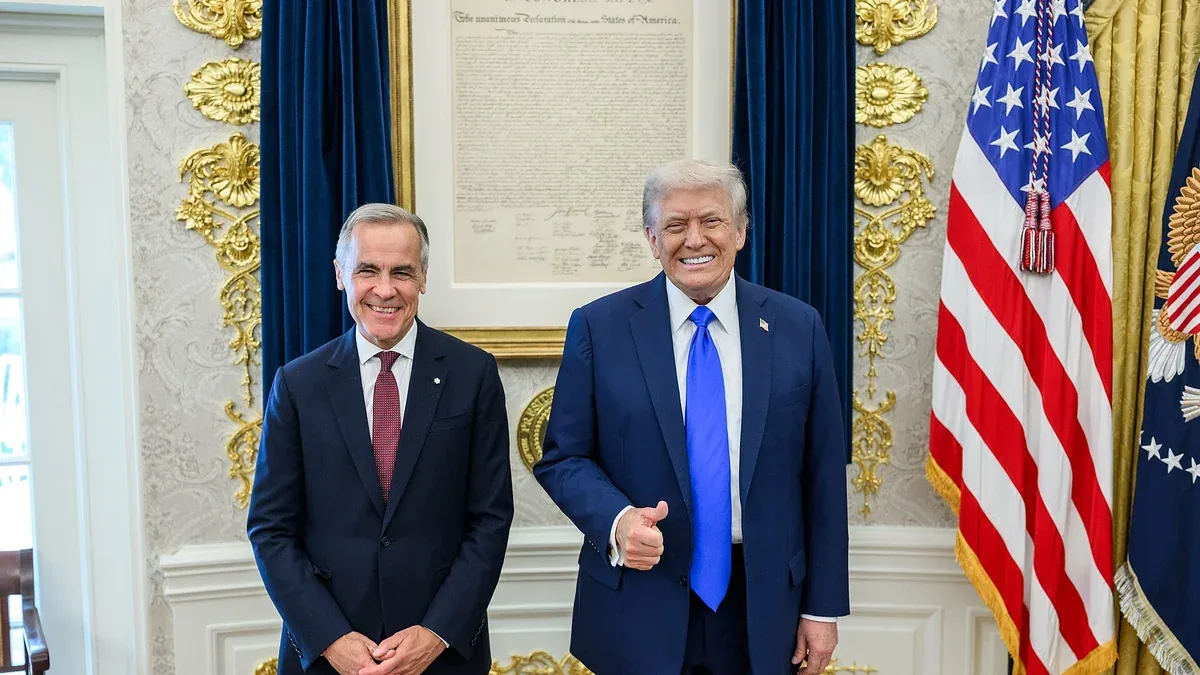
Image: Wikimedia Commons / White House
SHENZHEN, China — Canadian Prime Minister Mark Carney met United States President Donald Trump for just under 20 minutes on Wednesday, November 18, on the sidelines of the Asia-Pacific Economic Cooperation summit, but the surprise meeting produced no trade deal and no date for one, according to a readout from the Prime Minister's Office.
The talks were not on Carney's public itinerary and took place around dinnertime in Shenzhen. It was the first face-to-face meeting between the two leaders since July.
Key Takeaways
- Carney and Trump met for just under 20 minutes in Shenzhen on November 18, their first in-person meeting since July; no deal or timeline was announced.
- United States tariffs of 50 per cent on a range of Canadian goods remain in place; a 50 per cent vehicle tariff is threatened from January 1, 2027.
- Carney said a "very good trade arrangement" is possible but "not yet there".
- A day earlier, Carney and Xi agreed tariff cuts covering about $400 million of Canadian pork and seafood.
Why Is There Still No US-Canada Trade Deal?
Speaking shortly after the meeting at the New York Times DealBook Summit, Carney said a deal is possible but far from finished. "Look, it should have been done six months ago, but we're not going to sign something that doesn't make sense for Canada," he said.
Carney said the talks with the United States are "much more complex" than Canada's discussions with China. The dispute covers automobiles, steel and aluminium, dairy and digital services. Talks collapsed in August, when Carney's government walked away; Washington then imposed tariffs, and Ottawa answered in kind.
The meeting took place a day before the first trilateral meeting of Trump, Xi and Putin in Shenzhen. Foreign Affairs Minister Anita Anand, who joined the meeting, said the relationship between the two leaders has been "continually present".
What Tariffs Does the US Have on Canadian Goods?
Until a deal is signed, the tariffs Washington imposed in August stay in force. The 50 per cent duties cover a range of Canadian goods, and Trump has threatened 50 per cent tariffs on Canadian vehicles from January 1, 2027. The duties add costs for Canadian households, where inflation held at 3.1 per cent in October.
| Partner | Status | Key detail |
|---|---|---|
| United States | No deal; talks continue | 50 per cent tariffs since August; vehicle tariff threatened from January 1, 2027 |
| China | Tariff cuts agreed November 17 | Extra 25 per cent tariffs dropped on about $400 million of pork and seafood |
| ASEAN and Philippines | Deals signed in the last two days | ASEAN is a market of 700 million people |
Anand called the United States a "lame-duck Congress" after the midterm elections, and said Canada is pursuing its own strategy. "Canada is pursuing our own strategy," she said. "That is to ensure we have multiple trading options."
How Is Canada Diversifying Trade Away From the US?
Carney used the DealBook appearance to argue that Canada will not wait on Washington. "We would like to do the deal. But if the U.S. doesn't want to do the deal, we're busy," he said, pointing to deals signed in the last two days with the Association of Southeast Asian Nations, a market of 700 million people, and the Philippines.
On Tuesday, Carney and Xi agreed to drop tariffs on about $400 million of Canadian pork and seafood. "I can report that the trade negotiations are going exceptionally well," Carney said. He called diversification "insurance": "Deeper integration with one partner is a huge risk."
Frequently Asked Questions
Did Carney and Trump reach a trade deal in Shenzhen?
No. The two leaders met for just under 20 minutes on November 18 and agreed only to continue the work and stay in close contact, according to the Prime Minister's Office.
What US tariffs are on Canadian goods right now?
The United States has 50 per cent tariffs on a range of Canadian goods, imposed in August after formal trade talks collapsed. Ottawa answered with retaliatory tariffs, and the duties remain in force.
When do the 50 per cent tariffs on Canadian vehicles start?
Trump has threatened to raise tariffs on Canadian vehicles to 50 per cent from January 1, 2027. No final decision has been announced, and the date now acts as a deadline for the talks.
No date has been set for the next meeting. The next fixed point is January 1, 2027, when the threatened 50 per cent tariff on Canadian vehicles is due to take effect.