Nvidia, Rebellions and SK Telecom Join Forces on Korea's Sovereign AI Push
Nvidia, Rebellions and SK Telecom signed a deal to link Korean-designed R200 AI processors to Nvidia's platform for deployment in SK Telecom data centres.
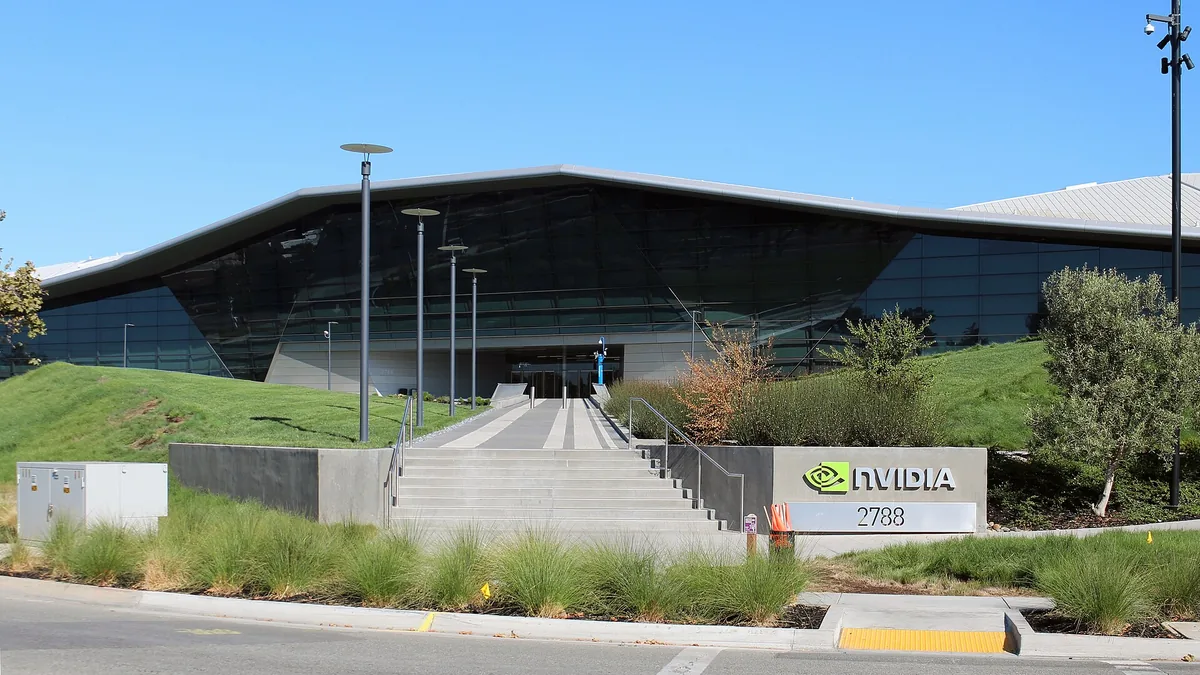
Image: Wikimedia Commons / Coolcaesar
SEOUL — Nvidia, Korean AI chip startup Rebellions and SK Telecom signed an agreement in Seoul on Monday to build sovereign AI infrastructure for South Korea, connecting Korean-designed processors to Nvidia’s platform for the first time. Under the memorandum of understanding, announced at Nvidia’s AI Day Seoul event on 9 November, Rebellions’ R200 neural processing units will plug into Nvidia’s NVLink Fusion interconnect and MGX rack architecture, for deployment by SK Telecom in its AI data centres. Yonhap News Agency reported the full terms as set out in the companies’ announcement.
It is the first time a Korean chipmaker’s processors will run inside Nvidia’s rack-scale platform. South Korea gets a domestic hardware path for its sovereign AI ambitions, rather than depending entirely on imported chips, and the first R200 systems are due in 2028.
- Nvidia, Rebellions and SK Telecom signed a memorandum of understanding in Seoul on 9 November to build sovereign AI infrastructure, linking Rebellions’ R200 processors to Nvidia’s platform.
- SK Telecom will deploy the combined GPU and NPU systems in its AI data centres, with the first R200 systems due in 2028.
- The deal puts Korean-designed silicon inside Nvidia’s rack-scale ecosystem and gives Seoul a domestic route to AI infrastructure.
NVLink Fusion is the programme Nvidia uses to let outside chip designers connect their own processors directly to its rack-scale infrastructure. Rebellions will use it to link its R200 units to Nvidia’s platform, while Nvidia’s MGX rack design provides the shared rack design, power and cooling. The companies plan a split approach, disaggregated inference: Nvidia’s GPUs handle the first stage of generating a response (prefill), while Rebellions’ NPUs handle the second stage (decode), to improve throughput and power efficiency.
South Korea’s Ministry of Science and ICT backs the collaboration, and expects the partnership to widen the market for domestic advanced semiconductors and open doors for local companies abroad. Bae Kyung-hoon, Korea’s deputy prime minister and science minister, said the deal lets Korean-developed processors enter the computing infrastructure market alongside Nvidia. Nvidia also announced investments in four Korean AI startups at the event: Point2 Technology, Motif Technologies, RLWRLD and Upstage.
| Item | Detail |
|---|---|
| Parties | Nvidia, Rebellions, SK Telecom |
| Announced | 9 November, at Nvidia AI Day Seoul |
| Agreement | Memorandum of understanding, not a binding contract |
| Korean hardware | Rebellions R200 neural processing units |
| Connection | NVLink Fusion interconnect and MGX rack architecture |
| Deployment | SK Telecom data centres; first R200 systems due in 2028 |
| Financial terms | None disclosed |
“Korea has the talent, technology and industrial ambition to become a world leader in AI,” said Jensen Huang, Nvidia’s founder and chief executive. “Sovereign AI gives nations the power to turn their language, culture and expertise into intelligence.” Sunghyun Park, cofounder and chief executive of Rebellions, said the deal “marks a turning point, opening a new chapter for sovereign AI.”
The deal comes as Nvidia faces scrutiny at home, with its board probing chief executive Jensen Huang and House chairmen seeking a briefing on 18 November, as previously reported.
For investors, the deal is a signal rather than a revenue event: no financial terms were disclosed, it is a memorandum of understanding rather than a binding contract, and no performance, power or price figures were published. What matters is the direction: Nvidia is opening its platform to third-party silicon as governments race to build AI infrastructure they control, and Rebellions — backed by Samsung, SK Hynix, Aramco and Arm — now has a route into that market.
The deal lands in the middle of an AI infrastructure boom: Anthropic recently took on billions of dollars of gas-powered generation for its data centres, as reported here, and Google has committed $15 billion to data centres in Malaysia, as reported here. The next test is whether the hardware works as promised: R200 systems are due in 2028, and the ministry says the Rebellions deal is only the start.
Frequently Asked Questions
What is NVLink Fusion?
Nvidia’s programme that lets outside chip designers connect their own processors to its rack-scale AI infrastructure.
When will the R200 systems be ready?
The first R200 systems are expected to be ready for deployment in 2028, in SK Telecom’s AI data centres.
What does SK Telecom plan to do with the systems?
SK Telecom plans to deploy the combined systems in its AI data centres and tie them to its own foundation models, including A.X K2, and public services under the government’s AI for All project.