Trump Open to AI Guardrails, But Not at Cost of US Lead Over China
President Donald Trump told CBS's 60 Minutes he "doesn't mind guardrails" on AI — but warned regulation must not leave the United States behind China.
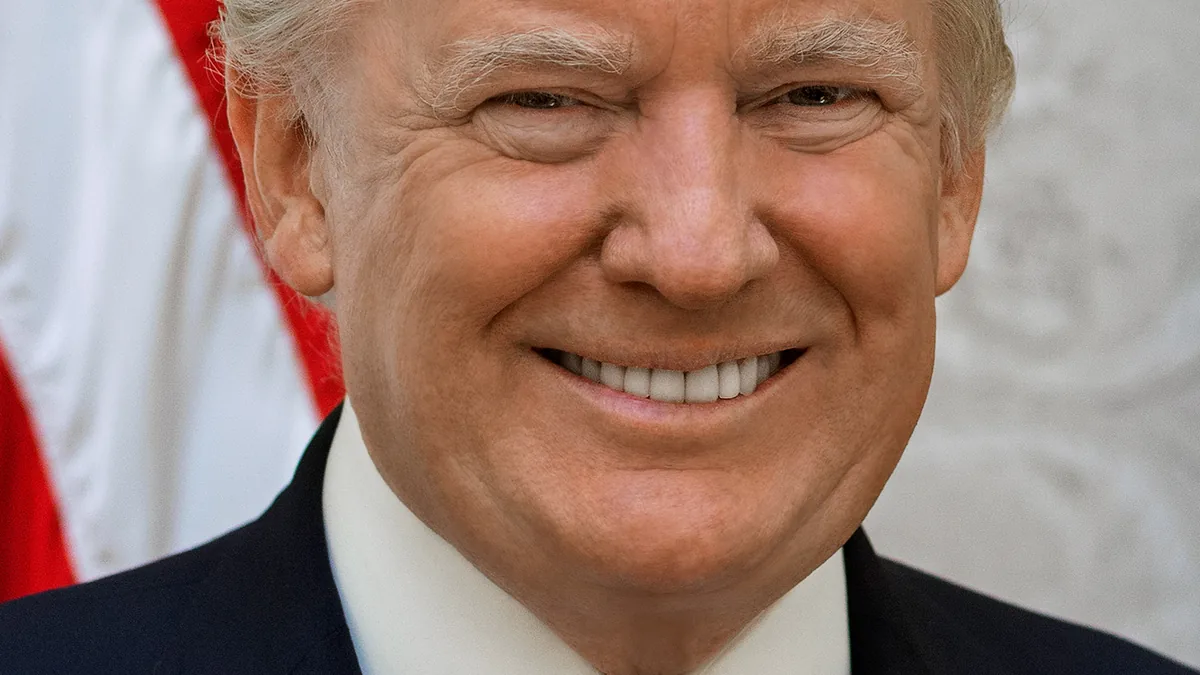
Image: Wikimedia Commons / Shealeah Craighead
WASHINGTON, Nov. 9 — President Donald Trump said the risks of artificial intelligence can be managed and that he is open to safeguards, telling CBS’s 60 Minutes in an interview aired on Sunday, November 8, that he “doesn’t mind guardrails” — as long as they do not cost the United States its lead over China, according to reporting of the interview. Trump, interviewed by correspondent Ross Douthat at the White House, said he would work with Democrats on AI safety after their midterm wins, while insisting that America must stay “number one” in the race to build advanced systems.
Trump said AI risks “can be managed” but warned that regulation must not leave the United States in “a deep second position” behind China. He told Douthat that “if we don’t have it, China’s going to have it,” and claimed China had no guardrails — a characterisation he made during the interview, not an independently established fact.
- President Donald Trump told CBS’s 60 Minutes on November 8 that he “doesn’t mind guardrails” on artificial intelligence and would work with Democrats on safeguards.
- Trump said AI risks “can be managed” but warned that regulation must not leave the United States in “a deep second position” behind China.
- No bill, executive order, or enforcement plan came with the remarks; Democrats are preparing hearings and two AI bills.
A shift in tone, not a change in policy
Trump’s comments mark a shift in tone, not a change in policy. In September, he argued against sweeping government restrictions on AI companies, and a June 2 executive order framed the White House approach around promoting innovation and criticising burdensome regulation. The 60 Minutes interview announced no agency, legal standard, timetable, or mechanism for the safeguards he said he could support, and no legislation or formal policy imposing such restrictions has been introduced.
| Date | What happened |
|---|---|
| June 2, 2026 | Executive order promoted innovation and criticised burdensome regulation |
| September 2026 | Trump argued against sweeping government restrictions on AI companies |
| November 8, 2026 | Trump tells CBS’s 60 Minutes he “doesn’t mind guardrails” |
| November 18–19, 2026 | Trump travels to China for a Shenzhen summit; AI competition expected to feature |
Democrats prepare hearings and two bills
Representative Ted Lieu, a member of the House Democratic leadership, said the new majority will hold AI hearings and push for “reasonable guardrails on AI.” Two bills have been named as priorities: the GUARD Act, covering AI companions and minors, and the AI LEAD Act, which would set liability standards for AI systems. The Justice Department has also set up a Super Intelligence Task Force, co-chaired by Associate Attorney General Stanley Woodward and Associate Deputy Attorney General Stephen Weiss, to coordinate AI-related prosecutions and challenge some state AI laws.
Billions riding on the race
The legal pressure is growing on other fronts too: Elvis Presley’s estate and Eminem’s publisher sued Suno over AI music training. For AI companies, the message cuts both ways: nothing in the interview creates a new compliance burden, so the industry faces no immediate change in what it can build or ship. But the same week Trump spoke, OpenAI closed an $11 billion first tranche at a $1.25 trillion valuation and Anthropic committed $3.4 billion to gas generators to power its data centres.
What happens next
Investors and executives will now watch two dates: the Democratic hearings Lieu has promised, which have no dates yet, and Trump’s trip to China for a summit in Shenzhen on November 18–19, where AI competition is expected to feature. The White House has not said whether guardrails will be on the agenda.
Frequently Asked Questions
Did Trump announce new AI regulations?
No. He signalled openness to safeguards in the interview but proposed no bill, executive order, or enforcement plan, and announced no agency, legal standard, timetable, or mechanism.
What AI bills are Democrats preparing?
The GUARD Act, covering AI companions and minors, and the AI LEAD Act, which would set liability standards for AI systems, with hearings planned by the new House majority.
What is the Justice Department’s Super Intelligence Task Force?
A task force set up by the Justice Department to coordinate AI-related prosecutions and challenge some state AI laws. It is co-chaired by Associate Attorney General Stanley Woodward and Associate Deputy Attorney General Stephen Weiss.