Banks Grow Wary of AI Debt as Market Sell-Off Shakes Lenders
Banks and credit investors are pulling back from AI debt after Thursday's $2.5 trillion Nasdaq 100 sell-off, tightening scrutiny of data-centre deals.
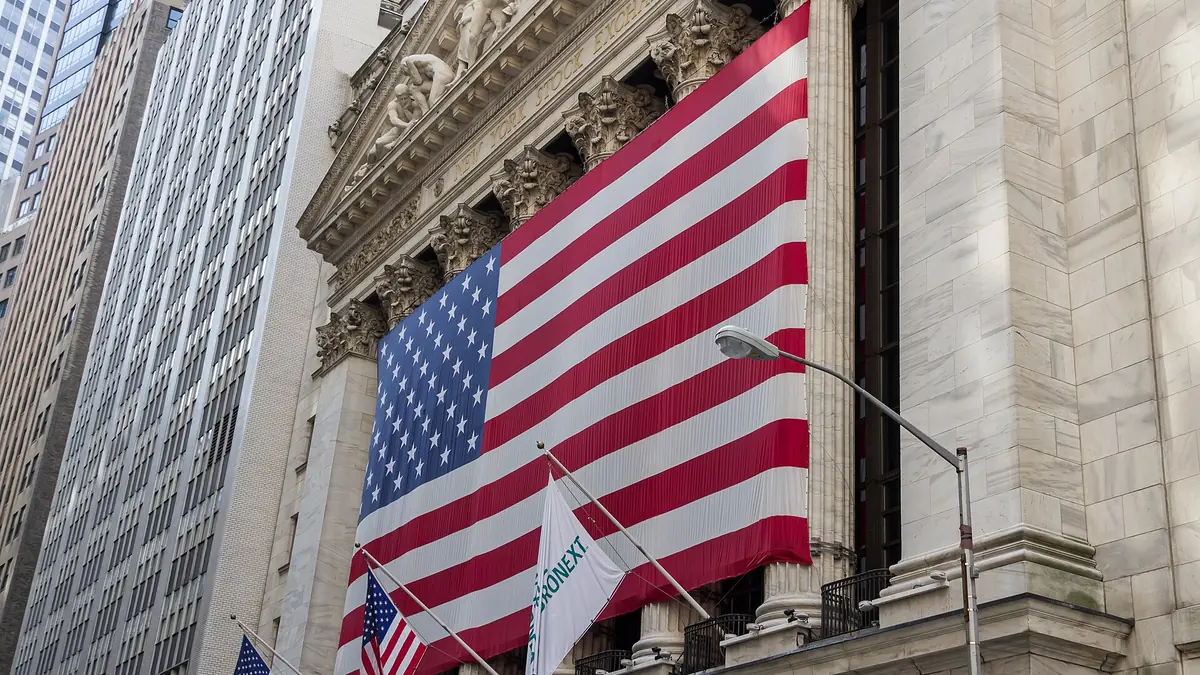
Image: Wikimedia Commons / Dietmar Rabich
Banks and credit investors are pulling back from the debt that has funded the artificial intelligence boom and are now reluctant to finance new deals, even with the biggest technology companies behind them. Reuters reported on Monday that the shift came in just the past few days, after Thursday's rout erased $2.5 trillion from the Nasdaq 100 and sent the index into a correction. the report.
Some lenders have shown reluctance to finance deals even if backstopped by names such as Anthropic and Google, banking and credit sources told Reuters. Both companies declined to comment. Weeks ago, banks were competing to fund AI deals; now lenders are stress-testing cash flows and picking apart the contracts behind AI infrastructure projects.
Key Takeaways
- Banks and credit investors are pulling back from AI-related debt deals after years of lining up to fund data centres and chips.
- Thursday's sell-off erased $2.5 trillion from the Nasdaq 100, pushing it into a correction, while spreads on 10-year hyperscaler debt widened about 50 basis points this year.
- Riskier borrowers such as Oracle and CoreWeave face higher borrowing costs and possible delays, and slower construction could cut bank loan growth and fees.
Debt has paid for much of the AI build-out, and if lenders step back, projects slow and borrowing costs rise. Chipmakers typically backstop the senior debt that finances advanced chips and guarantee payments on long-term data-centre leases, which drew banks in. That comfort is wearing thin: at JPMorgan Chase, loans backed by income-producing properties, which include data centres, stood at $29 billion at the end of the third quarter, its second-largest real estate exposure. JPMorgan declined to comment.
The spread on 10-year hyperscaler debt has widened by about 50 basis points so far this year, against roughly 20 basis points for high-quality industrials not tied to AI, according to Bank of America credit analyst Yuri Seliger. Dutch bank ING is seeking buyers for $500 million of data-centre loans, Bloomberg reported. Oracle and CoreWeave, the riskier borrowers, could be affected by construction delays, according to Baird Equity Research. CoreWeave's stock has fallen 35% this year, and Nebius shelved a planned high-yield bond issue last month.
"Over the past year there was unbridled enthusiasm to provide debt to neoclouds, anyone who was building data centers or some sort of AI asset," said Chris Poggi, finance partner at Ropes & Gray. "Debt investors' books have become full and now they are assessing if they have extended themselves as much as they're going to extend themselves this year." "Most banks and credit investors will take a wait and see approach," said Jay Bala, co-founder of $300-million asset manager AIP, after the Democratic sweep of Congress in the midterm elections. Voters also backed data-centre restrictions in 39 of 45 local ballot measures last week.
October inflation data and CoreWeave earnings are both due on Tuesday. Goldman Sachs Research projects global hyperscaler debt issuance will reach $420 billion in 2027, up from $250 billion in 2026. Monday's rebound, when the Dow jumped 1,000 points, did not lift every AI name. OpenAI has closed an $11 billion first tranche of new funding at a $1.25 trillion valuation.
The AI debt squeeze
| Measure | Figure |
|---|---|
| Nasdaq 100 lost on Thursday | $2.5 trillion |
| Hyperscaler debt spread widening, 2026 | About 50 basis points |
| Same spread, high-quality industrials | About 20 basis points |
| JPMorgan property loans | $29 billion |
| ING data-centre loans for sale | $500 million |
| Hyperscaler debt issuance forecast, 2027 | $420 billion |
Frequently Asked Questions
What are hyperscalers?
Hyperscalers are the largest cloud companies, such as Google, Meta and Microsoft, operating data centres at massive scale.
Why are banks suddenly cautious about AI debt?
Lenders say their loan books are already full of AI exposure, credit spreads have widened, and last week's $2.5 trillion Nasdaq 100 sell-off changed their view.
When will the market get its next read on the pullback?
CoreWeave reports earnings on Tuesday, the same day October consumer price data lands, and Nvidia reports quarterly results on 17 November.
For readers and investors, the AI trade now faces a financing test as much as a technology one. If lenders stay selective, the largest borrowers will still raise money, but at higher prices and with tougher terms, while smaller neocloud operators may have to delay projects or turn to private credit at a steep cost. The test comes on Tuesday, when CoreWeave reports and October inflation data lands, and again on 17 November, when Nvidia reports.