Dow Jumps 1,000 Points as Wall Street Rebounds from AI Sell-Off; Nvidia Falls
The Dow Jones Industrial Average rose more than 1,000 points on Monday as Wall Street rebounded from last week's AI sell-off, while Nvidia fell about 5%.
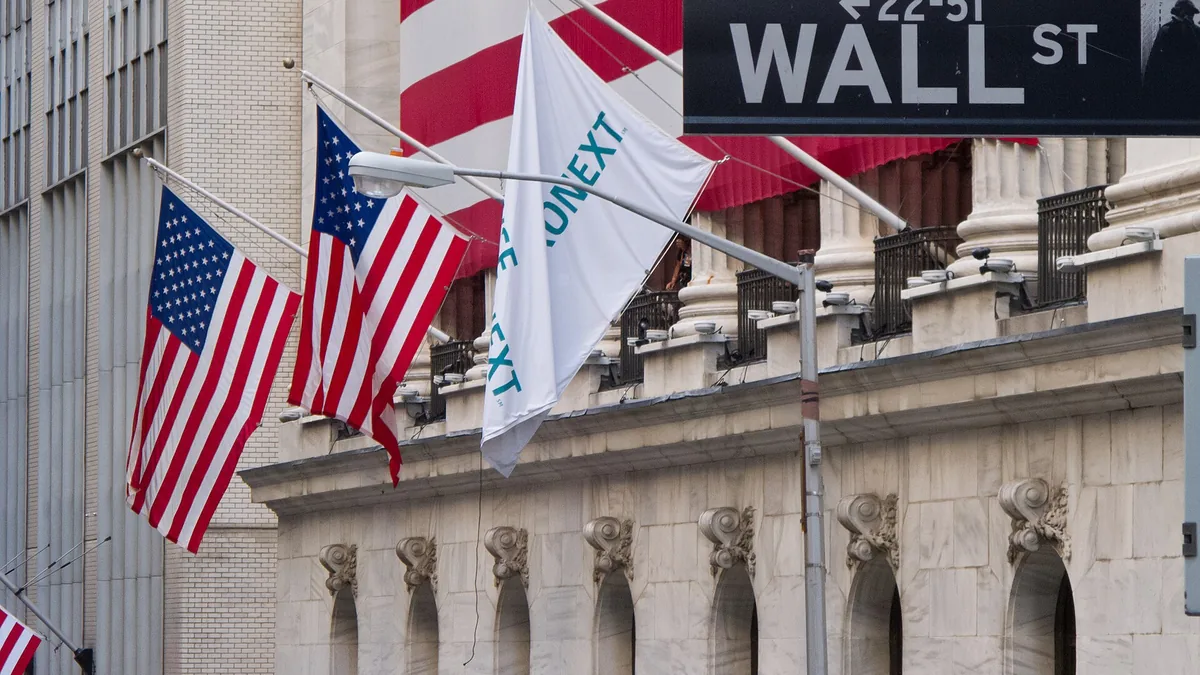
Image: Wikimedia Commons / Carlos Delgado
Wall Street staged a sharp rebound on Monday, with the Dow Jones Industrial Average rising more than 1,000 points in afternoon trading as investors bought back technology shares sold off heavily last week. The S&P 500 gained 2.3% and the Nasdaq Composite climbed 2.6%, while Nvidia, the company at the centre of the artificial intelligence boom, fell about 5% as questions over its chief executive deepened. Investopedia's report.
Last week ended badly for Wall Street. The S&P 500 posted its worst week since April 2025 and has now fallen for four consecutive weeks. The rout peaked on Thursday, when the Nasdaq Composite fell 5.52%, its biggest one-day drop in about 18 months, and the seven largest US technology companies lost a combined $1 trillion in market value in one session. Investors sold AI shares after Democrats swept last week's midterm elections, which the market read as a signal of tighter regulation of artificial intelligence and slower growth in data-centre building. Bitcoin also fell to a two-month low in the same post-midterm sell-off.
Key Takeaways
- The Dow rose more than 1,000 points, about 2%, in afternoon trading on Monday, with the S&P 500 up 2.3% and the Nasdaq Composite up 2.6%, in a rebound from last week's AI share sell-off.
- The rebound followed the S&P 500's worst week since April 2025; the index has now fallen for four straight weeks, and the Nasdaq dropped 5.52% on Thursday, its steepest fall in about 18 months, as the Magnificent Seven lost $1 trillion in a single day.
- Nvidia fell about 5%, the only Magnificent Seven stock in the red, after its board opened an investigation into chief executive Jensen Huang; AMD rose 12% and Broadcom and Marvell each rose more than 9%.
According to reporting by Investopedia, chip stocks led the recovery as traders hunted for bargains, with AMD jumping 12% and Broadcom and Marvell each rising more than 9%. Oil also fell, with West Texas Intermediate crude down 3.5% to $87.65 a barrel, as hopes grew that diplomacy could ease the eight-month war in Iran. The rally came despite fresh worries about interest rates, with investors still weighing fears of a December rate rise after a stronger-than-expected October jobs report.
Nvidia's slide has a cause of its own. The company's board opened an independent investigation on Sunday after reports that chief executive Jensen Huang had been targeted by a Chinese intelligence effort. Huang told employees he had an extramarital affair with a technology executive US officials allege was recruited by Chinese intelligence. The board said it had "no reason to believe" that the company's secrets or national security had been compromised. "Nvidia for now, is being treated as a one-off story," Patrick O'Hare, an analyst at Briefing.com, said, adding that investors saw no wider domino effect.
The rebound was broad: Meta and Tesla each rose about 5%, while Alphabet, Amazon, Apple and Microsoft all gained 2% or more, leaving Nvidia as the only Magnificent Seven stock in the red. Brokerages including Morgan Stanley and UBS have called last week's rout overdone, and Monday's buying suggests many fund managers agree, at least for now.
Monday's rebound
| Index or stock | Move |
|---|---|
| Dow Jones Industrial Average | More than 1,000 points (about 2%) |
| S&P 500 | +2.3% |
| Nasdaq Composite | +2.6% |
| AMD | +12% |
| Broadcom | More than +9% |
| Marvell | More than +9% |
| Meta | About +5% |
| Tesla | About +5% |
| Nvidia | About -5% |
| WTI crude | -3.5% to $87.65 a barrel |
Frequently Asked Questions
Why did stocks fall so sharply last week?
Investors read the Democrats' midterm sweep as a signal of tighter AI regulation and slower data-centre growth; the Nasdaq fell 5.52% on Thursday, its biggest one-day drop in about 18 months.
Why is Nvidia falling while other chip stocks rise?
Its board is investigating chief executive Jensen Huang after reports he was targeted by Chinese intelligence. Huang admitted an affair, and investors treat it as a company-specific issue, with no wider domino effect seen so far.
What comes next for the market?
The Labor Department releases its October consumer price index on Tuesday, with economists expecting a 2.7% annual rise. The reading will shape bets on a December Federal Reserve rate rise.
The test comes quickly: the Labor Department releases its October consumer price index on Tuesday, with economists expecting a 2.7% annual rise. A hot number could revive the selling; a cool one could extend the rebound. Nvidia's board has not said when its investigation will conclude.