December Fed Hike Now Near Certain: What It Means for Rates & Borrowers
Traders now put a December Fed rate rise at near certainty, with the 10-year yield above 5.15% and the dollar at a 19-month high. What it means for borrowers.
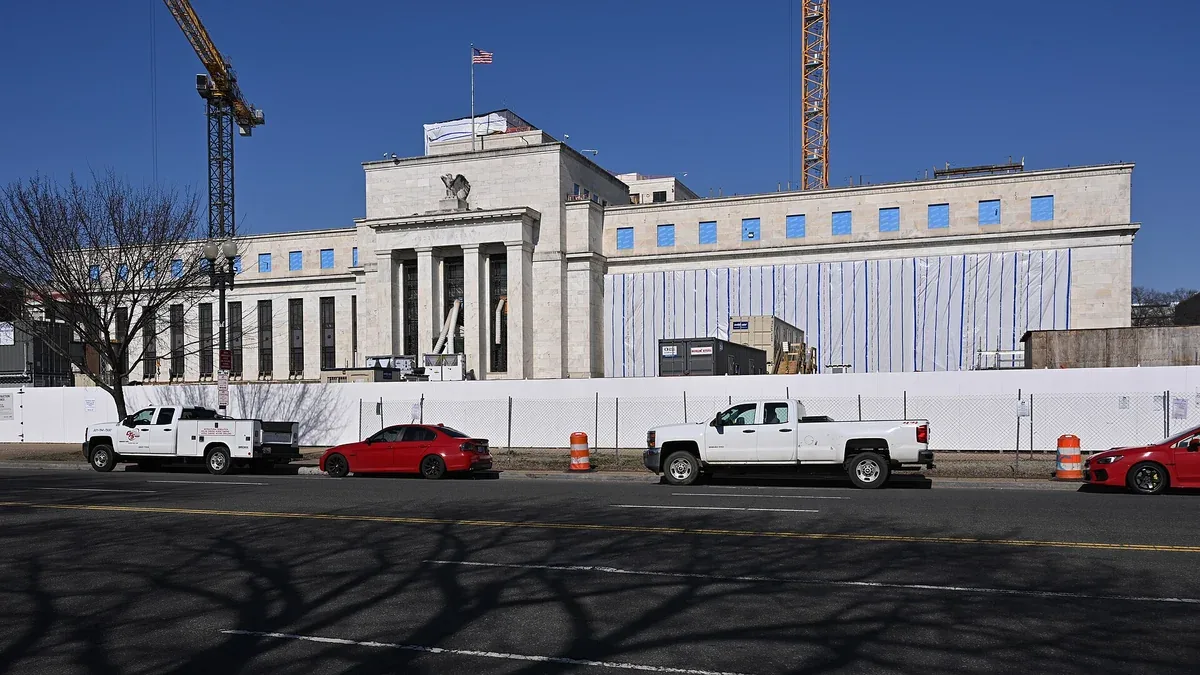
Image: Wikimedia Commons / G. Edward Johnson
Washington, Nov. 15 — Traders now price a December Federal Reserve interest-rate increase as near certain. The CME Group’s FedWatch tool on Saturday put an 88.5% probability on a quarter-point rise at the Dec. 8-9 meeting and 11.5% on a half-point move.
The shift follows a week of hot inflation data. October consumer prices rose 0.4% in the month, above the 0.3% economists expected, while producer prices rose 6.5% over the year, the largest annual gain since November 2022, according to the U.S. Bureau of Labor Statistics.
Key Takeaways
- CME FedWatch: 88.5% chance of a 25-basis-point December hike, 11.5% of 50 basis points, 0% on hold.
- October consumer prices rose 0.4% and core prices 0.3% for a third straight month; producer prices rose 6.5% over the year.
- The 10-year Treasury yield closed Friday above 5.14%; the dollar index hit a 19-month high near 103.4.
- A quarter-point move would lift the federal funds range to 4.00%-4.25% from 3.75%-4.00%.
How a December Fed Hike Affects Mortgages, Loans, and Savings
The Federal Reserve sets the overnight federal funds rate, not mortgage rates directly, but a December move would still reach household budgets. Credit card rates, which track short-term borrowing costs, typically rise within a billing cycle or two; auto loan rates follow. Mortgage rates answer more to the 10-year Treasury yield, and 30-year fixed mortgages have held around 7%. Savers stand to gain as deposit rates tend to climb.
Bank of America told clients the October data “all but locks in” a December hike, while the bank itself still forecasts a quarter-point move. Fed Governor Christopher Waller had said a 50-basis-point increase should be considered if core prices rose 0.3% or more in October; core prices rose exactly 0.3%.
| December decision | Nov. 6 | Nov. 14 |
|---|---|---|
| Hold rates steady | 23.7% | 0% |
| 25-basis-point hike | 76.3% | 88.5% |
| 50-basis-point hike | 0% | 11.5% |
Probabilities from the CME Group’s FedWatch tool.
Why the 10-Year Yield Above 5% Matters for Borrowers
The 10-year Treasury yield, the reference rate for mortgages, car loans and credit card rates across the United States, closed Friday at 5.143%, its second straight close above 5%. The two-year note finished at 4.859% and the 30-year bond at 5.472%.
Higher yields weighed on stocks on Friday: the S&P 500 fell 0.4% and the Nasdaq dropped 0.9%, while the Dow edged up 0.1%. Bitcoin slid to a four-month low near $62,000 as about $2 billion in leveraged positions were liquidated, according to CoinGlass data.
When Is the December Fed Meeting?
The Federal Reserve’s rate-setting committee meets on Dec. 8-9 and announces its decision on Dec. 9. November consumer price data arrives on Dec. 10, a day after the decision. Minutes of the October meeting, when the committee held rates at 3.75%-4.00% in a 10-2 vote, are due Wednesday.
Vice Chair Philip Jefferson said on Friday that inflation will be central to future decisions, citing September inflation of 3.6% and core inflation of 3.1%. Boston Fed President Susan Collins said on Saturday that “steady, gradual” rate hikes are appropriate. Kalshi traders price a quarter-point rise at 89% and Polymarket at 88%.
Frequently Asked Questions
Will the Federal Reserve raise interest rates in December 2026?
Markets price it as near certain: the CME Group’s FedWatch tool put an 88.5% probability on a quarter-point rise and 11.5% on a half-point move, with none on a hold. The Fed has not announced a decision, and its committee meets Dec. 8-9.
How much will mortgage rates rise if the Fed hikes in December?
Mortgage rates track the 10-year Treasury yield more than the Fed’s overnight rate; the 10-year yield closed Friday at 5.14% and 30-year fixed mortgages sit around 7%. A hike could push yields higher, but mortgage rates do not move one-for-one with Fed decisions.
What is the CME FedWatch tool and how accurate is it?
The tool derives probabilities for Federal Reserve decisions from 30-day federal funds futures prices, so it reflects what traders expect rather than what the Fed has decided. Markets have called recent decisions correctly, but pricing can reverse quickly on new data.
Does a Fed rate hike affect savings accounts and credit cards?
Credit card rates, which track short-term borrowing costs, typically rise within a billing cycle or two after a hike, and auto loan rates follow. Savings rates also tend to rise, though banks pass increases to savers more slowly.
The committee announces its decision on Dec. 9, and November consumer price data arrives the following day.