US October Deficit Hits Record $404 Billion: What It Means for Rates
The US ran a record $404 billion October deficit as receipts fell 9% and spending jumped 12%, opening fiscal 2027 with the widest October gap on record.
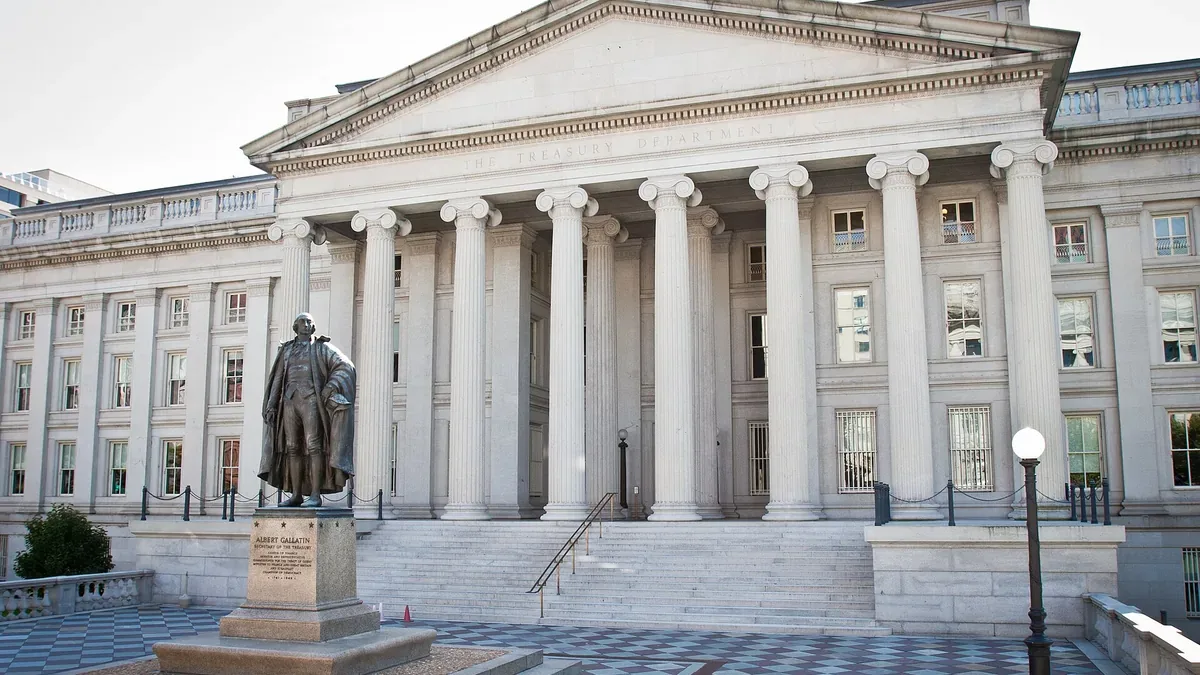
Image: Wikimedia Commons / Tony Webster
WASHINGTON — The United States government started fiscal 2027 with a record $404 billion budget deficit in October, the Treasury Department said on Thursday, as receipts shrank and spending rose sharply in the first month of the new fiscal year.
The gap was $120 billion, or 42 percent, wider than in October 2025. Receipts fell 9 percent to $369 billion, while outlays reached a record $773 billion, up 12 percent. It follows a fiscal 2026 deficit of $1.992 trillion, the largest in five years at 6.2 percent of gross domestic product.
Key Takeaways
- The $404 billion October deficit is the largest ever for the month, up 42 percent from October 2025.
- Receipts fell $35 billion to $369 billion, with net customs duties down 39 percent to $19.2 billion from $31.3 billion.
- Outlays hit a record $773 billion, driven by farm relief up 80 percent and military spending up 30 percent.
- After calendar adjustments the deficit would have been $285 billion, still up 49 percent from a year earlier.
Why Did the US Budget Deficit Hit $404 Billion in October?
The shortfall widened from both sides. Individual non-withheld taxes came in $29 billion, or 36 percent, lower than a year earlier, after tax filing deadlines delayed for Californians hit by the 2025 wildfires had swelled the year-ago figure. Net customs duties fell 39 percent to $19.2 billion from $31.3 billion in October 2025, when tariff revenues were at their peak.
Agriculture Department outlays rose $14 billion, or 80 percent, on farm relief payments, while military spending rose $28 billion, or 30 percent, on a payment to military trust funds delayed by last year’s government shutdown. Gross interest on the federal debt rose 11 percent to $115 billion.
How the Record October Deficit Affects Interest Rates and Borrowing Costs
A deficit of this size keeps pressure on the government’s borrowing costs when investors are already demanding higher yields. The 10-year Treasury yield stood near 5.10 percent when the figures were released, after a weak auction pushed the benchmark yield above 5 percent earlier in the week. Higher yields raise the cost of servicing the national debt, which already took $115 billion in interest in October alone.
For households, the same move sets the tone for mortgage and auto loan rates, which track the 10-year benchmark. Savers, by contrast, are seeing strong risk-free returns: Treasury I Bonds now pay 5.51 percent, with the fixed rate at a 20-year high.
What the $404 Billion Deficit Means for the 2027 Budget and Taxpayers
The October result is an early setback for Treasury Secretary Scott Bessent, who aims to cut the deficit to 3 percent of gross domestic product. The fiscal 2026 gap of 6.2 percent moved the other way, and October shows the new fiscal year opening wider still. The Treasury Department has separately hired private debt collectors to pursue defaulted student loans, money already owed that sits outside the monthly budget totals.
| October measure | October 2026 | October 2025 | Change |
|---|---|---|---|
| Budget deficit | $404 billion | $284 billion | Up 42% |
| Receipts | $369 billion | $404 billion | Down 9% |
| Outlays | $773 billion | $689 billion | Up 12% |
| Net customs duties | $19.2 billion | $31.3 billion | Down 39% |
| Gross interest on debt | $115 billion | $104 billion | Up 11% |
| Calendar-adjusted deficit | $285 billion | $191 billion | Up 49% |
Frequently Asked Questions
Why was the US budget deficit so high in October 2026?
Receipts fell 9 percent to $369 billion while outlays rose 12 percent to a record $773 billion. Non-withheld taxes dropped 36 percent and customs duties fell 39 percent, while farm relief and military spending lifted outlays.
How much did US tariff revenue fall in October 2026?
Net customs duties fell 39 percent to $19.2 billion, down from $31.3 billion in October 2025, when tariff revenues were at their peak. The drop was a main reason receipts fell $35 billion from a year earlier.
What is the adjusted US budget deficit for October 2026?
After calendar adjustments for November benefit payments shifted into October, the Treasury Department said the deficit would have been $285 billion, still 49 percent higher than a year earlier.
How does the October deficit affect interest rates?
A larger deficit means more government borrowing, which can push yields higher. The 10-year Treasury yield stood near 5.10 percent when the figures were released, and the government paid $115 billion in gross interest in the month alone.
November’s Monthly Treasury Statement is due in mid-December, the next full read on whether the fiscal 2027 gap keeps widening.