What Is a Recession, and How Is It Declared in the United States?
A recession is a broad, months-long decline in economic activity — but no government body declares one. Here is who decides, and how the call is made.
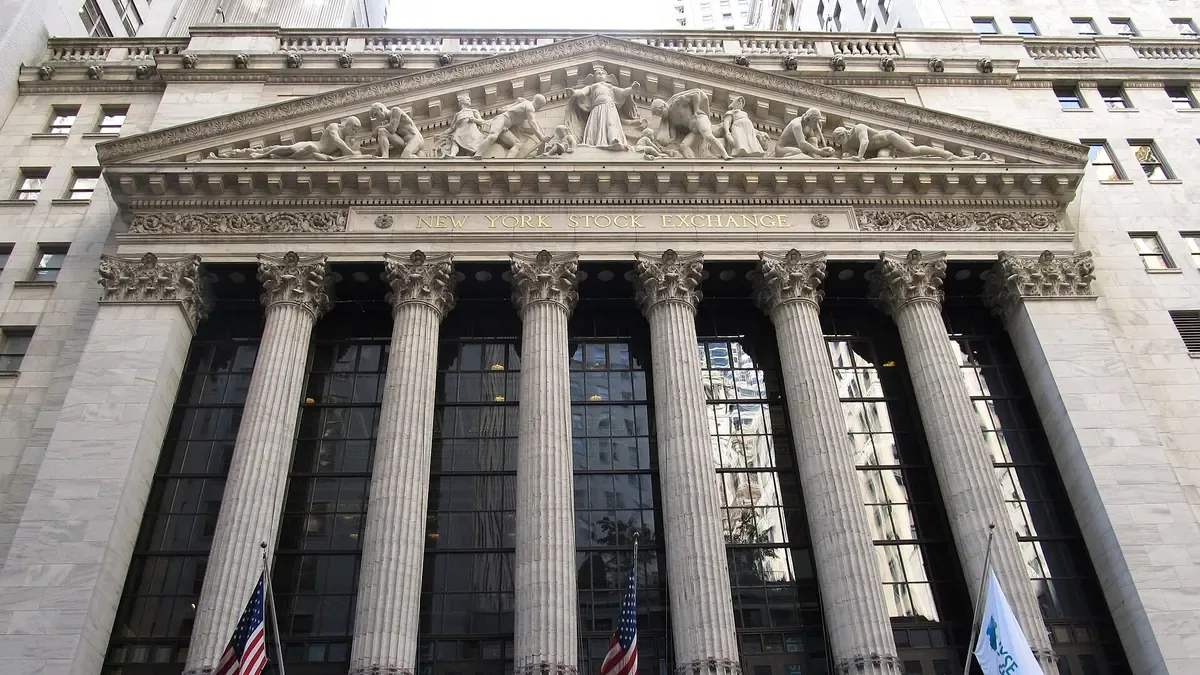
Image: Wikimedia Commons / Ken Lund from Reno, Nevada, USA
What is a recession, and who gets to say one has begun? A recession is a significant decline in economic activity across the whole economy, lasting more than a few months — and in the United States, the call is made not by the government but by economists at the National Bureau of Economic Research (NBER). That matters: the word moves markets and shapes policy.
The NBER's Business Cycle Dating Committee judges a downturn on three tests: depth, diffusion and duration. It weighs monthly data — income, jobs, spending, sales and output. There is no fixed formula and no single number that triggers a declaration.
Key Takeaways
- A significant, broad-based decline in economic activity lasting more than a few months — judged on depth, diffusion and duration.
- In the US, the NBER's Business Cycle Dating Committee — not the government — dates recessions, months after the event.
- Two quarters of falling GDP is a rule of thumb, not the test: US GDP fell in early 2022 with no recession declared.
- Since 1945, 12 US recessions, averaging 10.3 months; the latest ran from February to April 2020.
Who Declares a Recession in the US?
Recessions are not defined in statute, and no government agency declares them. The NBER, an independent research organisation founded in 1920, has a Business Cycle Dating Committee of eight macroeconomists that acts as the accepted arbiter of US turning points. The Congressional Research Service notes recessions are neither determined by the federal government nor defined in statute. It dates recessions by peaks and troughs: a recession runs from the month after a peak to the month of the trough.
The dating is deliberately retrospective: the committee waits for enough data to avoid major revisions, so announcements arrive months after the turning point. It announced the December 2007 peak on 1 December 2008, and the April 2020 trough was not confirmed until 19 July 2021. By then, the recovery is often already under way.
Two Quarters of Falling GDP Is Not the Official Test
The best-known shortcut is the two-quarter rule: two consecutive quarters of falling real GDP. It is a useful warning sign, not the NBER's test. In 2022, US real GDP fell at an annual rate of 1.6 percent in the first quarter and 0.6 percent in the second (Bureau of Economic Analysis) — yet no recession was declared, because jobs, incomes and spending kept growing. The NBER measures month to month, not quarter to quarter.
Other signals help policymakers react in real time. The Sahm rule flags a recession when the three-month average unemployment rate rises half a percentage point or more above its lowest level in the previous 12 months. An inverted yield curve — short-term government borrowing costs above long-term ones — has preceded most modern recessions. These are indicators, not verdicts.
How Long Do Recessions Usually Last?
Recessions are usually brief. Since 1945 there have been 12 in the US, averaging 10.3 months, while expansions between them averaged 64.2 months. The longest post-war recession ran 18 months, from December 2007 to June 2009; the shortest lasted two months, from February to April 2020, when the pandemic shut down activity with extraordinary speed and breadth. The longest on record is the Great Depression: 43 months, from August 1929 to March 1933.
| Peak | Trough | Length |
|---|---|---|
| February 2020 | April 2020 | 2 months |
| December 2007 | June 2009 | 18 months |
| March 2001 | November 2001 | 8 months |
| July 1981 | November 1982 | 16 months |
Frequently Asked Questions
Is the United States in a recession now?
No recession has been dated since the one that ended in April 2020. Because the NBER announces turning points only after the fact, the current state is judged from live data — GDP, jobs and spending — not from a declaration.
What is the difference between a recession and a depression?
A depression is a much longer and deeper decline, but there is no formal threshold separating the two. The Great Depression, at 43 months, remains the benchmark; no post-war downturn has come close.
What usually causes a recession?
Triggers vary: interest-rate rises to fight inflation, oil price shocks, financial crises, asset bubbles bursting and pandemics. Whatever the trigger, spending, hiring and production pull back together.
Do not wait for the word recession: by the time the NBER confirms one, the downturn is months old. Watch what the committee watches — incomes, jobs and spending — and its next announcement will come only when the data leaves no doubt.