NASA Finds Clues to Ancient Water Beyond Neptune: What It Means
NASA says 12 grains of space dust carry chemical traces of ancient water from the Kuiper Belt, pointing to a vast ice reservoir beyond Neptune.
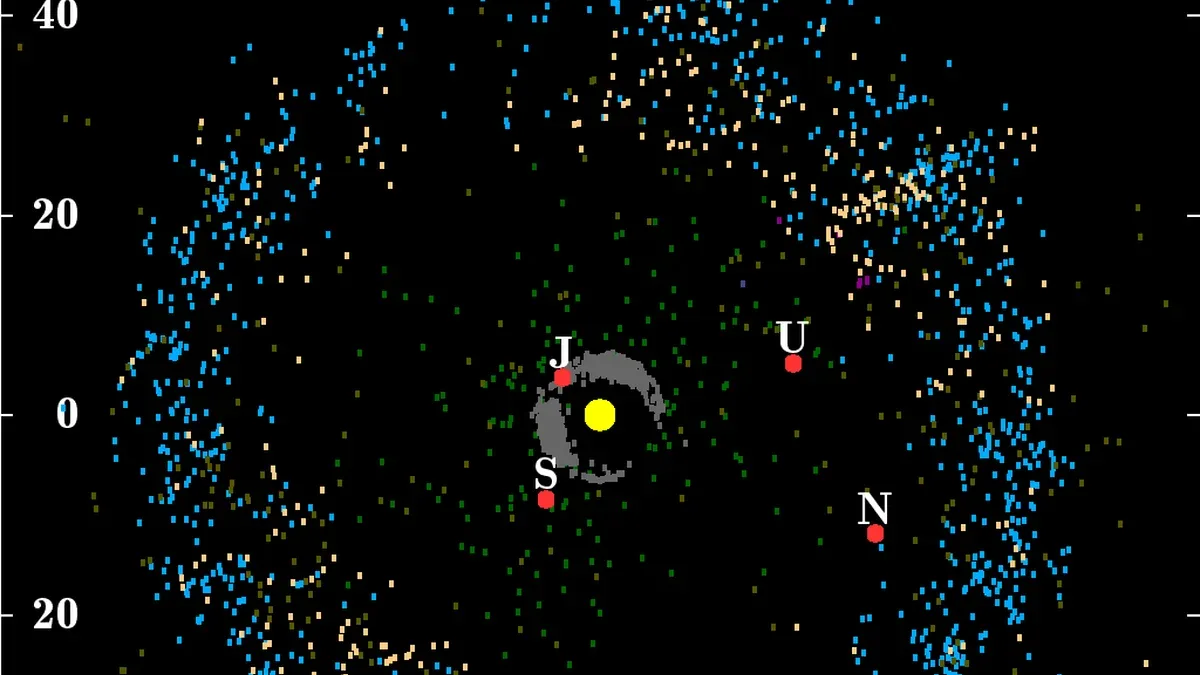
Image: Wikimedia Commons / WilyD
NASA announced on November 18 that 12 microscopic grains of space dust collected high above Earth carry chemical traces of ancient water from the Kuiper Belt, the ring of icy bodies beyond Neptune. The grains, each 10 to 30 micrometres across, were caught in Earth's stratosphere by the agency's ER-2 aircraft and analysed at NASA's Johnson Space Center in Houston with colleagues at the University of California, Los Angeles.
The findings, published in the journal Science Advances, offer the strongest evidence yet for a vast ice reservoir in the outer solar system, largely sealed off from material closer to the Sun. Planetary scientist Lindsay Keller of NASA's Johnson Space Center led the study, with Christopher J. Snead of NASA and Ming-Chang Liu and Kevin D. McKeegan of UCLA.
Key Takeaways
- Twelve dust grains, 10 to 30 micrometres across, collected from Earth's stratosphere by NASA's ER-2.
- Radiation-track densities about 100 times higher than asteroid-belt dust point to a Kuiper Belt origin.
- Clay minerals show the grains' parent material reacted with water rich in heavier oxygen isotopes.
- The water's oxygen-17 excess averages +62 parts per thousand, vs +3 to +7 in carbonaceous chondrite water.
How NASA Traced 12 Dust Grains to the Kuiper Belt
The team traced the grains' origin through damage tracks left in their crystals by energetic particles from the Sun. The grains carry 50 to 200 billion tracks per square centimetre, roughly 100 times more than dust from the asteroid belt or Jupiter-family comets. That points to a journey from far beyond Neptune. The grains are also rich in carbon, about four times the level in primitive meteorites. The Kuiper Belt sits beyond Neptune, roughly 30 times farther from the Sun than Earth.
| Measurement | Reading |
|---|---|
| Grains analysed | 12 dust particles |
| Grain size | 10 to 30 micrometres |
| Radiation tracks | 50–200 billion per sq cm, about 100 times asteroid-belt dust |
| Carbon content | About 4 times CI chondrite meteorites |
| Oxygen-17 excess (Δ17O) | +62 parts per thousand, vs +3 to +7 in carbonaceous chondrite water |
What the Oxygen Isotopes Reveal About Ancient Water Beyond Neptune
At NASA's Johnson Space Center, Keller and Snead studied the grains with electron microscopy, while the UCLA team measured oxygen isotopes with an ion microprobe. They found clays such as saponite and serpentine, which form only when water reacts chemically with rock. That reaction left a record of water that once flowed inside the parent bodies, enriched in heavier oxygen-17 and oxygen-18. Its oxygen-17 excess is +62 parts per thousand. NASA's announcement says data from the agency's Genesis mission provided the reference for comparing oxygen isotopes. "This is compelling evidence for the presence of a major heavy water reservoir beyond the orbits of the gas giant planets that was largely isolated from inner solar system materials," Keller said.
Why the Kuiper Belt Water Discovery Matters for Planet Formation
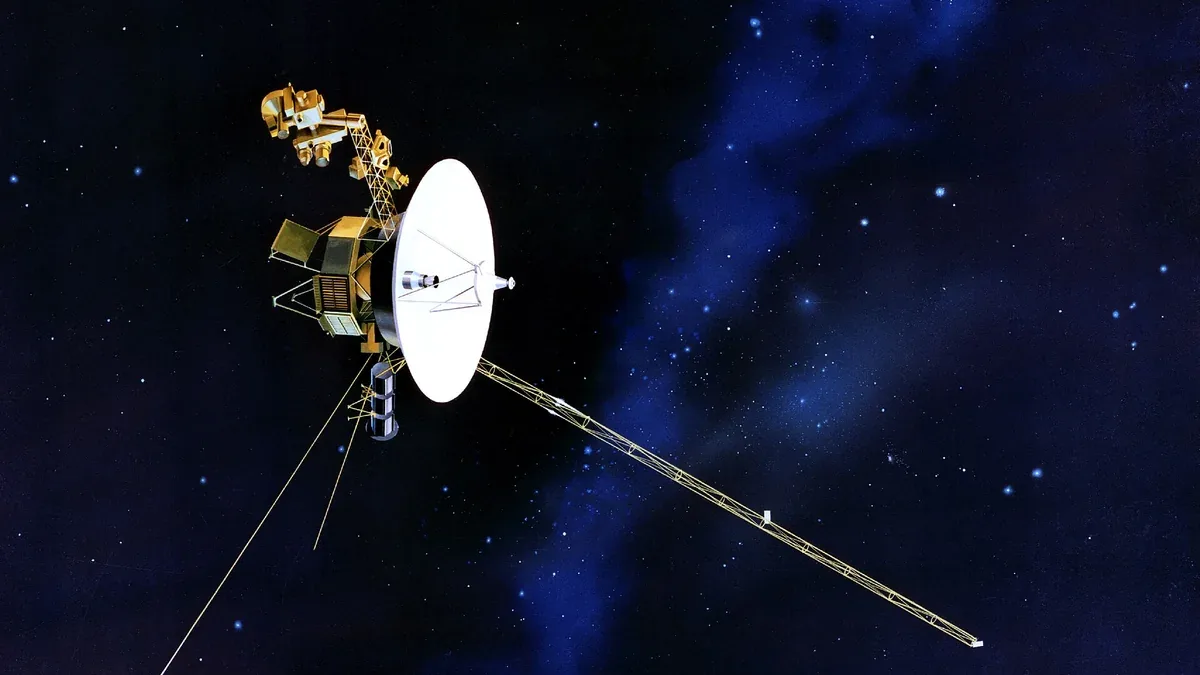
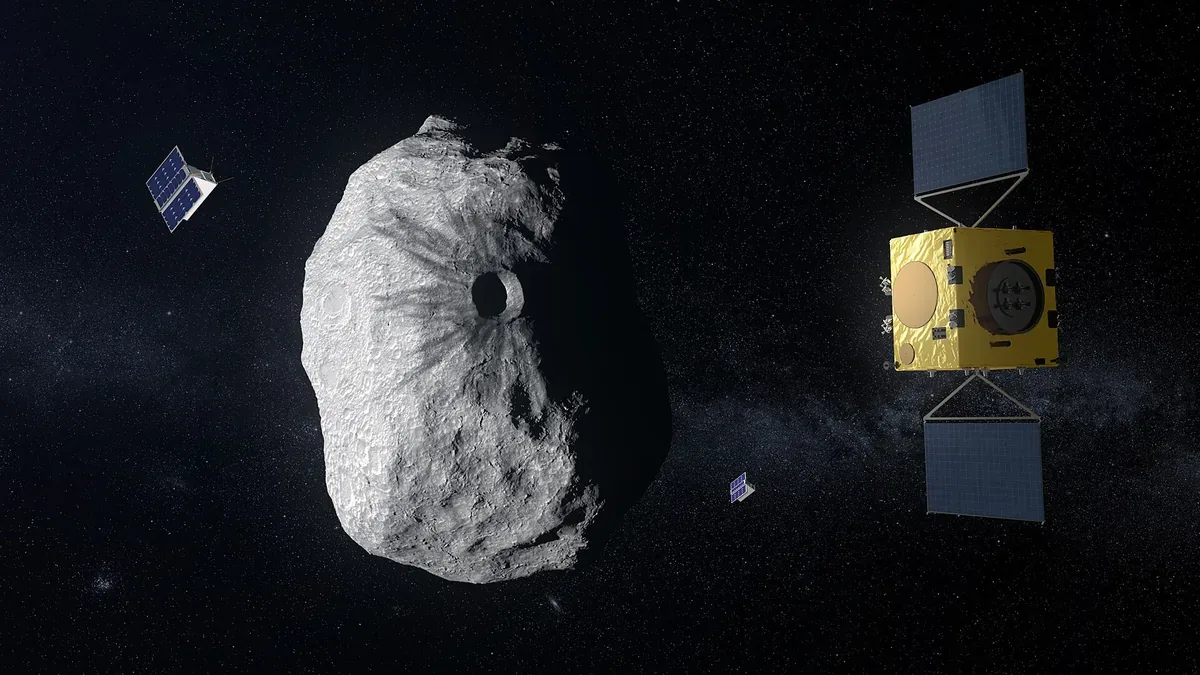
The finding helps explain how water and other materials spread as the solar system formed. The scarcity of similar heavy-water signatures in meteorites suggests the giant planets limited mixing between the outer and inner solar system. Voyager 1, now more than 16 billion miles from Earth, passed through the Kuiper Belt region decades ago. The authors note the limits plainly: 12 grains is a small sample, the parent bodies are unknown, and the water values are estimates, not direct measurements. Only material collected at the source could test the idea directly, and NASA's small-body missions continue to examine asteroids and other leftover material.
Frequently Asked Questions
What did NASA find in space dust from beyond Neptune?
NASA found traces of ancient water in 12 microscopic dust grains from Earth's stratosphere. Their minerals and oxygen isotopes point to an ice reservoir in the Kuiper Belt, largely isolated from inner solar system material.
How did scientists trace the dust grains to the Kuiper Belt?
Radiation-track densities about 100 times higher than asteroid-belt dust show a long journey from the outer solar system, and carbon content about four times that of primitive meteorites points the same way.
Did NASA find liquid water in the Kuiper Belt?
No. The water itself is long gone. Scientists found minerals that formed when water reacted with rock inside the parent bodies, and used their oxygen isotopes to estimate what the ancient water was like.
How far away is the Kuiper Belt from Earth?
The Kuiper Belt begins beyond Neptune, roughly 30 times farther from the Sun than Earth, and its icy bodies orbit at about 30 to 55 astronomical units from the Sun.