BepiColombo Enters Mercury Orbit After 8 Years: What Happens Next
After an eight-year, 10-billion-km journey, ESA and JAXA's BepiColombo has entered orbit around Mercury — only the second mission ever to do so.
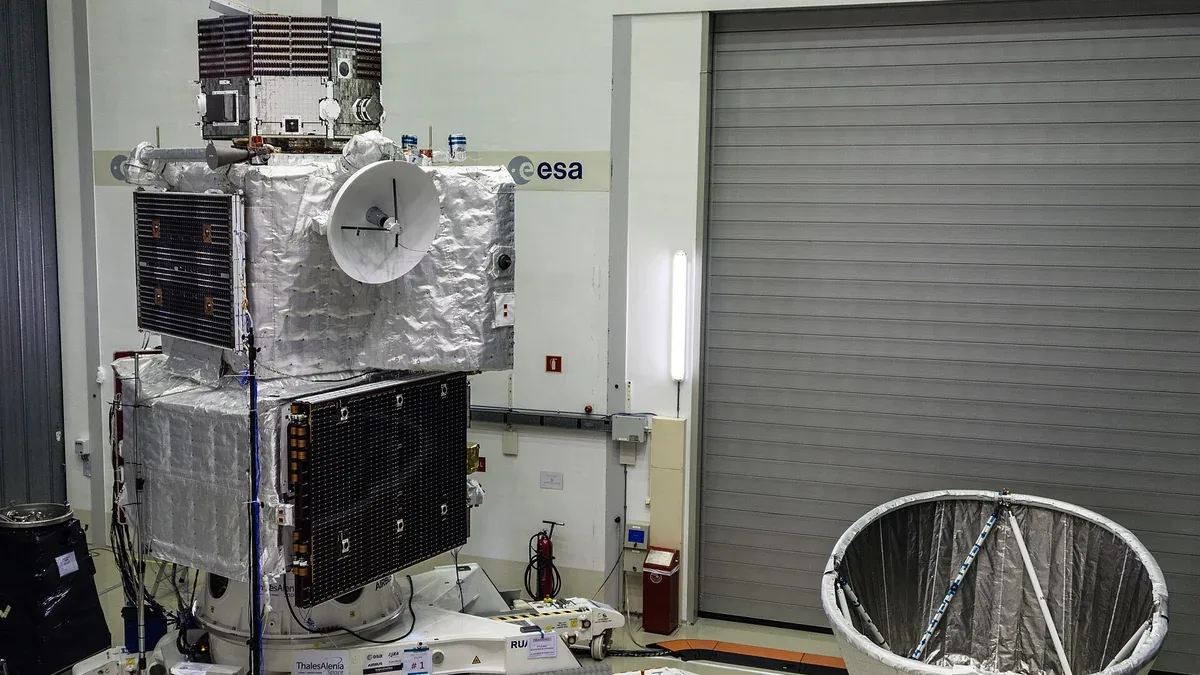
Image: Wikimedia Commons / European Space Agency
The European Space Agency announced on 21 November 2026 that its BepiColombo spacecraft has entered orbit around Mercury, completing an eight-year journey of almost 10 billion kilometers and becoming only the second mission ever to circle the innermost planet.
Four thrusters fired for 37 minutes from 1:24 p.m. EST, slowing the spacecraft enough for Mercury's gravity to capture it. The burn placed the joined orbiters into an elliptical orbit of 590 by 11,640 kilometers, the European Space Agency said.
Key Takeaways
- The European Space Agency confirmed on 21 November that BepiColombo entered orbit around Mercury, only the second mission ever to do so.
- A 37-minute burn ended a journey of more than eight years and almost 10 billion kilometers since its 20 October 2018 launch.
- The two orbiters, the European Space Agency's Mercury Planetary Orbiter and the Japan Aerospace Exploration Agency's Mio, separate on 9-10 December 2026.
- Full science operations begin in April 2027, with a one-year mission and an extension through 2029.
How BepiColombo Reached Mercury Orbit After Eight Years
BepiColombo launched on 20 October 2018 as a joint mission of the European Space Agency and the Japan Aerospace Exploration Agency, and it needed to shed speed gradually as it fell towards the Sun. The route used flybys of Earth, Venus and Mercury to brake the spacecraft, a path that took more than eight years. Mission scientists say reaching Mercury takes more energy than reaching the outer Solar System because a spacecraft must keep losing speed to avoid overshooting it.
The journey ran a year long: a 2024 thruster glitch cut propulsion power and pushed arrival from December 2025 to November 2026. The transfer module separated from the two science orbiters on 3 September 2026.
What BepiColombo's Two Orbiters Will Study at Mercury
The two orbiters carry different instruments. The European Space Agency's Mercury Planetary Orbiter will map the planet's cratered surface and catalog its geology from an orbit descending to between 400 and 1,500 kilometers by March 2027. Mio will trace wide ellipses between 500 and 11,000 kilometers, sampling Mercury's magnetic field and its interaction with the solar wind.
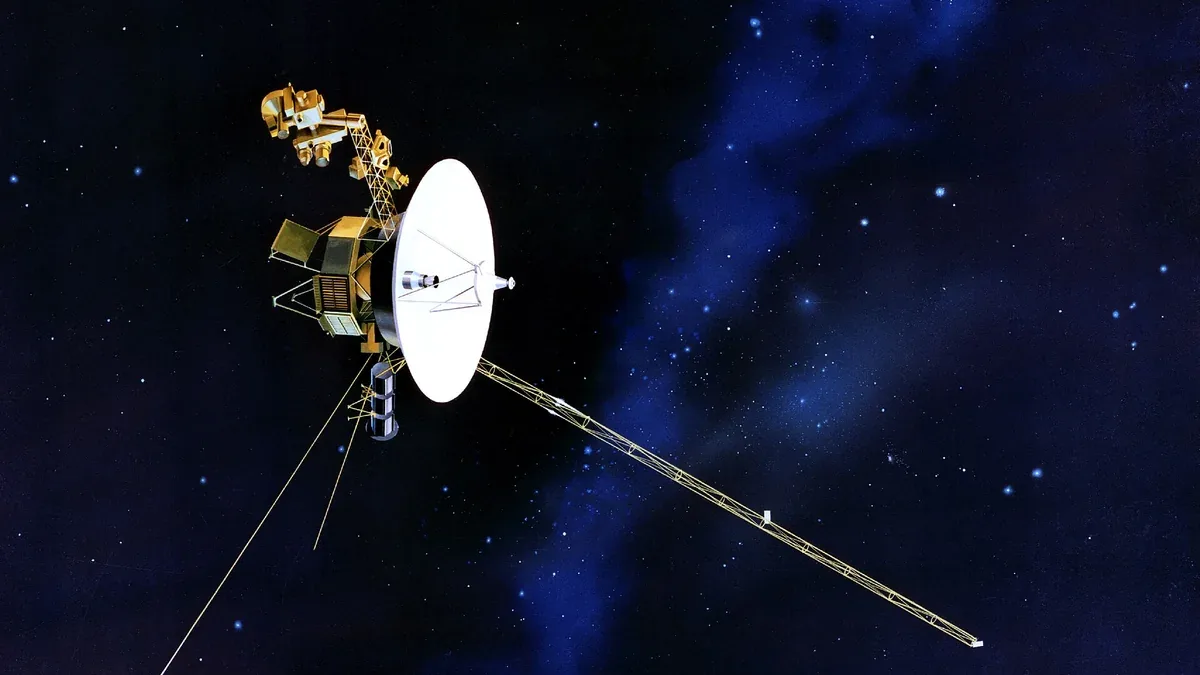
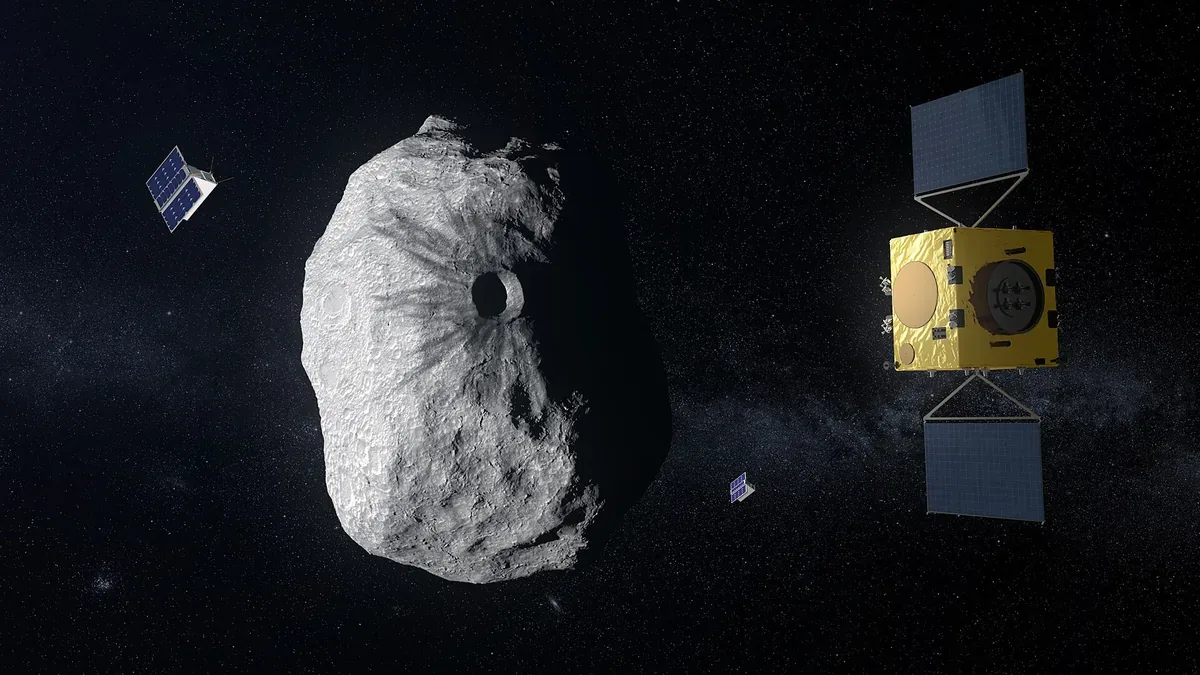
Some instruments were tested en route: scientists pointed the Mercury Imaging X-ray Spectrometer, MIXS, at the Crab Nebula, the remnants of a supernova seen from Earth in 1054. MIXS is the first X-ray imaging device sent on an interplanetary mission, according to Emma Bunce of the University of Leicester. For context, Voyager 1 recently reached one light-day from Earth, and Hera's first photos showed Didymos after NASA's DART impact.
When BepiColombo Science Operations Begin and What Comes Next
The next milestone comes on 9-10 December 2026, when the two orbiters separate into individual polar orbits. The European Space Agency's orbiter will then burn to reach its final science orbit by March 2027, and science operations begin in April 2027, with a one-year mission and an extension through 2029. The European Space Agency's BepiColombo mission page carries the agency's updates, and its animation of the orbit insertion shows the burn that captured the spacecraft.
| Date | Milestone | Detail |
|---|---|---|
| 20 October 2018 | Launch | Leaves Earth |
| 3 September 2026 | Transfer module separation | Orbiters fly alone |
| 21 November 2026 | Orbit insertion | 37-minute burn; 590 by 11,640 km orbit |
| 9-10 December 2026 | Orbiter separation | Individual polar orbits |
| March 2027 | Final science orbit | 400 to 1,500 km orbit |
| April 2027 | Science operations begin | One-year mission; extension to 2029 |
Frequently Asked Questions
When did BepiColombo enter orbit around Mercury?
BepiColombo entered orbit around Mercury on 21 November 2026, after a 37-minute burn that began at 1:24 p.m. EST. The European Space Agency announced it the same day; it is only the second mission ever to orbit Mercury after NASA's MESSENGER.
How long did BepiColombo take to reach Mercury?
BepiColombo took more than eight years, launching on 20 October 2018 and traveling almost 10 billion kilometers. Flybys of Earth, Venus and Mercury slowed it, and a 2024 thruster glitch delayed arrival by a year.
What is BepiColombo's mission at Mercury?
BepiColombo is a joint European Space Agency and Japan Aerospace Exploration Agency mission with two orbiters. The Mercury Planetary Orbiter will map the surface and geology, while Mio will study the magnetic field and solar wind.
When will BepiColombo start its science mission?
Full science operations begin in April 2027, after the orbiters separate on 9-10 December 2026 and the Mercury Planetary Orbiter reaches its final orbit by March 2027. The mission lasts a year, with an extension through 2029.